News

Microplastics Fingerprinting research project releases impact report
The Microplastics Fingerprinting research project has released their latest impact report. This report showcases the remarkable scientific advancements and societal contributions our researchers have made since the microplastics fingerprinting research group's launch.
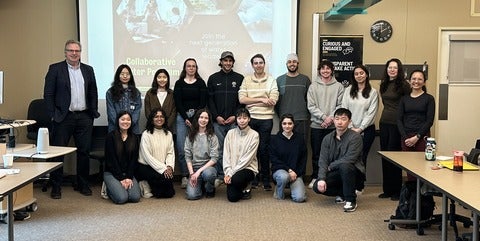
Collaborative Water Program students present integrated solutions to Canada’s pressing water challenges
As part of the Collaborative Water Program’s WATER 601 course, student teams delivered final presentations featuring integrated water management solutions to complex water challenges, sharing their ideas with a panel of experts from the University of Waterloo and the Canada Water Agency (CWA). The exercise goes beyond a typical class assignment. It asks students to think across disciplines, weigh ecological, social and economic trade-offs and deliver practical recommendations that could inform real policy and practice.
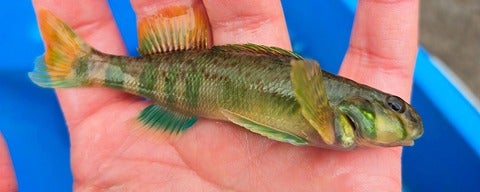
Opioids and antidepressants found accumulating in freshwater fish
A new study led by Water Institute researcher Mark Servos and colleagues in the Servos Group has detected antidepressants, opioids and other drugs of abuse accumulating in freshwater fish living downstream of urban wastewater treatment plants. Using a newly developed analytical method, the team found compounds such as fentanyl, methadone and venlafaxine in multiple wild fish species, marking the first documentation of these substances in wild fish in Canada.
Events
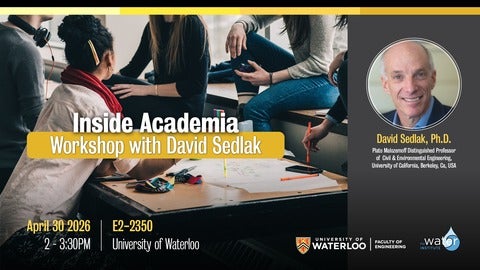
Inside Academia Workshop with David Sedlak
The Water Institute and the Department of Civil Engineering are pleased to present the Inside Academia Workshop with David Sedlak, PhD, Plato Malozemoff Distinguished Professor of Civil and Environmental Engineering at the University of California, Berkeley.
This event will be held in person in E2 2350, University of Waterloo.
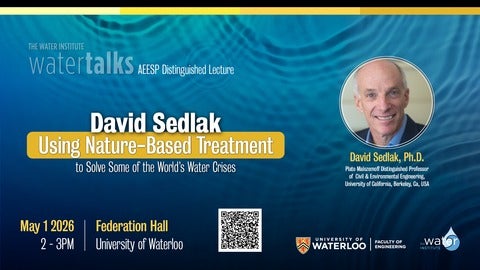
Using Nature-Based Treatment to Solve Some of the World’s Water Crises
The Water Institute and the Faculty of Engineering are pleased to present the 2025–26 AEESP Distinguished Lecture, Using Nature-Based Treatment to Solve Some of the World’s Water Crises, presented by David Sedlak, PhD, Plato Malozemoff Distinguished Professor of Civil and Environmental Engineering at the University of California, Berkeley.
This event will be held in person at Federation Hall, University of Waterloo.