Current students

One of Canada’s greatest natural resources doesn’t need mining or refining, it just needs researchers to help us leave it alone.

Maria Strack
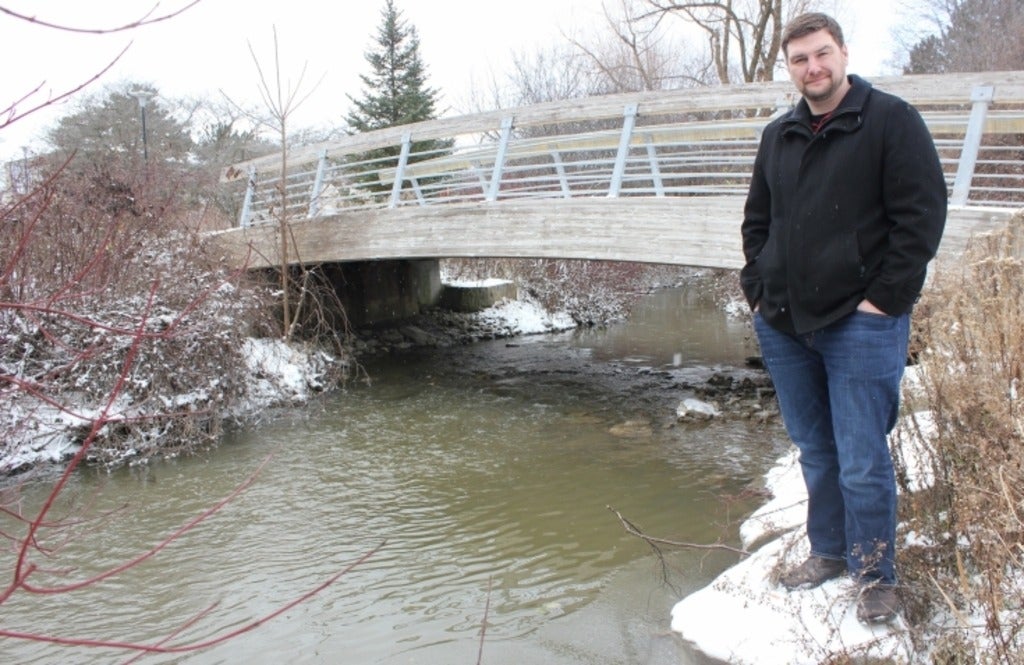
The true north strong and free. It’s a well-worn phrase evoking soaring mountains, verdant forests, rocky coasts and golden plains. But Canada also has a massive wet, marshy, boggy, ignored landscape known as peatlands. They may not have made it into our national anthem, but according to Water Institute member and professor in Waterloo's Department of Geography and Environmental Management, Maria Strack, they could be one of Canada’s secret weapon to fight climate change.  

Water Institute member explains how and why during 40th annual Forest Industry  Lecture

Monica EmelkoOn November 2, 2017, Waterloo Engineering professor and Water Institute member, Monica Emelko, delivered the 40th annual Forest Industry Lecture at the University of Alberta, "Strategic Importance of Canada’s Forests in National Drinking Water Security." The lecture is now available online (see bel

Friday, March 23, 2018 2:00 pm - 2:00 pm EDT (GMT -04:00)

2018 Darcy Lecture: Prof. Masaki Hayashi

Alpine Hydrogeology: The Critical Role of Groundwater in Sourcing the Headwaters of the World

Professor Masaki Hayashi
Department of Geoscience, University of Calgary
Canada Research Chair in Physical Hydrology

Everyone welcome - refreshments served.

Thursday, March 8, 2018 1:00 pm - 2:00 pm EST (GMT -05:00)

Wetland Water Storage: Drivers and Functions at Varying Spatial Scales

Daniel McLaughlin, an assistant professor in Virginia Tech's Department of Forest Resources and Environmental Conservation, will be presenting a WaterTalk on "Wetland Water Storage: Drivers and Functions at Varying Spatial Scales."

Register today.

Monday, June 4, 2018 8:01 am - Saturday, June 9, 2018 4:00 pm EDT (GMT -04:00)

Principles of Hydrologic Modelling - short course

This course addresses the development of computational models of watershed hydrology in support of water resources management and scientific investigation. The full model development and application cycle is considered: pre-processing, understanding, and generating input forcing data; system discretization and algorithms for simulating hydrologic processes; parameter estimation; and interpreting model output in the context of often significant system uncertainty.

Thursday, March 22, 2018 7:00 pm - 9:00 pm EDT (GMT -04:00)

Wild Weather Talks and Roundtable: Our Changing Climate

Region of Waterloo Museum building

Join three of our Water Institute members at the Waterloo Region Museum for a special presentation and roundtable discussion about climate change in the Region of Waterloo and across the globe.