Tuesday, January 2, 2018
Water Institute member named to the Order of Canada

As part of the Water Institute's WaterTalks lecture series, Barbara Sherwood Lollar, University Professor in Earth Sciences at the University of Toronto, presents, "Exploration of the Earth’s Deep Hydrogeosphere and Subsurface Microbial Life."
Light refreshments will be provided.
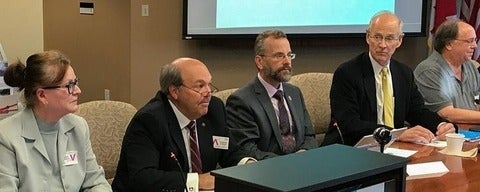
Water Institute member Rob De Loë shares his experience as a professor in the School of Environment, Resources and Sustainability and his involvement as the Canadian Co-Chair in the International Joint Commission’s Great Lakes Water Quality Board.
Professor Mark Servos, Canada Research Chair in Water Quality Protection and professor of Biology, Nandita Basu, professor in the Departments of Earth and Environmental Sciences and Civil and Environmental Engineering, and post-doctoral fellow, Kim Van Meter, were prominently featured in Kitchener-Waterloo’s local newspaper.
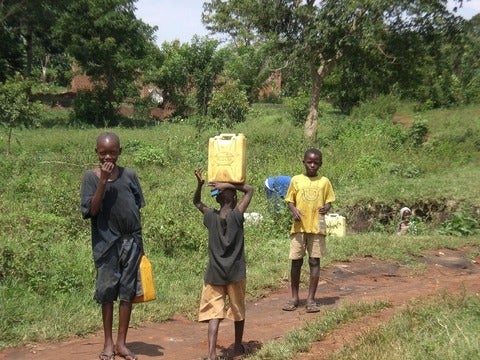
Today, 4.5 billion people live without a household toilet that safely disposes of their waste. World Toilet Day, which took place on Sunday, November 19, is about inspiring action to tackle the global sanitation crisis.

The University of Waterloo has entered into a partnership with the University of Alberta and Insituform Technologies to improve the maintenance of water distribution pipelines.
The partnership is part of the Alberta-Ontario Innovation Program(AOP)-NSERC program.
As part of the Water Institute's WaterTalks lecture series, Sharon Megdal, Director of The University of Arizona Water Resources Research Center, presents, "Groundwater governance and management research: Connecting researchers and practitioners."
Light refreshments will be provided.
Water samples taken from Lake Superior show that the Thunder Bay area appears to have a significant amount of plastic pollutants.
The samples were collected in 2014 as part of a fish survey on Lake Superior by an American research team.
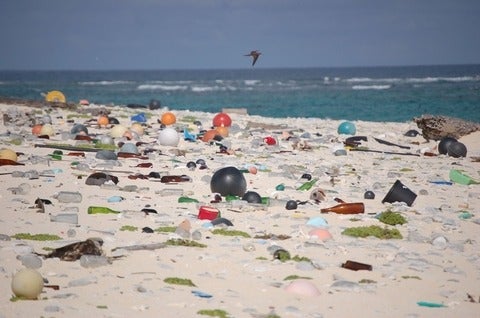
The presence and accumulation of plastic debris in the marine environment has seen a substantial increase, with global production of plastics having grown exponentially in the last 60 years, from 1.5 million tons of plastics around 1950 to more than 300 million tons annually in 2014. In 2010 alone, estimates show that between 4.8 and 12.7 million tons of plastic litter entered the marine environment (UNEP and GRID-Arendal, 2016. Marine Litter Vital Graphics. United Nations Environment Programme, Nairobi, Kenya).
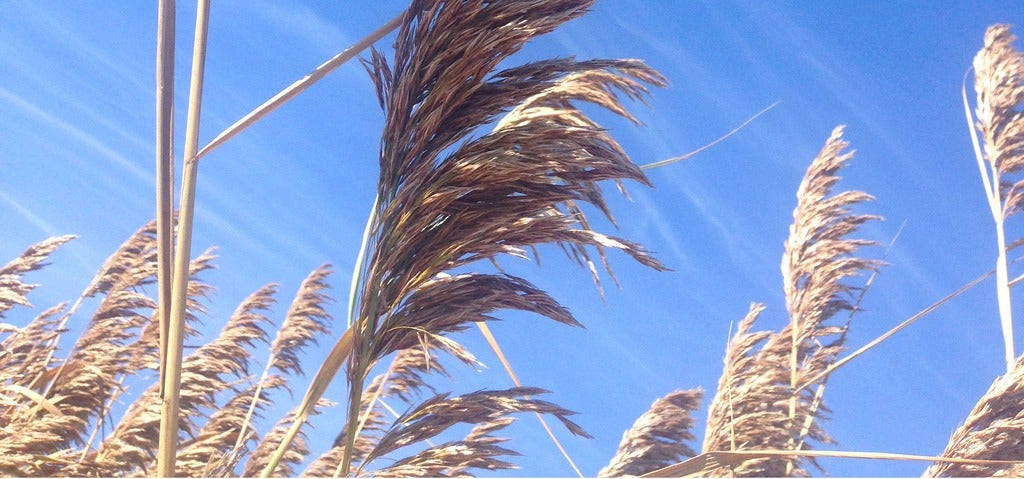
Rebecca Rooney, Water Institute member and professor in the Department of Biology, studies wetlands ecology. Her work supports the implementation of invasive species management and the protection of species at risk. Currently, Rooney is exploring the interactions between invasive species and species at risk, especially Phragmites australis, which is considered one of the greatest dangers to coastal marshes.