PhD student addresses drinking water security challenges related to natural disturbances

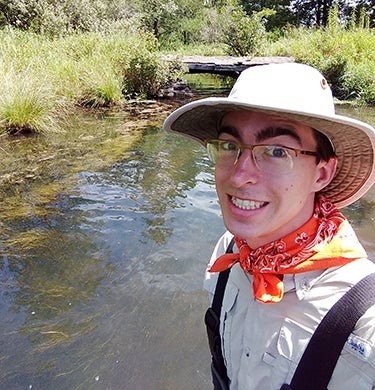
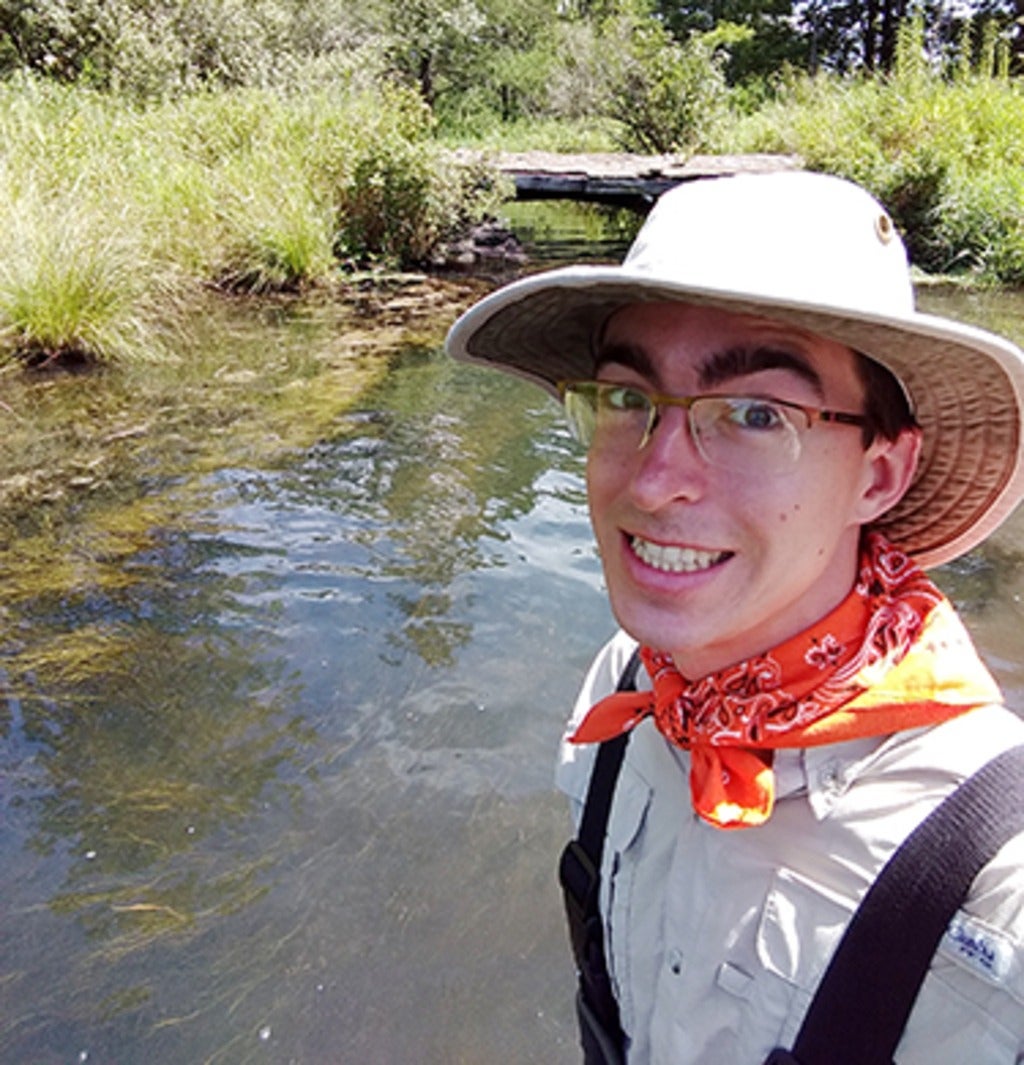
Tyler Hampton in the midst of field research, Augusta Creek, Michigan.

Tyler Hampton in the midst of field research, Augusta Creek, Michigan.

With the right information and often for less than $250, homeowners can protect themselves from the increasing risks of basement floods, according to a report from the University of Waterloo.
Water Institute member Blair Feltmate, professor in Waterloo's School of Environment, Enterprise and Development and the head of the Intact Centre on Climate Adaptation at the University of Waterloo, is part of a new Pan-Canadian Expert Collaboration team on climate change, green energy, and adaptation.
Authored by: Water Institute member, Fereidoun Rezanezhad, Assistant Professor in the Department of Earth and Environmental Sciences, University of Waterloo and Principal Investigator in the Global Water Futures project, Winter Soil Processes in Transition.
Water Institute member Blair Feltmate points to the study's predictions for quadrupling of flooding along the Halifax waterfront as sea levels rise 20 centimetres over current levels by mid century.
Feltmate, head of the Intact Centre on Climate Adaptation at the University of Waterloo, said in an interview Friday that projections of 75 centimetres to one metre of relative sea level rise for the East Coast by the end of the century are “a wake up call and a call to arms.”

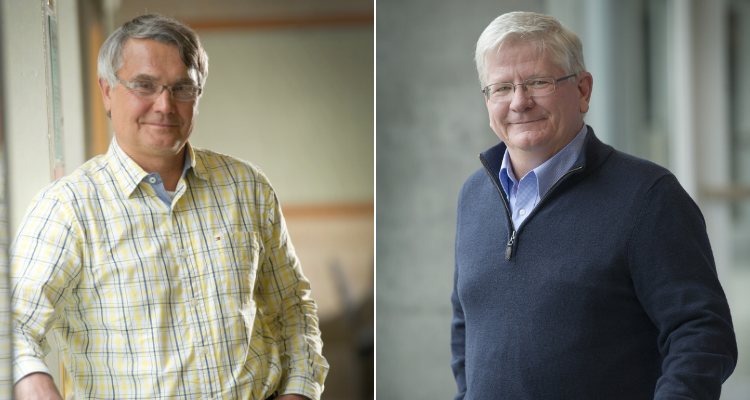
Professor Janusz Pawliszyn, Professor Mark Servos
The University of Waterloo has been recognized for its social and economic impact related to its United Nations Sustainable Development Goals (SDGs) commitments.
Antiquated city infrastructure not built to withstand changing climate, says Water Institute member Jason Thistlethwaite.
Canada's warming temperatures will result in more expensive and less comfortable city living, an environment and business expert warns.
Earth is warming. The vast majority of climate scientists have spent many years warning the public of that reality and the dangers it poses for life on our fragile planet.
Now, there’s evidence that Canada will experience the effects of climate change more severely than many other regions of the globe.
"Canada's climate has warmed and will warm further in the future, driven by human influence,” reads a new report commissioned by Environment and Climate Change Canada. “Both past and future warming in Canada is, on average, about double the magnitude of global warming.”
Water Institute member Blair Feltmate, Head of the Intact Centre on Climate Adaptation, comments on the new report in an interview with CBC.
Canadian meteorologists who deliver the evening news are interested in educating Canadians about the increasing impacts of climate change.
A recent study from the University of Waterloo found that television weathercasters are increasingly interested in getting into climate change journalism, as opposed to just forecasting current conditions, but face a number of barriers to taking on the role.