New online water economics seminar series launched
The editors of two leading international water economics journals, Water Resources and Economics and Water Economics and Policy, have joined forces to launch a new online seminar series named SWELL.

With the right information and often for less than $250, homeowners can protect themselves from the increasing risks of basement floods, according to a report from the University of Waterloo.
Underscores value of citizen science and linking with stakeholders to refine and share research results
Nearly 95,700 Great Canadian Shoreline Cleanup volunteers hauled approximately 263,000 kilograms of litter from Ontario shorelines between 2010-17. Volunteer citizen scientists have logged the amounts and types of litter they have found during their community cleanups, however this information has not often been utilized by researchers to explore notable trends over extended time periods.
The State of São Paulo, Brazil has faced severe water shortages in the recent past and may be heading towards another water crisis. During this time, the Water Institute has partnered with local stakeholders to help investigate some of the most important aspects of water security in São Paulo, and new and fortified partnerships are driving these initiatives forward.
Danielle Lindamood and Irene Brueckner-Irwin have had a passion for water for as long as they can remember. It’s what led them to become actively involved in the Water Institute, and what inspired them to launch a unique, online platform that shares the incredible impacts of people working in the water-related fields with a particular focus on women.

According to the World Health Organization, 2.1 billion people lack access to safely managed drinking water. Without safe drinking water, people are at risk of contracting water-borne diseases, which are responsible for more than 3.4 million deaths each year.
Located in northeast Alberta, the Peace-Athabasca Delta (PAD) is one of the most magnificent wetlands in the world. Serving as the junction of four major North American waterfowl migratory routes, millions of ducks and geese descend to feed and nest here each summer.

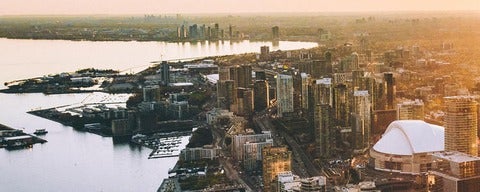
Institutions around the Great Lakes gathered at the 2018 AquaHacking semi-finals in Toronto to present their solutions for the issues facing the Great Lakes. Competing teams were given five minutes to pitch their idea to judges throughout the afternoon at the RBC WaterPark Place.
Five of the 16 teams that competed were selected to move on to the finals in October, including a University of Waterloo team, WaterPuris, that is tackling the issue of endocrine disrupting chemicals (EDC) in our Great Lakes.
There are 700 million people in 43 countries currently suffering from water scarcity. By 2025, 1.8 billion people are expected to be living in countries or regions with absolute water scarcity.
On June 17-20, Water Institute members and water experts from around the world are gathering in Toronto to discuss issues of water security at the First International Conference on Water Security.