News

Filter by:

Limit to news where the title matches:
Limit to items where the date of the news item:
Date range
Limit to news items where the audience is one or more of:

Amblyopia, also known as lazy eye, is a condition where one or both eyes have impaired vision because the eyes and brain aren’t working together properly. In North America, it is estimated that amblyopia affects up to four per cent of the population and is one of the most common vision disorders in children. 

Dry eye disease is a chronic condition that occurs when an individual does not produce enough quality tears to properly lubricate their eyes. It is estimated that up to 30% of Canadians suffer from dry eye. In the coming years, this number is expected to increase as the population ages. 

Wednesday, June 26, 2024

A robot friend for vision treatment

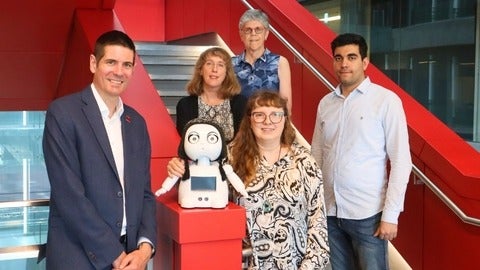
An interdisciplinary group of University of Waterloo researchers is trying to improve adherence to 'lazy eye' treatment through use of a social robot that can educate and motivate children and their caregivers.

Wednesday, June 12, 2024

Taking the temperature of the eye

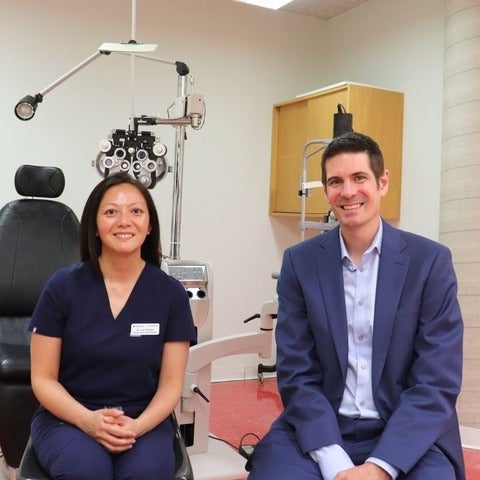
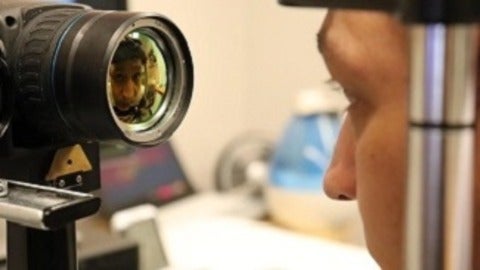
Taking your temperature can often help a healthcare practitioner figure out if you’re sick. A new University of Waterloo spinoff company aims to do something similar with your eyes.

Friday, June 7, 2024

From eye patch to robots

An interdisciplinary team including Drs. Ben Thompson (PI), Lisa Christian and Marlee Spafford are using socially interactive technology to improve health outcomes in children with amblyopia.

Read the full story here.

Myopia, more commonly known as nearsightedness, not only causes blurry vision, it puts patients at higher risk of vision loss. These days, children's myopia can be controlled using special glasses, contact lenses or eyedrops. Dr. Debbie Jones explains how.

Friday, April 19, 2024

Longtime clinic mentor retires

Dr. Stephen Tait is retiring both from his 40-year part-time role as a clinical supervisor at the School of Optometry & Vision Science and from his private practice.