
This paper provides an overview of the quality landscape in higher education and work-integrated learning and presents an updated work-integrated learning quality framework: AAA★.
This paper provides an overview of the quality landscape in higher education and work-integrated learning and presents an updated work-integrated learning quality framework: AAA★.

The job search is stressful—especially for first-year co-op students. New research explores how students respond to early work-integrated learning stressors and what helps them cope.

This study explored whether students’ approaches to learning at work explain the relationship between lifelong learning characteristics (LLCs) and work adjustment. This was determined by collecting data via 2 surveys, one at the beginning of the coop term and one at the end of the coop term, to measure students' approaches to learning at work. We found that approaches to learning are a strong candidate for explaining lifelong learners’ successful organizational entry.

Students from equity-deserving groups (EDGs) may face barriers in work-integrated learning (WIL). This study aimed to identify these barriers experienced by WIL students on a co-op journey from various EDGs. Analyses revealed that students from EDGs faced both structural and non-structural barriers on their co-op journey. The results of this study highlight the need for solutions and action to address these barriers by all WIL stakeholders.

Between 2020 and 2022, the University of Waterloo rapidly hired and trained over 1000 undergraduate co-operative education (co-op) students as part of the Online Learning Assistant (OLA) Program, to support faculty (i.e., course instructors) in the transition to online teaching. Our research findings suggest that these co-op hires were incredibly beneficial to many faculty, with their efforts ultimately leading to improvements in teaching and learning.
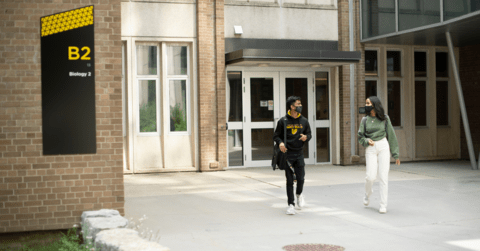
This research study explored the kinds of friendships co-op students make on work terms and how they are impacted by remote work. We also examined the impacts of these friendships on outcomes that are important to both students and employers.
The Future Ready Talent Framework (FRTF) is a research-backed tool to help students, employers and educators understand the key competencies we all need to navigate the future of work and learning. The FRTF is a competency framework that was developed through extensive research into existing frameworks, studies and reports, and validated through our network of employers, students and fellow educators.
The Co-operative Education and Work-Integrated Learning (CEWIL) Resource Hub is a website developed for all stakeholders involved in work-integrated learning (WIL): students, practitioners, employers, and educators.

One of the most important aspects in successful student recruitment is an understanding of what students value in the workplace.

With partners at Macquarie University in Australia and Auckland University of Technology in New Zealand, the principal researchers developed a framework for the factors that are critical to sustainable partnerships in work-integrated learning (WIL).