
The Artificial Intelligence (AI) Group at the David R. Cheriton School of Computer Science conducts research in many areas of artificial intelligence. Faculty members of the group have active interests in: models of intelligent interaction, multi-agent systems, natural language understanding, constraint programming, computational vision, robotics, machine learning, and reasoning under uncertainty.
The AI Group also has a particular investment in Societal AI.

Maura R. Grossman recognized for work at intersection of law, data governance, and AI
Research Professor Maura R. Grossman has received two recognitions highlighting her scholarly contributions at the intersection of law, data governance, and artificial intelligence.
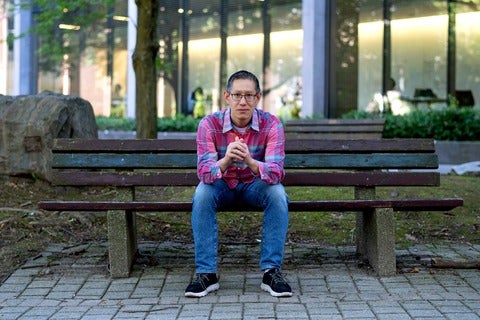
Professor Jimmy Lin appointed Fellow of the Royal Society of Canada
Professor Jimmy Lin has been named a 2026 Fellow of the Royal Society of Canada, the nation’s highest honour for scholars, artists and scientists.
He is among 105 individuals across Canada, and seven at the University of Waterloo, elected as RSC Fellows this year in recognition of their exceptional scholarly, scientific and artistic achievements.
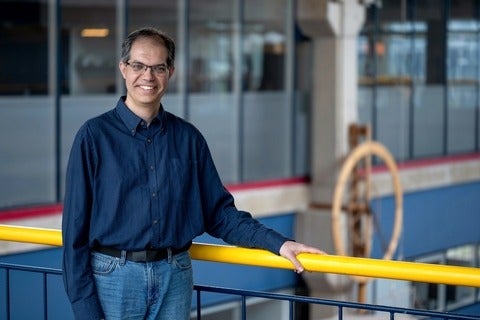
Pascal Poupart awarded $170k NSERC Alliance Grant to develop an agentic system to automate internal workflows
Professor Pascal Poupart has been awarded $170,000 through the NSERC Alliance Grant program.
This funding is complemented by $85,000 from industry partner Manulife Financial, bringing the total project support to $255,000. Manulife is also providing significant in-kind contributions, including synthetic data, technical infrastructure for simulated business environments, and access to its technical experts.