Dixie White-topped Aster
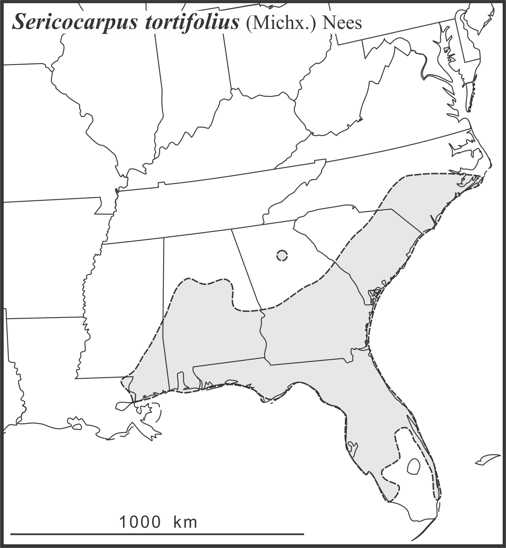
Sericocarpus tortifolius (Michx.) Nees is native to dry to moist clay, sandy and gravelly open soils in oak and pine barrens, oak scrub, pastures, and roadsides of the southeastern U.S. from North Carolina to eastern Louisiana mostly on the coastal plain . The species is distinguished by its moderately to densely short-hairy stems and leaves, obovate leaves the longest 30 mm or less, and phyllaries in strongly graduated series (Semple and Leonard 2006 FNA). The species is diploid (2n=18).
Sericocarpus tortifolius has been treated in the literature as Aster tortifolius Michx., Conyza bifoliatus Walter, Aster bifoliatus (Walter) H. E. Ahles, Sericocarpus acutisquamus (Nash) Small, S. bifoliatus(Walter) Porter, and S. collinsii Nutt.
Last revised 9 May 2025 by J.C. Semple
© 2025 J.C. Semple, including all photographs unless otherwise indicated


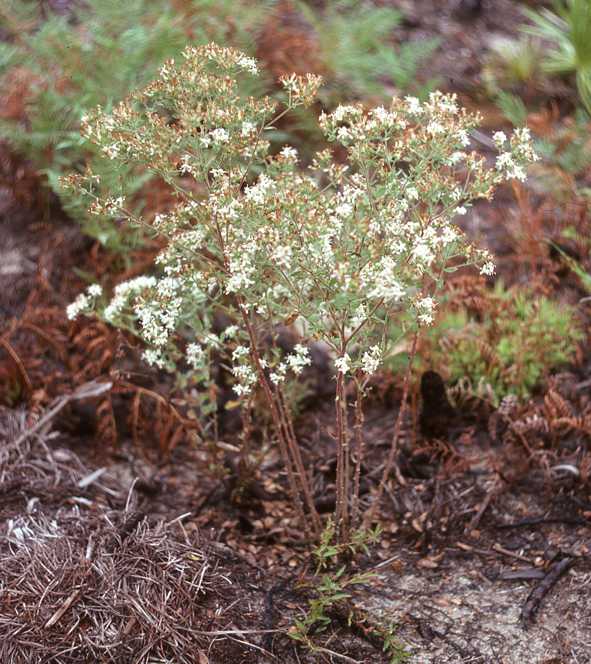

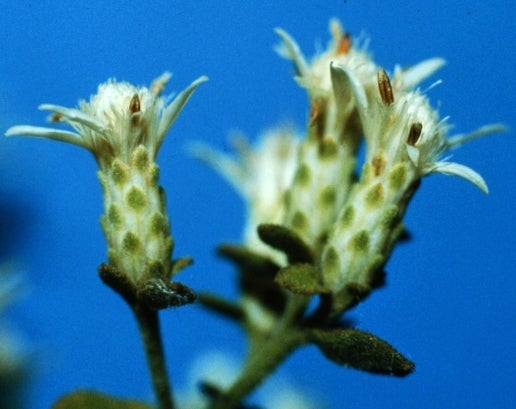
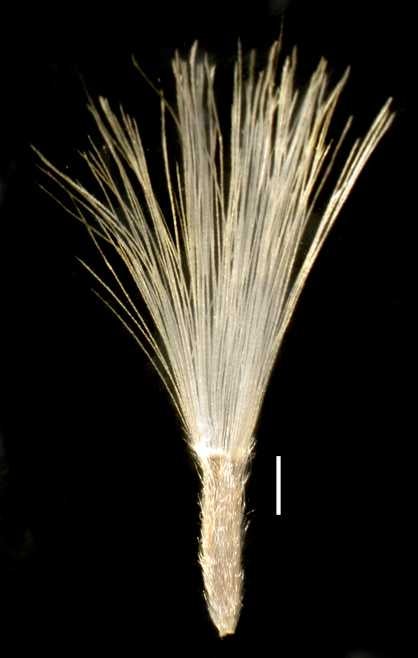
1-4. Sericocarpus tortifolius. 1. Habit, Calhoun Co., Florida. 2. Rhizome and inflorescence, Semple 10923, Franklin Co., Florida. 3. Heads, Semple 2494, Florida. 4. Fruit, Semple et al. 3931, Suwannee Co., Florida. 5. Range map.