Schreber’s Aster
Eurybia schreberi (Nees) Nees is native to damp to mesic deciduous (maple, elm, oak), mixed woods, thickets, shaded roadbanks from Ontario to southern Maine south to Alabama in many disjunct populations and in several disjunct areas in southeastern Wisconsin and northern Illinois (Brouillet 2006 FNA). The species is distinguished by its large narrow cylindrical involucres of appressed glandless linear oblong-lanceolate phyllaries and white ray florets. It blooms generally earlier than E. macrophylla. It is similar to diploid E. divaricata and octoploid E. macrophylla. The species is hexaploid (2n=54).
Eurybia schreberi is rare or extirpated in a many states at the northern limit of its range and introduced in Europe (Scotland; Brouillet 2006 FNA).
The following are synonyms: Aster schreberi Nees, Biotia glomerata (Nees) DC., Biotia schreberi (Nees) DC. Eurybia glomerata Nees, Aster chasei G.N. Jones.
Semple, J.C., S.B. Heard and L. Brouillet. 2002. Cultivated and native asters of Ontario (Compositae: Astereae): Aster L. (including Asteromoea Blume, Diplactis Raf. and Kalimeris (Cass.) Cass.), Callistephus Cass., Galatella Cass., Doellingeria Nees, Oclemena E.L. Greene, Eurybia (Cass.) S.F. Gray, Canadanthus Nesom, and Symphyotrichum Nees (including Virgulus Raf.). U.Waterloo Biology Series 41: 1-134.
Last revised 12 May 2025 by J.C. Semple
© 2025 J.C. Semple, including all photographs unless otherwise indicated


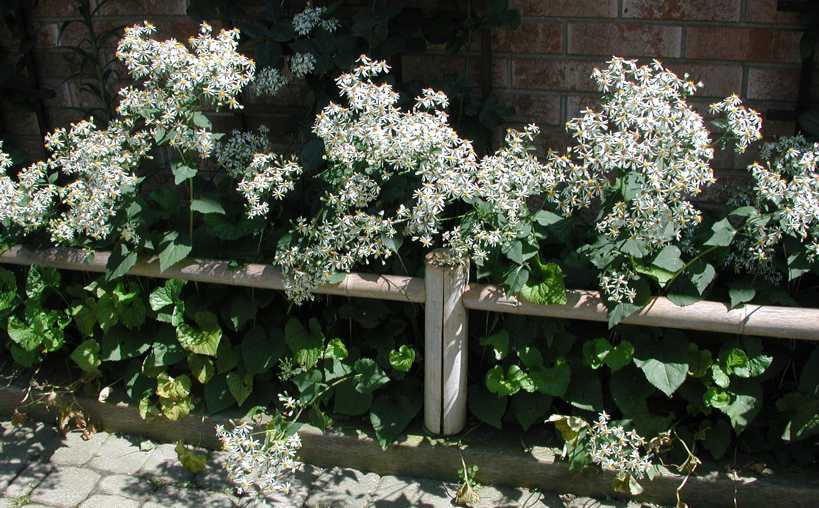
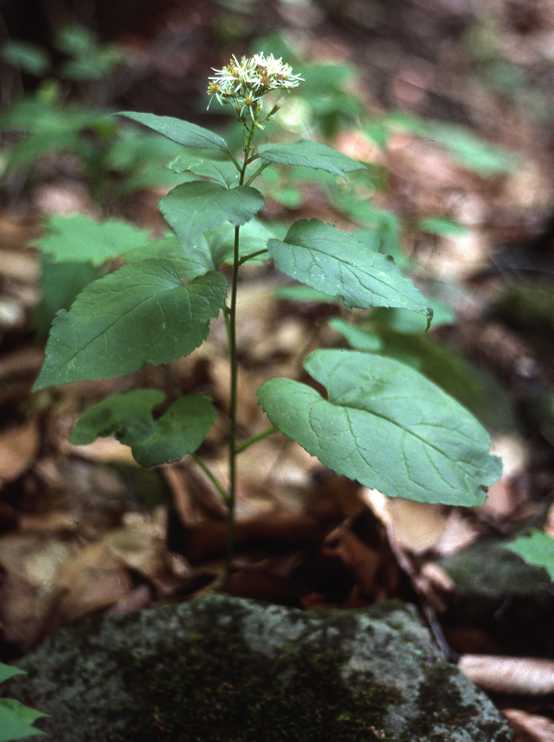
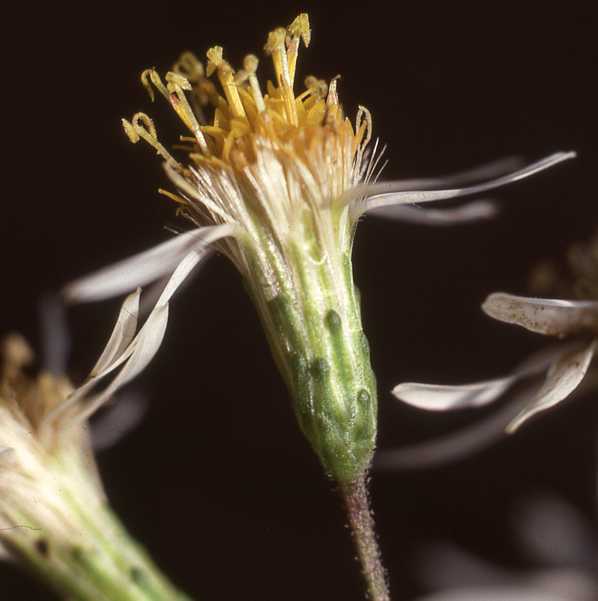
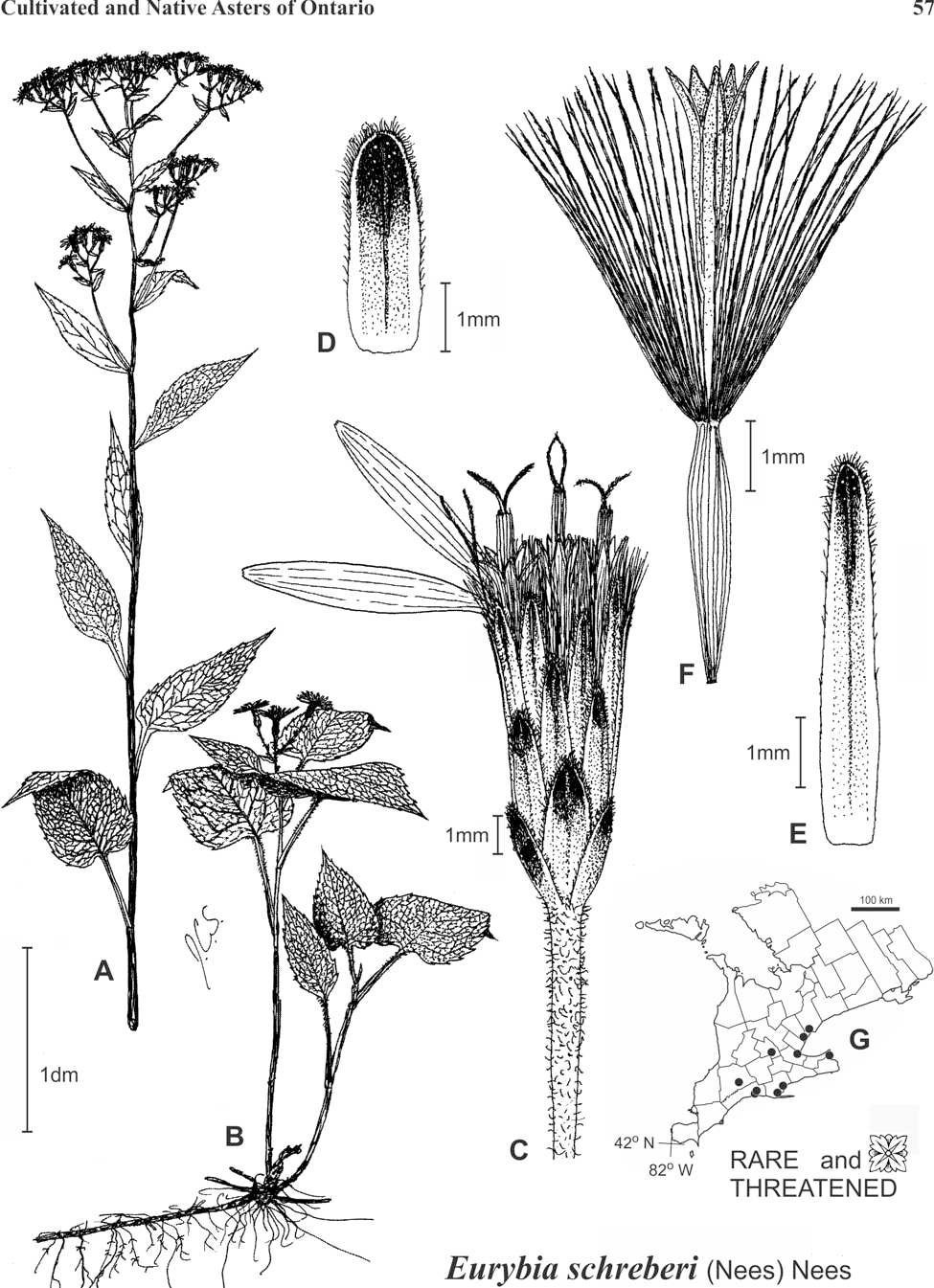
1-4. Eurybia schreberi. 1. Shoots, cultivated in garden, Waterloo, Ontario. 2. Habit, Semple 9047, Ontario. 3. Head, cultivared in garden. 4. Fig. 27 in Semple et al. (2002) showing morphology and distribution in Ontario.