Oblong-leaved Aster, Aromatic Aster
Symphyotrichum oblongifolium (Nutt.) G.L. Nesom is native to open, dry, rocky, sandy, gravelly, or shaly soils, limestone glades and outcrops, sandstone or calcareous cliffs, open-wooded bluffs, prairies, pastures, dunes, roadsides on the prairies and in habitats from Montana to Pennsylvania south to Texas and central Alabama (Brouillet et al. 2006 FNA). The species is distinguished by its stipitate-glandular upper stems, leaves, peduncles and phyllaries, rhizomatous rootstocks, oblong obtuse leaves, often foliaceous phyllaries, and violet-purple rays. Stem height is highly varied and very plastic with short plants occurring on the prairies and much more robust plants occurring in the eastern portion of the range. The species is diploid (2n=10) over most of its range and tetraploid (2n=20) in a broad zone from Minnesota to northern Arkansas (Semple 1984).
A cultivar of the species is available in the nursery trade cv. Raydon's Choice.
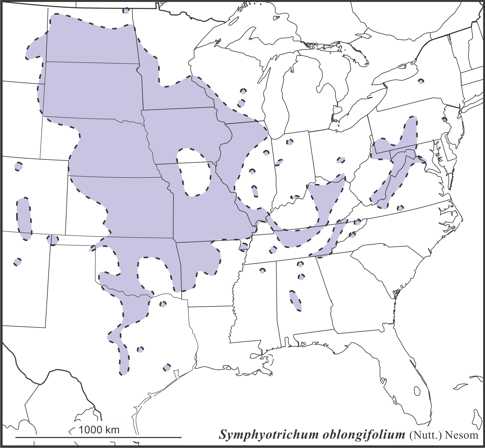
Semple, J.C. 1984. Cytogeographic studies on North American asters. I. range surveys of Virgulus adnatus, V. concolor, V. georgianus, V. grandiflorus, V. novae-angliae, V. oblongifolius, V.patens, and V.walteri. Amer. J. Bot. 71:522-531.
Last revised 16 May 2025 by J.C. Semple
© 2025 J.C. Semple, including all photographs unless otherwise indicated


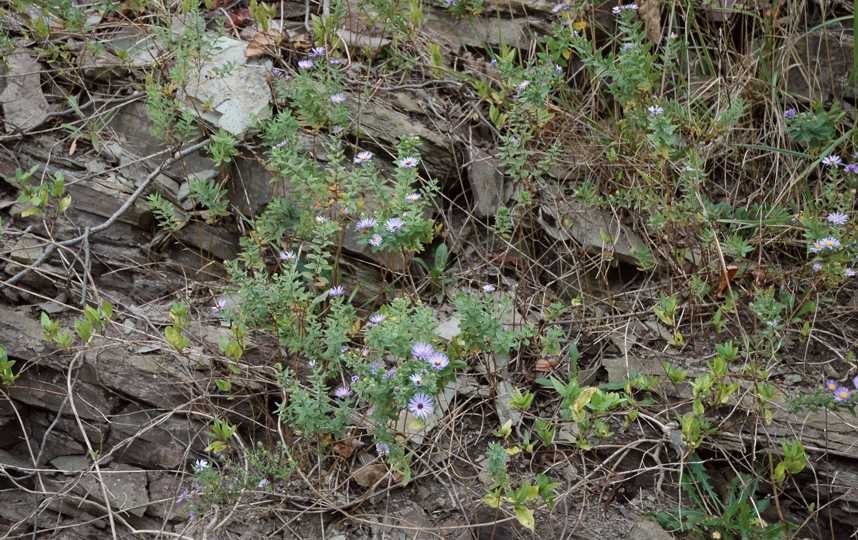
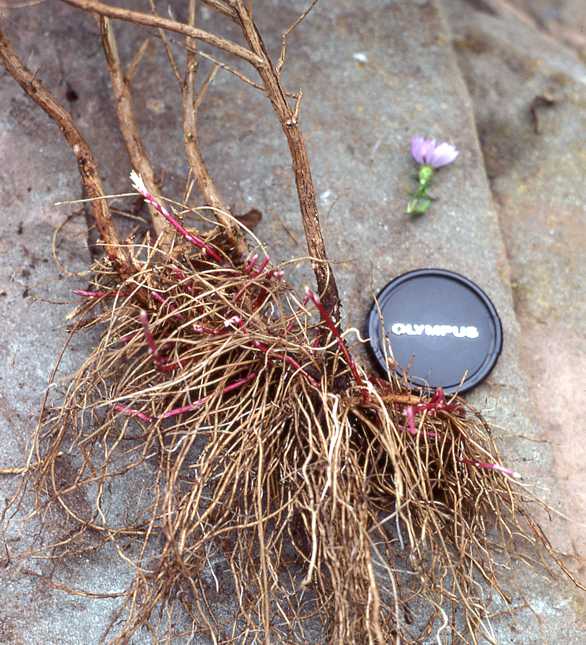
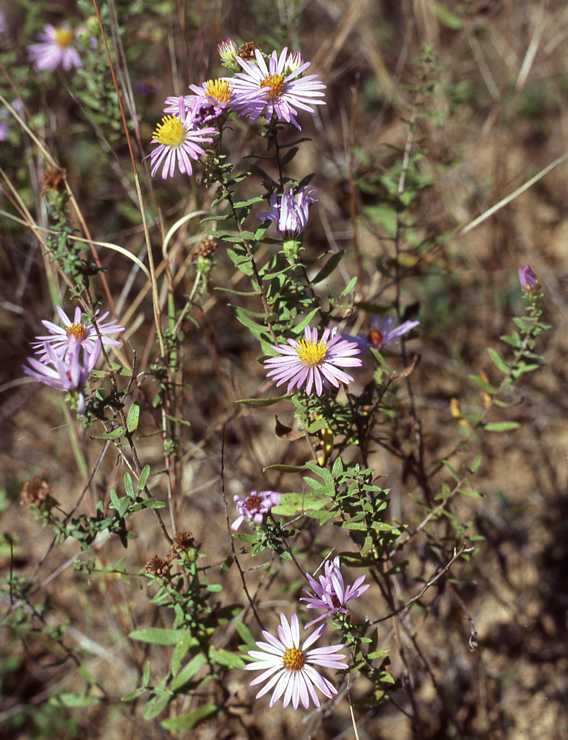
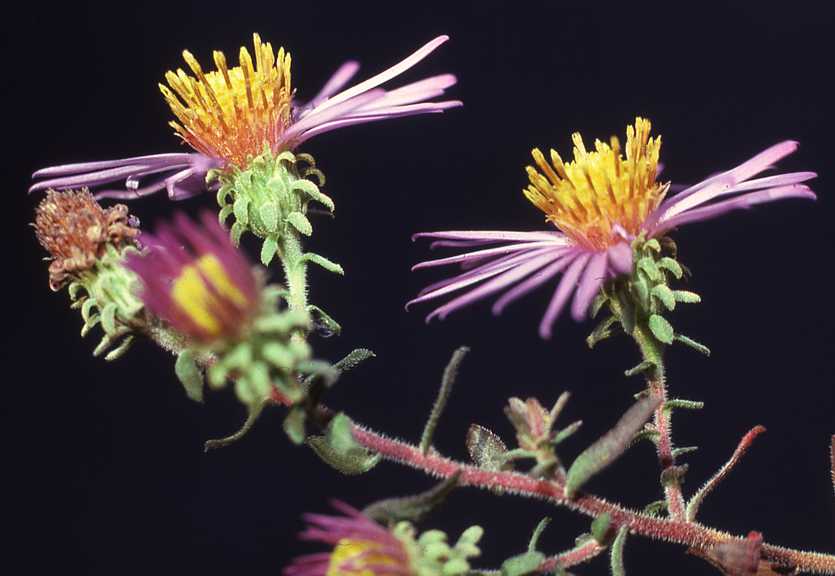
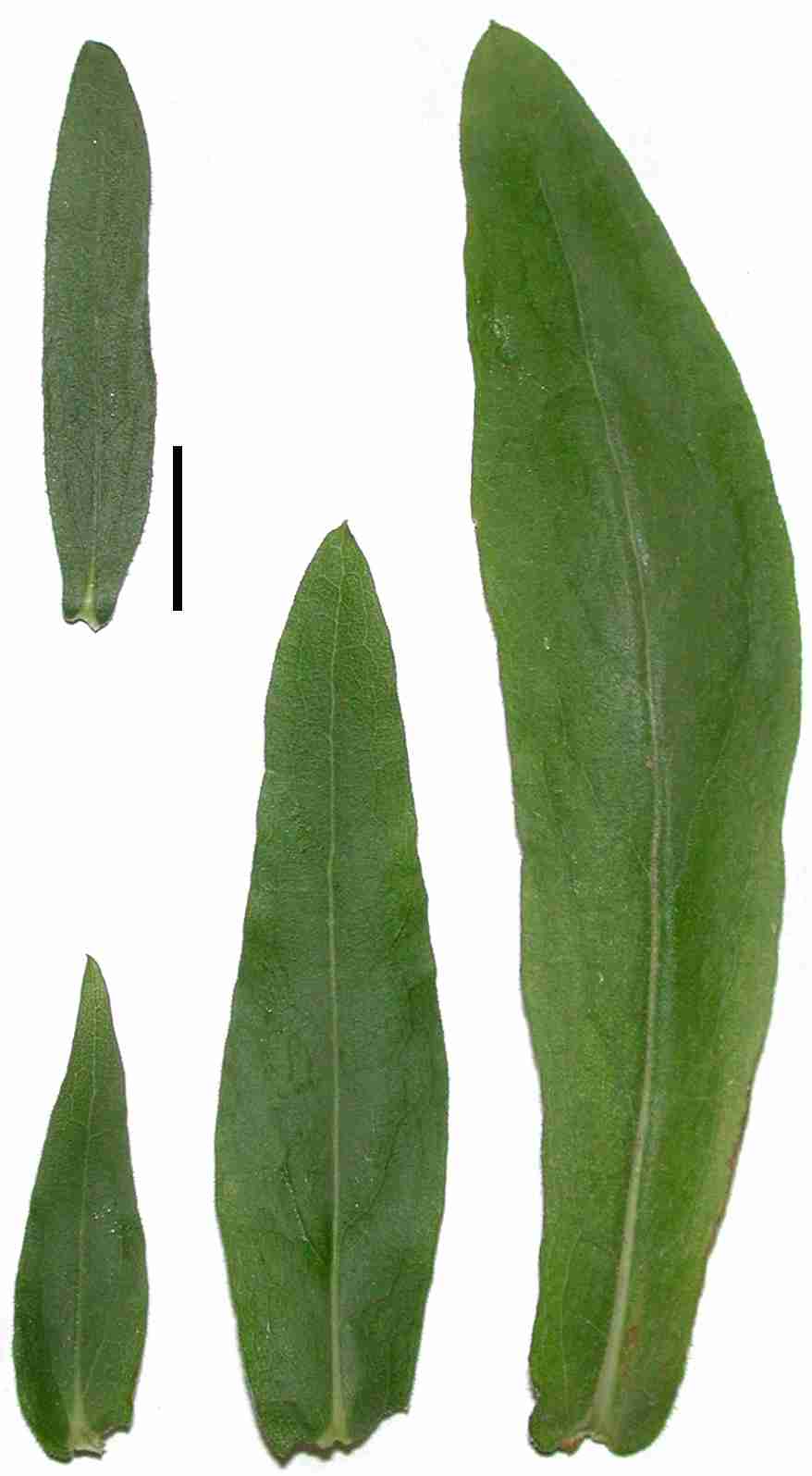
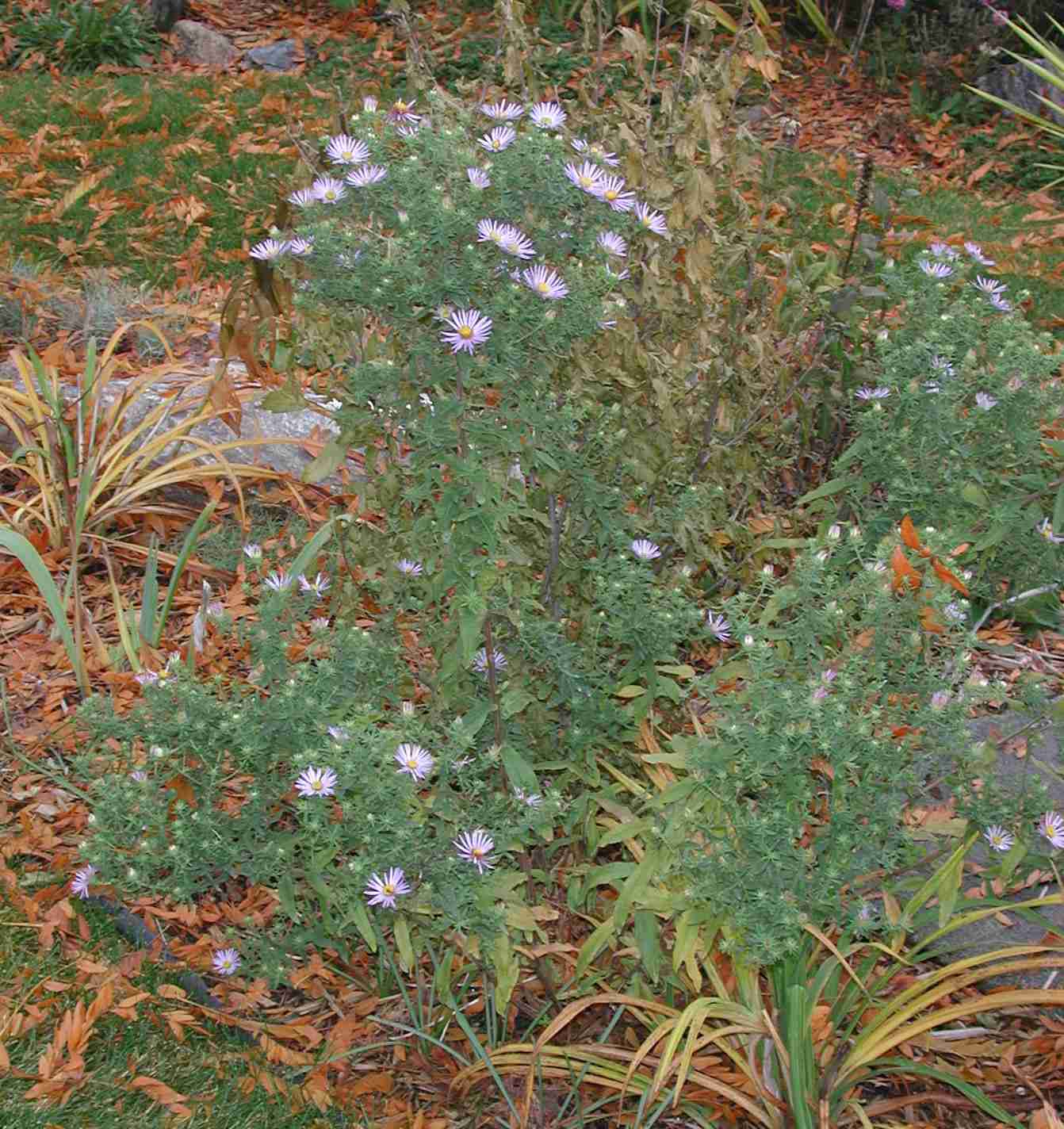
1-6. Symphyotrichum oblongifolium. 1. Habitat and habit, Semple 11563, Claiborne Co., Tennessee. 2. Woody stems and rhizomatous rootstock, Semple & Chmielewski 5855, Bedford Co., Pennsylvania. 3. Shoots and leaves, Semple & Chmielewski 6449, Milam Co., Texas. 4. Leaf series. 5. Heads, Times Beach, Semple & Brouillet 3742, St. Louis Co., Missouri. 6. Cultivar Raydon's Choice, Waterloo, Ontario.