Western Panicled Aster
Symphyotrichum lanceolatum (Willd.) Nesom var. hesperium (Gray) Nesom is native along streams and banks in prairies, wet meadows, open conifer forests in montane zone, and roadside ditches across the prairies, boreal forests and mountains of western Canada and near James Bay in Québec and the US (Brouillet et al. 2006; FNA). Ray florets are usually pale to dark purplish blue, sometimes white, while rays in the other varieties in the Sy. lanceolatum are usually or always white. The variety has also been treated as Symphyotrichum hesperium (A. Gray) Löve & Löve, Aster lanceolatus Willd. ssp. hesperius (Gray) Semple & Chmielewski, Aster ensatus Greene, Aster osterhoutii Rydb., Aster fluvialis Osterhout, A. lautus Lunell, Aster hesperius A. Gray var. wootonii Greene, Aster wootonii (Greene) Greene, and Aster coerulescens DC. var. wootonii(Greene) Wieg. The variety is hexaploid 2n=64 throughout its range.
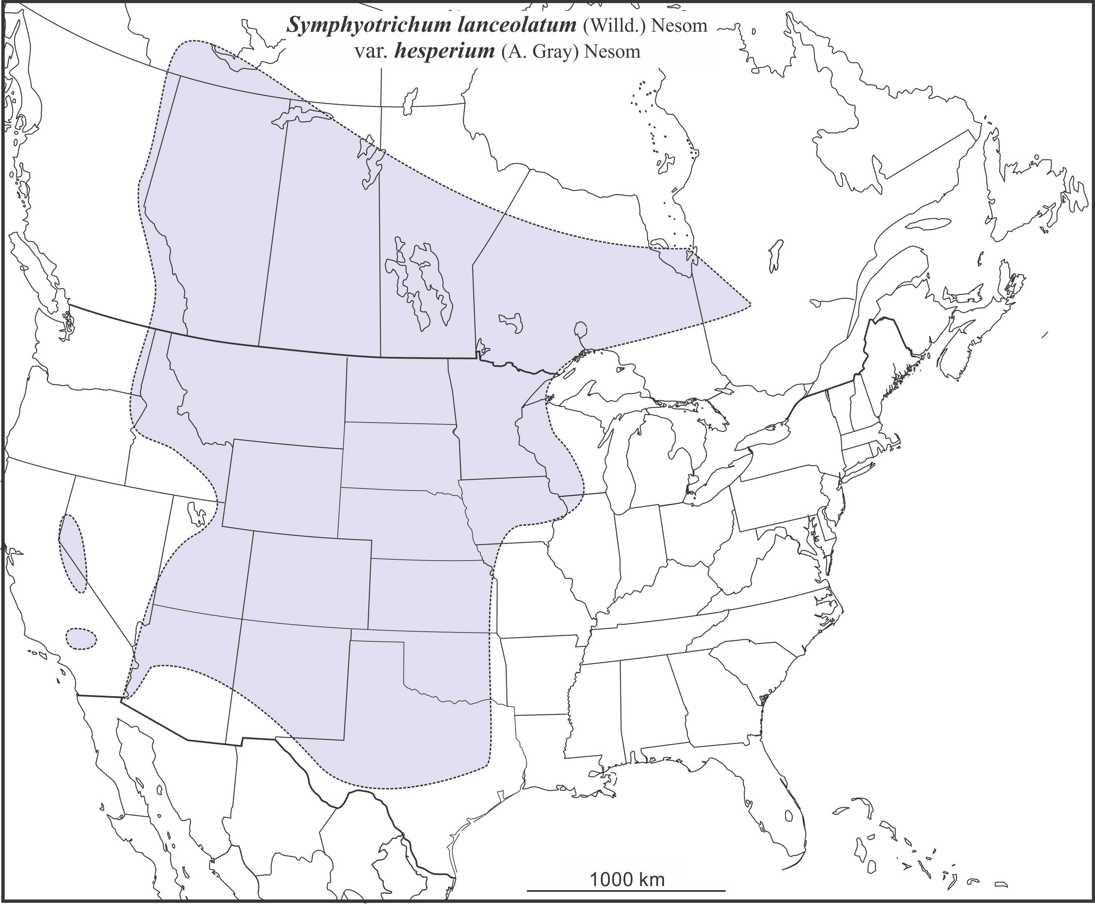
Last revised 14 May 2025 by J.C. Semple
© 2025 J.C. Semple, including all photographs unless otherwise indicated


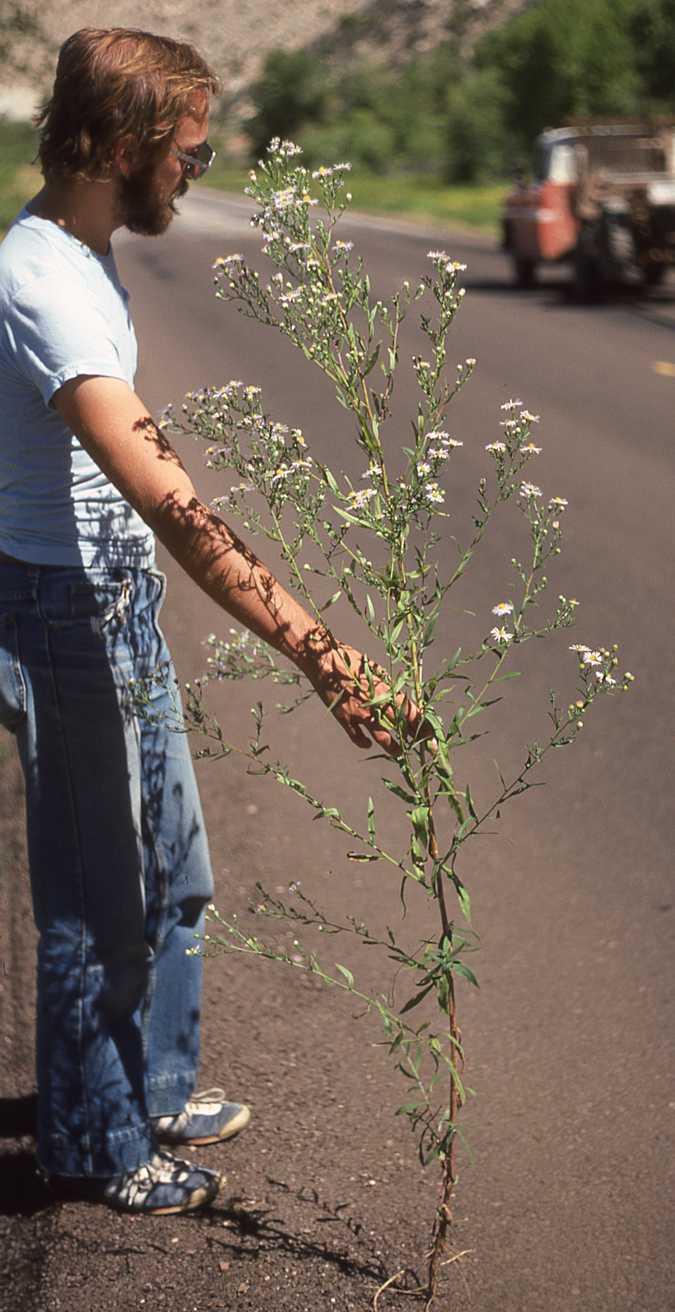
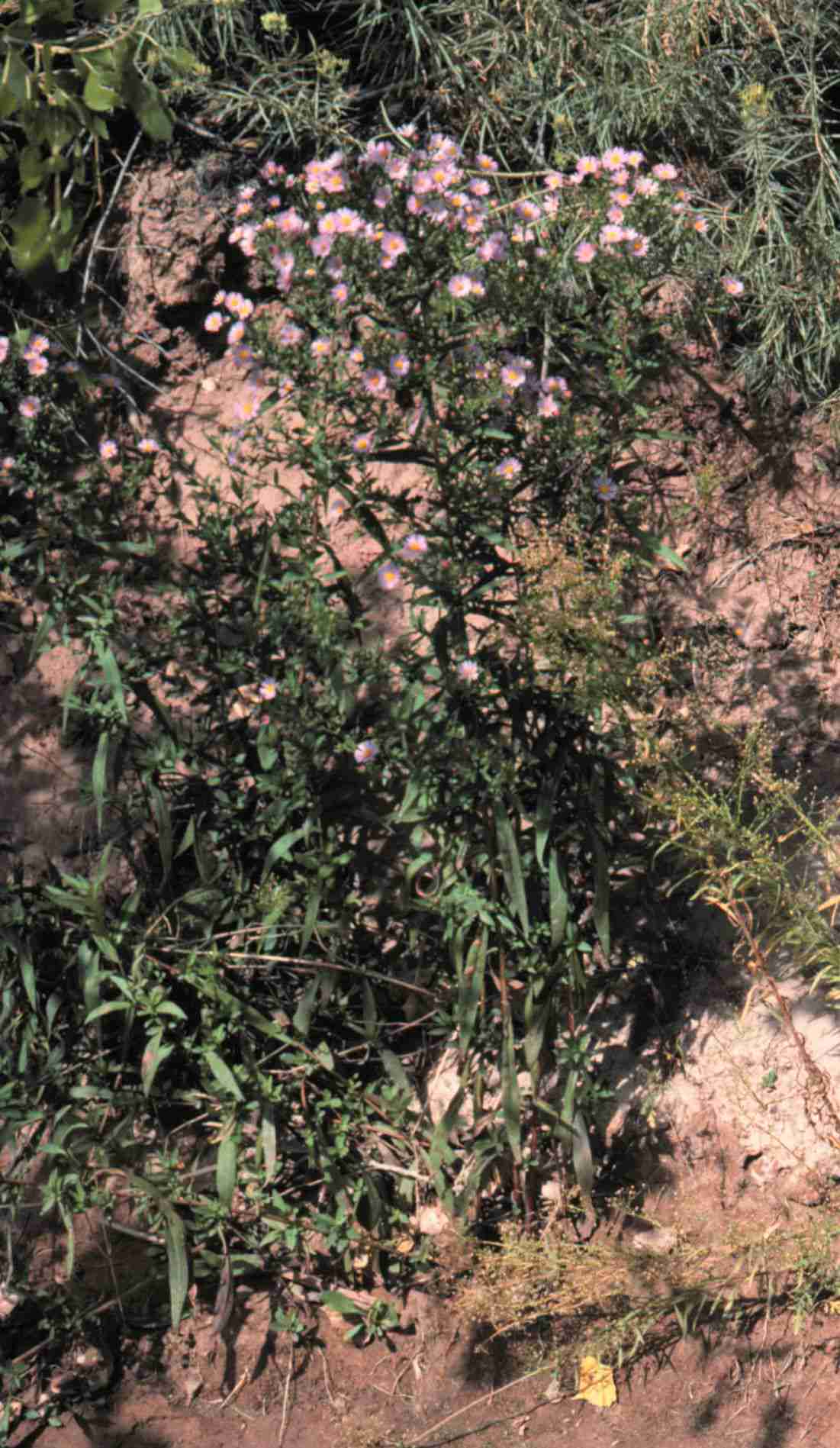
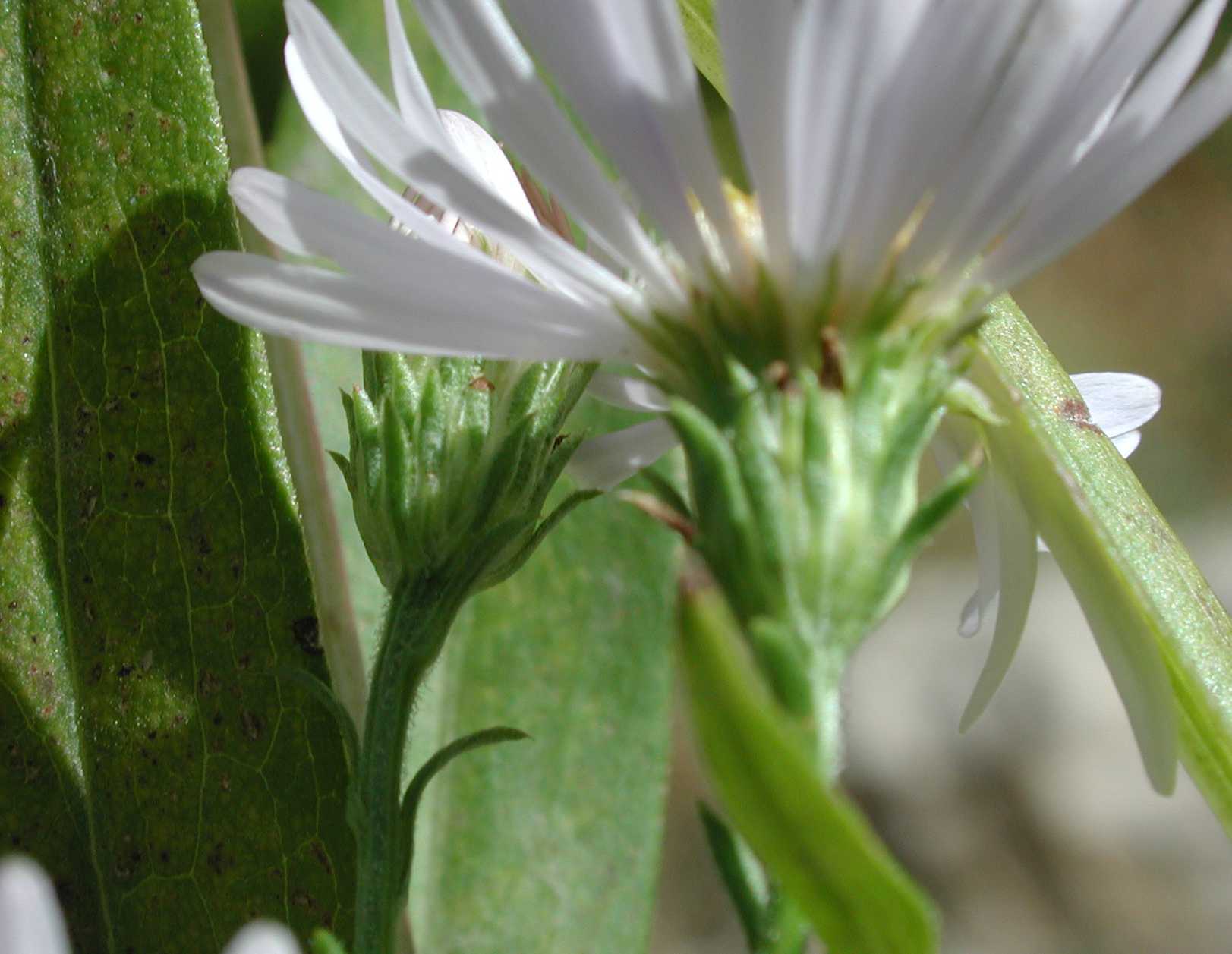
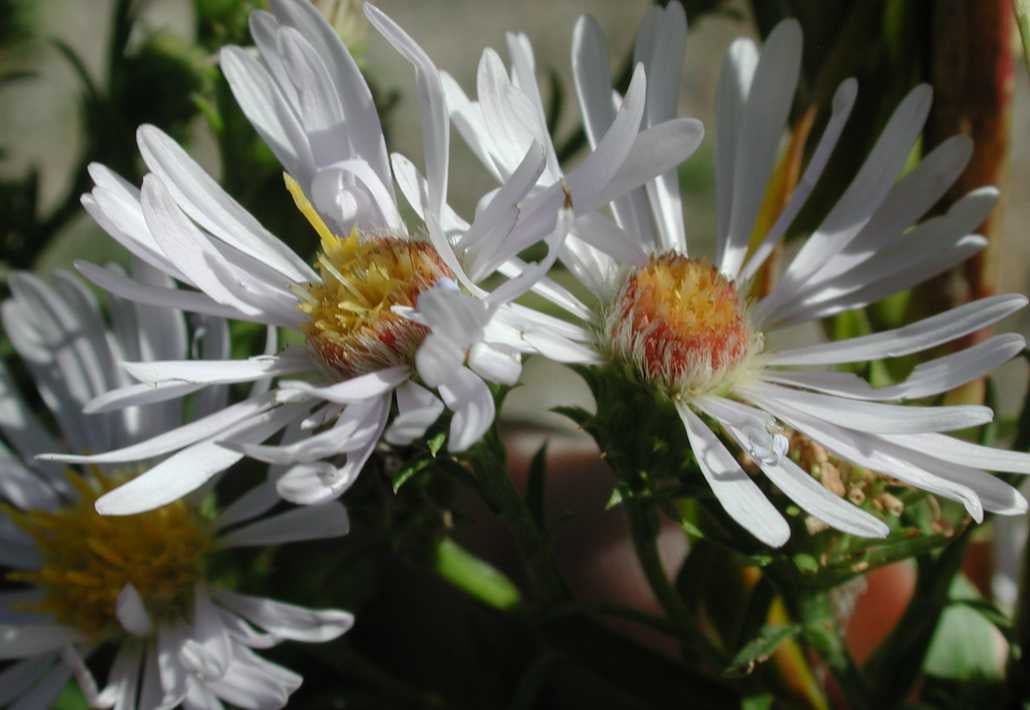
1-4. Symphyotrichum lanceolatum ssp. hesperium. 1. Shoot held by L. Brouillet, Semple & Brouillet 4444, Washokie Co., Wyoming. 2. Habit, Semple & Heard 7856, Washington Co., Utah. 3-4 Involucres and florets, Semple & B. Semple 11273, Utah Co., Utah.
Brouillet, L., J.C. Semple, G.A. Allen, K. Chambers and S. Sundberg. 2006. Symphyotrichum Nees. pp. 465-539. In Flora North America Editorial Committee, eds. Flora of North America. Vol. 20. Asteraceae, Part 2. Astereae and Senecioneae. Oxford University Press, New York.