Douglas’s aster
Symphyotrichum subspicatum (Nees) G. L. Nesom is a far western species extending down the western coast from Alaska to Monterey Bay, California and eastward in disjunct populations in the Front Range with populations in southern British Columbia-Alberta and in Idaho and adjacent eastern Washington. Plants have outer phyllaries that are usually acute (shorter than or equal to inner) and fruits that are 2–3.5 mm. It occurs in usually disturbed habitats. The species is a weedy, high polyploid assemblage, probably of allopolyploid derivation from different combinations of species including S. chilense, S. eatonii, S. foliaceum, S. laeve, and S. spathulatum. Hybrids with S. hallii are known from western Oregon. The species passes into S. foliaceum in southeastern Alaska (Brouillet et al. 2006 FNA).
The species includes hexaploids (2n=48), octoploids (2n=64), decaploids (2n=80), and duodecaploids (2n=96).
Brouillet, L., J.C. Semple, G.A. Allen, K. Chambers and S. Sundburg. 2006. Symphyotrichum Nees. pp. 465-539. In Flora North America Editorial Committee, eds. Flora of North America. Vol. 20. Asteraceae, Part 2. Astereae and Senecioneae. Oxford University Press, New York.
Last revised 14 May 2025 by J.C. Semple
© 2025 J.C. Semple, including all photographs unless otherwise indicated


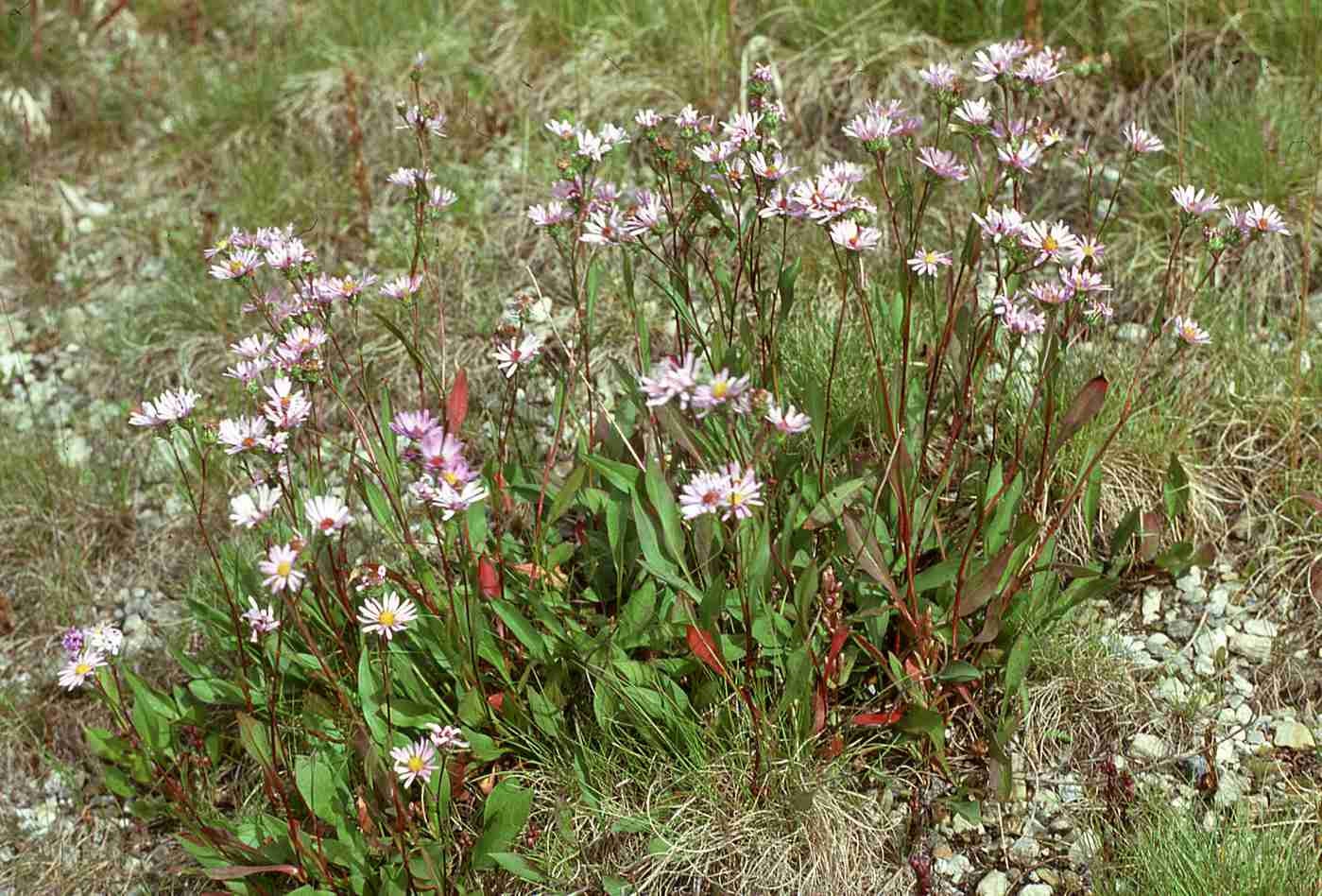
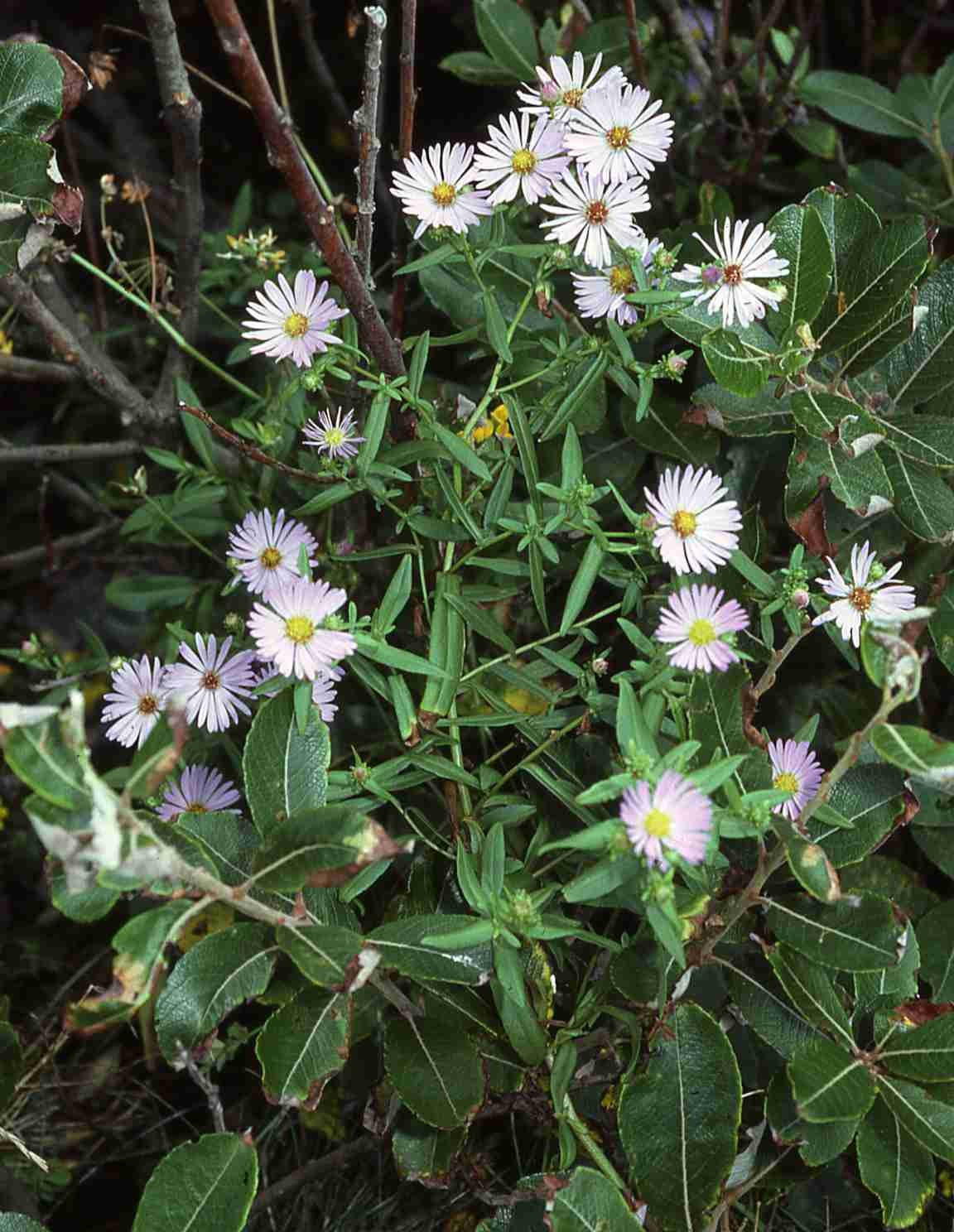
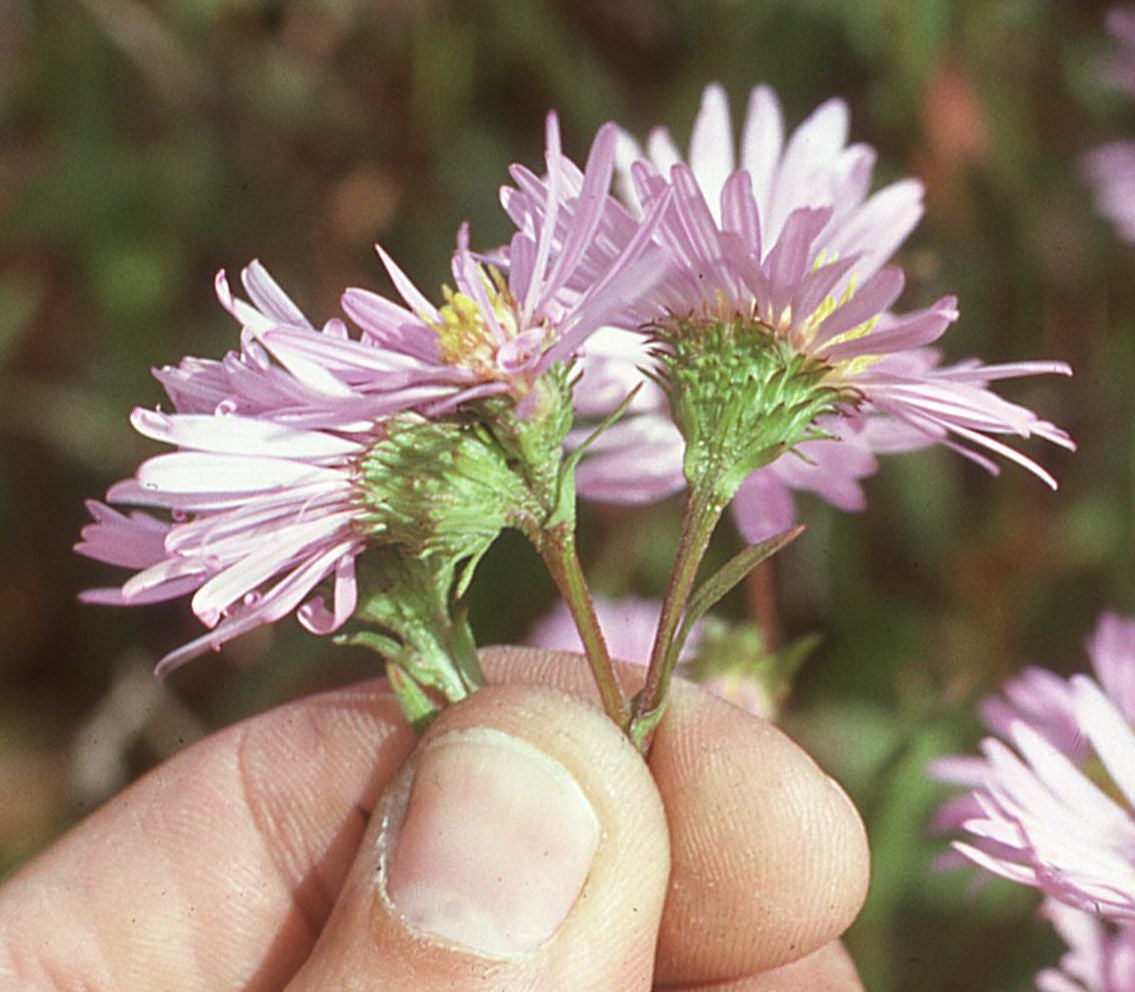
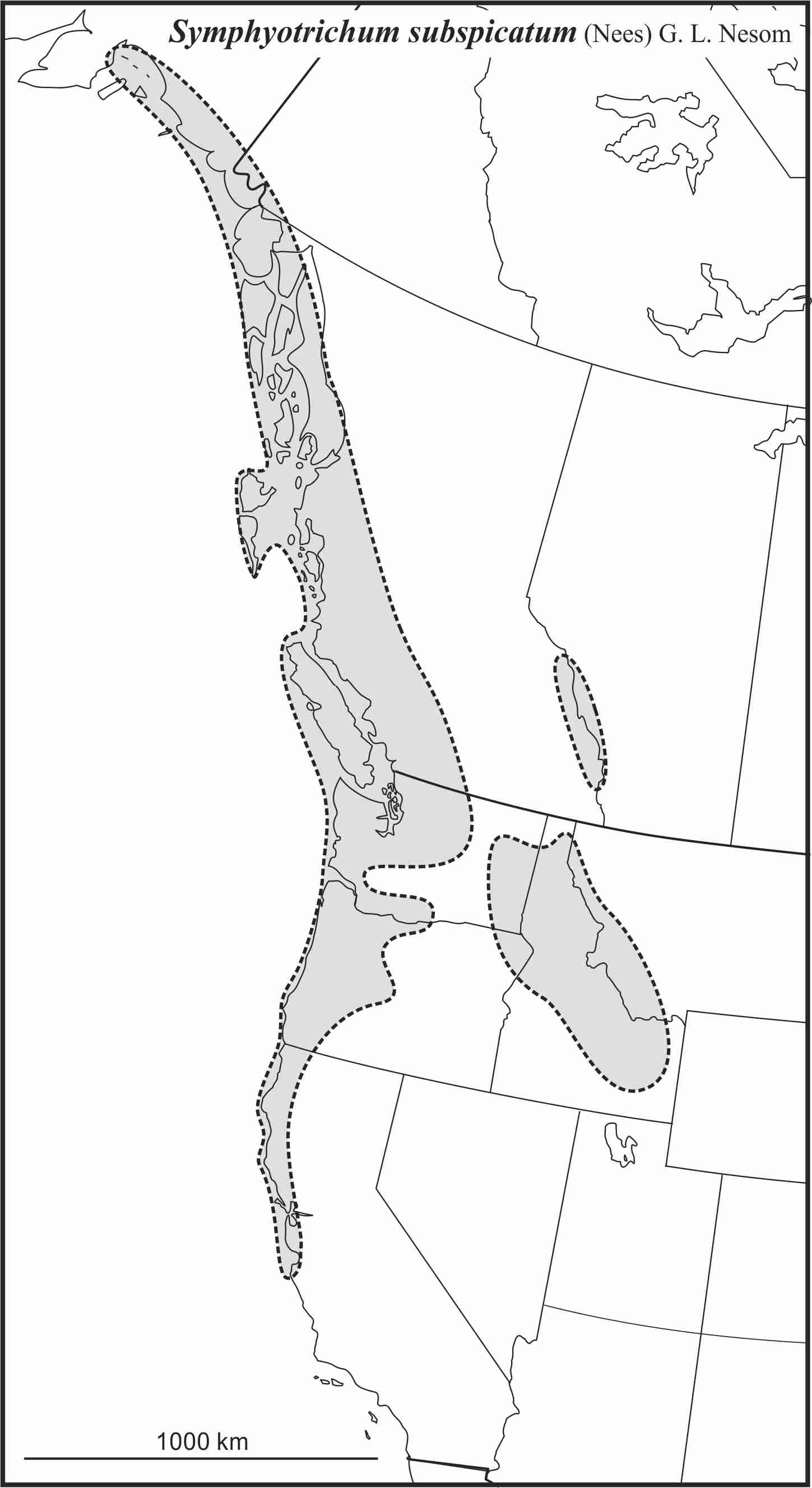
1-3. Symphyotrichum subspicatum. 1. Small population, Banff N.P., Canada. 2. Inflorescence, Semple & Brouillet 7116, Tillamook Co., Oregon. 3. Heads, Banff N.P. 4. Range map draft JCS.