


...where the Universe is our laboratory.
The Waterloo Centre for Astrophysics (WCA) looks to the cosmos to solve the greatest mysteries of the universe. Here, world-class researchers and students come together in an atmosphere of curiosity, creativity and collaboration; exploring our cosmic origin to truly understand the physical processes at work in the Universe. From black holes to cosmology, we aim to understand what lies beyond the Earth. The possibilities for new discovery are limitless.
News
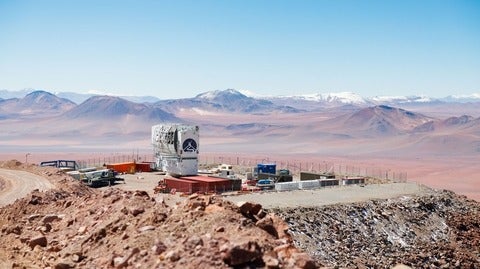
Major new telescope on Chilean summit opens window on universe
Thirty-four years after scientists first conceived it, the Fred Young Submillimeter Telescope (FYST) now rises above the Atacama Desert, near the summit of Cerro Chajnantor in Chile’s Parque Astronómico Atacama.
FYST will help answer some of the most important questions in astronomy, including how the universe works, the nature of dark energy and dark matter, how galaxies form and evolve and what happened in those mysterious first moments after the Big Bang.
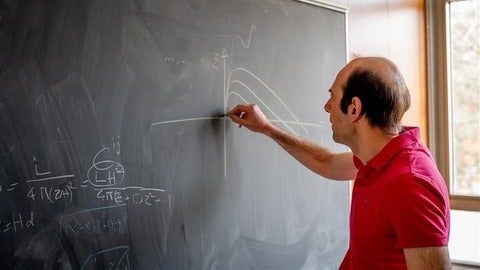
New theory reshapes quantum view of Big Bang
WCA scientists have developed a new way to understand how the universe began, and it could change what we know about the Big Bang and the earliest moments of cosmic history. Their work suggests that the universe’s rapid early expansion could have arisen naturally from a deeper, more complete theory of quantum gravity.
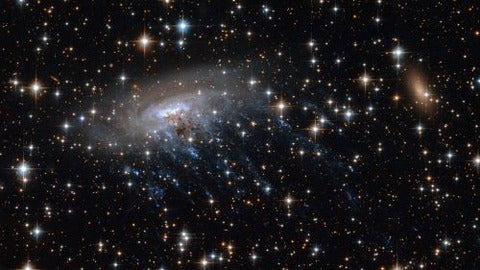
Highest redshift jellyfish galaxy
WCA researchers Ian Roberts and Michael Balogh lead the team that have discovered the highest redshift jellyfish galaxy, named for the long, tentacle-like streams that trail behind them.