Current undergraduate students

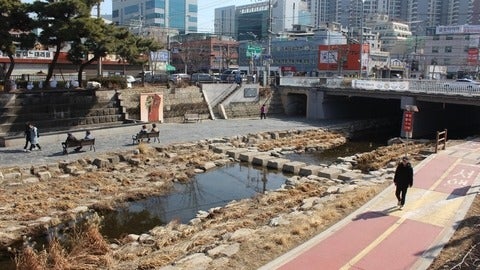
The UN-Habitat's World Cities Report 2024 highlights the urgent need for climate-resilient urban planning as 2 billion city dwellers face climate change impacts by 2040. Co-authored by Dr. Luna Khirfan from the University of Waterloo, the report emphasizes nature-based solutions, such as urban green spaces and flood defenses. It calls for inclusive, people-centered approaches to address vulnerabilities and promote equitable outcomes. The report aims to inspire cities to integrate climate action into their planning frameworks.
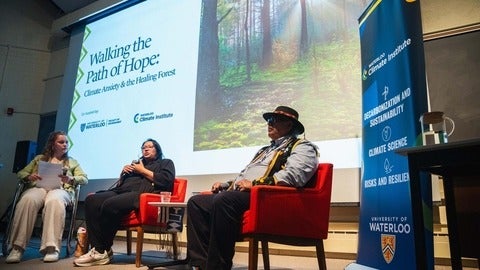
On November 14, the University of Waterloo hosted "Walking the Path of Hope," focusing on climate anxiety, Indigenous healing, and reconciliation. Amanda St. Marie introduced speakers, including Elder Myeengun Henry and Dr. Kelsey Leonard, who discussed land stewardship and wellness. They emphasized reconnecting with nature and honoring treaties as pathways to healing. The Healing Forest, designated a national Healing Forest, symbolizes reconciliation and community responsibility. The event highlighted that "We are all treaty people," urging collective environmental stewardship. It served as a call to action, integrating Indigenous knowledge to address contemporary challenges and foster resilience.

The Waterloo Climate Institute's new brief discusses the Global Stocktake's impact on climate action during COP29 in Baku. It emphasizes the need for nations to revise their Nationally Determined Contributions (NDCs) by 2025, integrating renewable energy strategies. Dr. Marie-Claire Cordonier Segger highlights the GST as a pivotal moment in climate law, urging collective action for a sustainable future.

Kwaku Owusu Twum, an Environment student and member of the Student Climate Council at the University of Waterloo, is making significant strides in agriculture with his startup, Mapmate. Alongside co-founder Daniel Buston Yankey, Twum aims to connect small-scale farmers with food manufacturers through a digital platform that enhances communication and collaboration. Inspired by his experiences in Ghana, where climate variability impacts food security, Twum's vision empowers farmers with data analytics and innovative tools, even in areas with limited internet access. His recent win at the Velocity Pitch Competition underscores Mapmate's potential to transform agricultural practices and improve livelihoods.

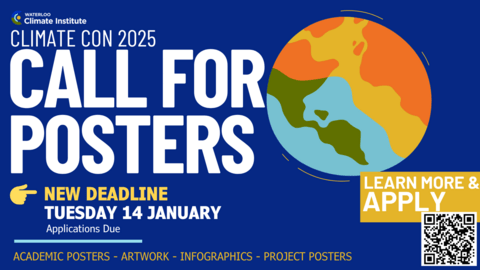
Tuesday, January 14, 2025 11:59 pm - 11:59 pm EST (GMT -05:00)

Climate Con: Call for Posters

Calling all undergrad and grad students! You are invited to submit a proposals to present at the Student Showcase at this year’s Climate Con 2025 hosted on Friday February 7th 2025. The Climate Con is an annual climate change convention, organized to showcase the contributions of students across all disciplines that tackle climate change. 

Daniel Scott, Climate Institute member and professor from the Faculty of Environment, looked at 93 cities and regions around the world that have previously hosted Olympics and Paraolympics and revealed a stark decline in climatically reliable sites as global warming continues. Only 52 locations that previously hosted an Olympic Winter Games will remain climate-reliable by the 2050’s, and just 46 by the 2080’s. 

Wednesday, November 27, 2024 6:00 pm - 8:00 pm EST (GMT -05:00)

Paint & Unwind

Join the student climate action program's student climate council for Paint & Unwind! Take some time to relax before finals on our Paint & Unwind night! Join us to create beautiful leaf-printed bags as well as unique painted designs, unwind with friends, and enjoy a cozy night of creativity.

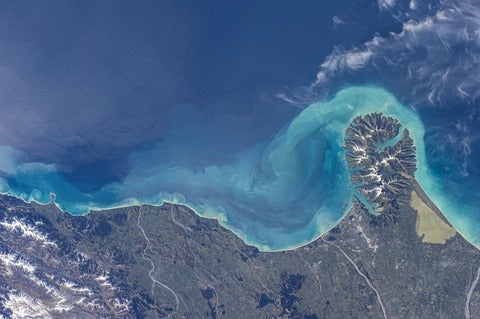
A new policy brief from the Waterloo Climate Institute emphasizes the urgent need for Canada to adopt a national strategy for marine carbon dioxide removal (mCDR). As international negotiators discuss marine pollution control, mCDR emerges as a vital option for Canada to meet its 2050 net-zero emissions goal. The brief outlines strategies for research, development, and regulation of mCDR, highlighting its potential to complement broader climate efforts. It stresses the importance of public engagement and calls for a coordinated regulatory framework to ensure responsible deployment and alignment with international commitments.

Lauryn Margarit’s journey from justice services to climate advocacy highlights the link between equity and environmental issues. At the John Howard Society in 2023, she saw how wildfires disproportionately affected homeless populations, fueling her passion for environmental justice. This led her to pursue a Master of Climate Change at the University of Waterloo, where she deepened her understanding of climate impacts on marginalized communities. Her studies and experience prepared her for a role as a policy analyst with Environment and Climate Change Canada, focusing on making federal climate data accessible to enhance community resilience. As she graduates, Margarit is committed to continuing her work in climate policy.