Submit content for the Daily Bulletin through the Daily Bulletin intake form.
For all other requests, please contact communications@uwaterloo.ca.
World Cup in Canada sparks opportunity to build safer, more inclusive youth sport

This article was originally published on Waterloo News.
The FIFA World Cup in Canada is igniting excitement and expected to increase participation in soccer nationwide. For Dr. Kaleigh Pennock, a professor in the University of Waterloo’s Department of Recreation and Leisure Studies, the global spotlight also presents a critical opportunity to strengthen inclusion, equity and safety in youth sport.
“With the World Cup in North America this summer, it’s very exciting,” Pennock says. “Amidst that celebration, we still need to look at sport through a critical lens. Is sport inclusive for youth? Is it safe and what kind of risks and harms do we need to think about when we have youth who are participating in sport?"
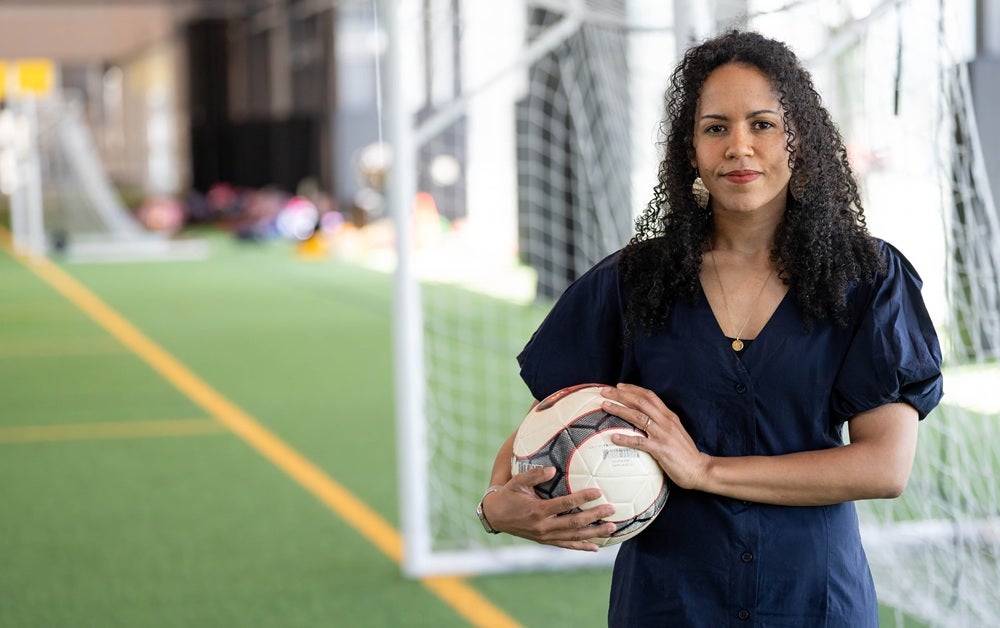
Major sporting events tend to drive interest and registration at the amateur level, with young athletes eager to emulate what they see on the field. Pennock says that an expected surge in participation places pressure on community sport systems, where most children play.
“With the World Cup, what we see is soccer being played on the world stage at the highest professional elite level,” she says. “But most youth are playing sport at the community level, where the emphasis should be on fun, on inclusion and on participation.”
Ensuring those principles are upheld requires more than enthusiasm. Pennock says local organizations must be prepared with structures that support both access and safety for a growing number of participants.
“For me, I conceptualize safety as the risk of incurring harm,” Pennock says. “It’s important to think about harm not just as physical harm. There are also harms like social and emotional harm that can happen with youth in sports systems where they feel excluded, where there’s maltreatment issues and where they don’t feel like they belong.”
That includes everything from concussion management to fostering inclusive environments where all athletes feel valued. While awareness has improved in recent years, gaps remain.
“We have more knowledge and more protocols in place,” Pennock says, noting measures such as concussion education requirements. “On the other hand, we’re also seeing some significant gaps when it comes to youth safety and the risks they might incur through sport.”
While elite sport can normalize playing through pain or not reporting injuries, Pennock notes these behaviours are already present in youth sport settings.
Research shows that even when young athletes understand concussion risks, they may still choose not to report symptoms due to pressures to stay in the game.
“We might see players not coming off the field or hiding symptoms,” she says. “Those are not things that we want to be bringing down to the youth system level.”
Rather than reinforcing those behaviours, Pennock says the focus should be on building community sport systems that actively discourage them and prioritize athlete well-being.
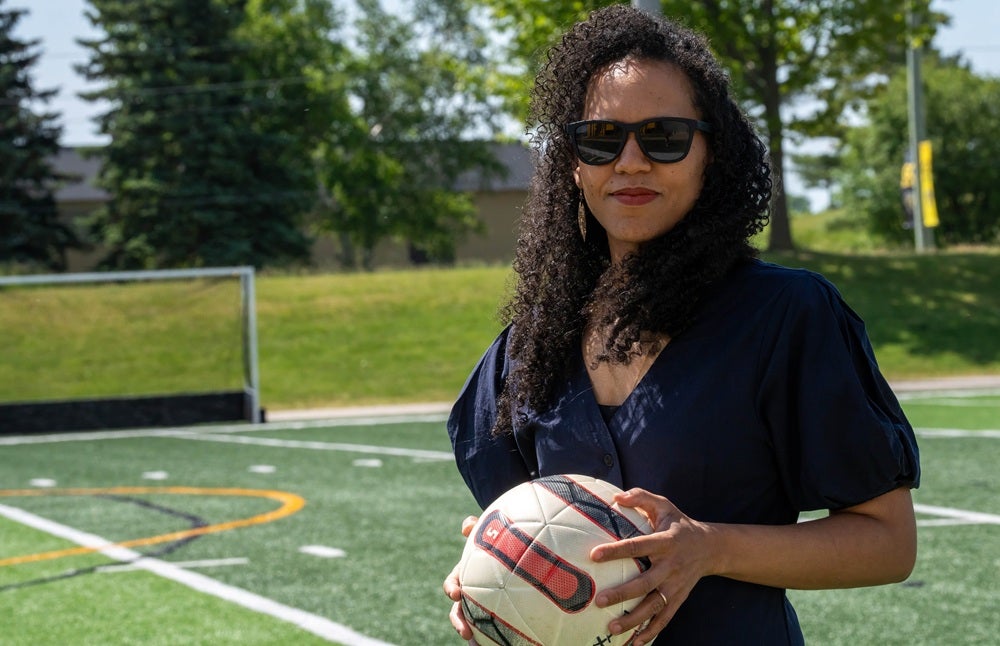
Equity is also central to the conversation. Research by Pennock and others shows that participation and retention can vary significantly across different groups, particularly for Black and racialized youth.
“We know that Black and racialized and other equity-deserving groups participate in sport at lower rates and also tend to drop out during adolescence,” she says. “We need to rethink what soccer can look like for everybody.”
Cost and access are key barriers. As the sport grows in Canada, expenses tied to equipment, travel and team participation are rising. Pennock emphasizes the need for low-cost or free programming and accessible transportation options to ensure that enthusiasm for the game translates into opportunity.
Pennock says meaningful change requires coordinated action from organizations, coaches and administrators.
“The responsibility for safety in sport can’t just fall on the kids and parents,” she says. “It has to be happening at the organizational level. What do the protocols look like and how are they enforced?”
At its best, the World Cup can serve as a catalyst not only for participation but also for reimagining how sport systems operate.
“If we see an increase in participation, we need to make sure we have those safety protocols in place and that everyone is having a safe and enjoyable experience,” Pennock says. “That is going to require a system-level change.”
The Conversations We Need to Have episode 5 now streaming
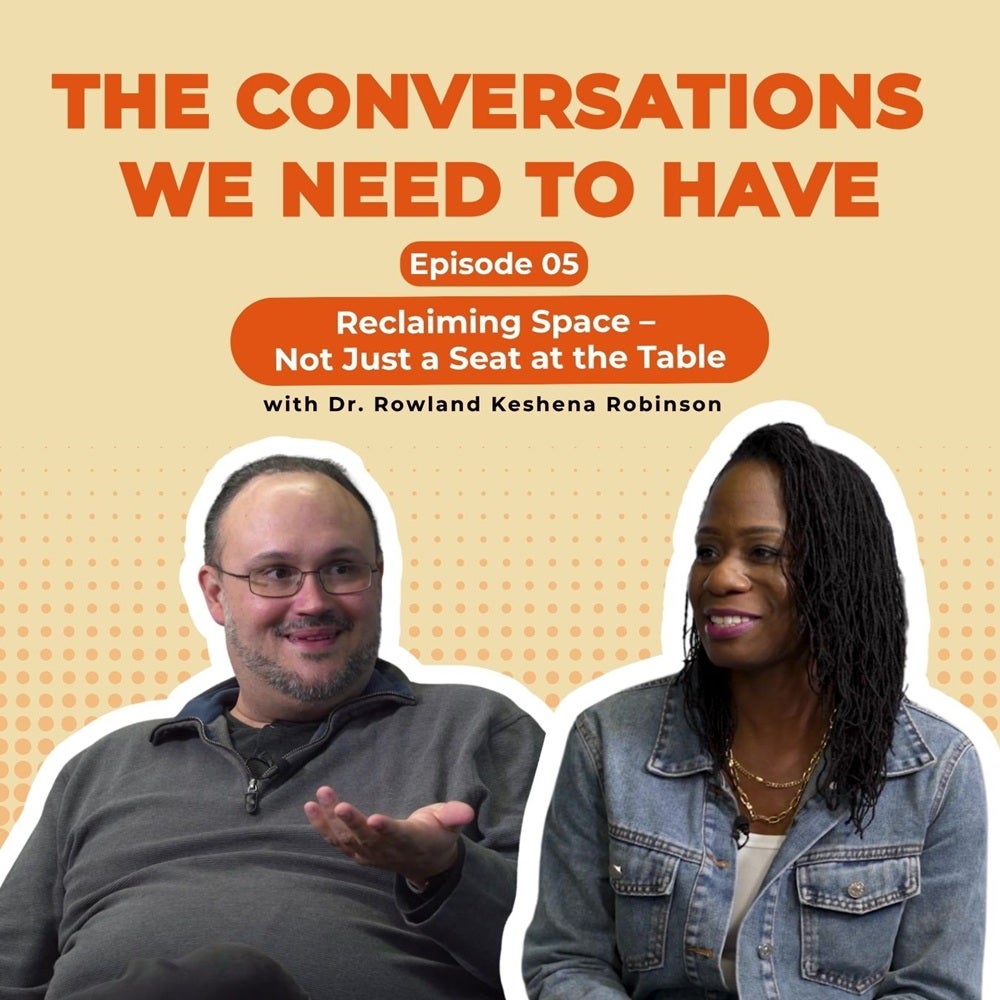
What happens when inclusion is present, but power remains unchanged? In the latest episode of The Conversations We Need to Have, Dr. Rowland Keshena Robinson, Assistant Professor in the Department of Political Science, challenges listeners to think beyond representation and examine who actually holds decision-making power within institutions.
The conversation explores how inclusion can sometimes be used to maintain the status quo, creating opportunities for participation without shifting authority or resources. Moving beyond the idea of simply having a seat at the table, the episode asks what it takes to ensure people can help shape agendas, influence decisions, and drive meaningful change. Stream it today on the EDI-R website, YouTube, or Spotify.
Detecting eye disease from home
This article was originally published on the School of Pharmacy's website.
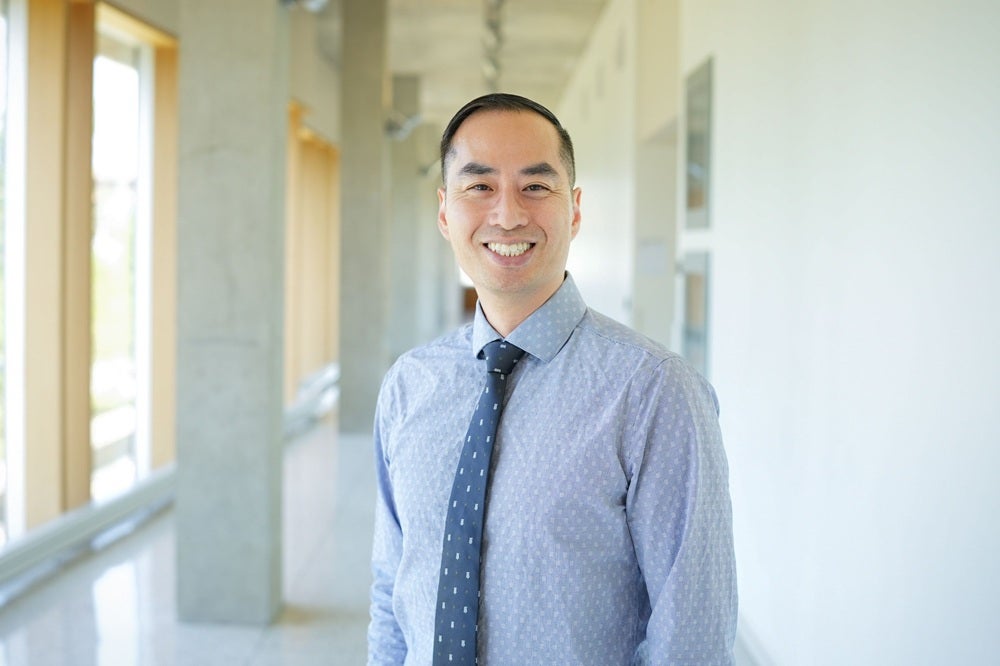
Dr. Emmanuel Ho, Professor at the University of Waterloo School of Pharmacy, has received support through the Centre for Aging + Brain Health Innovation’s (CABHI) Ignite program to advance an innovative mobile screening tool that aims to detect early signs of eye disease and potential changes in cognitive health.
CABHI's Ignite program supports early-stage Canadian innovators, including researchers, point-of-care staff and companies, to help develop, test and validate their solutions. Ho's project bridges artificial intelligence (AI), ocular health and neurodegenerative disease research to create an accessible screening tool for patients, caregivers and healthcare professionals.
The application, called PhotoHealth, allows users to take a photograph of their eye using a smartphone. The image is then analyzed to detect subtle abnormalities that are often invisible to the human eye. By comparing images against datasets from diagnosed patients, the system can identify minute variations suggestive of disease.
Initial development will focus on detecting diabetic retinopathy, a condition that stems from a complication of diabetes that causes damage to the retina and can lead to blindness if left untreated. The research team will also investigate whether changes to eye health correlate with cognitive decline, including dementia.
“Utilizing the eye as a portal could be the key to further understanding brain health and cognitive function,” says Ho.
The project addresses a clear healthcare gap for individuals facing mobility challenges or those living in rural and remote communities that don’t have easy access to specialists.
“Optometrists rely on large, expensive, immovable equipment that isn’t easily transported to a patient,” says Ho. “For someone who lives more than an hour away, travelling for a routine checkup without showing clear signs of vision impairment or concerns, can be a significant burden.”
The app aims to function as a low cost, first-line screening tool and will function offline to accommodate regions with limited internet access, while prioritizing strong privacy protections.
The PhotoHealth team also consists of Waterloo undergraduate students Ari Wertheim and Nicole Hughes along with collaborators Dr. Tejal Patel, Clinical Associate Professor at the School of Pharmacy, Dr. Tammy Labreche, Clinical Associate Professor at the School of Optometry and Dr. Nadine Furtado, Clinical Associate Professor at the School of Optometry.
CABHI funding will support technical development and clinical validation. Ho’s team will recruit study participants to collect eye image data to refine the algorithm’s accuracy and precision.
A Windows-based version of the software has already been created and is now being adapted for Android and iOS platforms.
“Our long-term goal is to make the tool useable across a range of settings, from clinics to long-term care homes to patient homes,” says Ho.
Early disease detection using this tool could have a significant impact on the health of Canadians. By identifying conditions earlier before they escalate, PhotoHealth could reduce pressure on healthcare services and improve quality of life by minimizing the need for additional appointments, treatments and medications.
Beyond diabetic retinopathy, the team plans to expand the app capabilities to detect other eye conditions, such as hemorrhaging, retinal tears and signs of infection. Ho’s research could open new avenues in other disease screening, for example exploring correlations between eye health and infectious diseases.
Dr. Ho gratefully acknowledges the support from the Centre for Aging + Brain Health Innovation, the Innovation, Science and Economic Development Canada’s Strategic Science Fund, the Ontario Ministry of Colleges, Universities, Research Excellence & Security, and the Baycrest Foundation. This research is in collaboration with Watco.
Victor Zhong, Jimmy Lin awarded $1.64-million NSERC Alliance grant

This is an excerpt of an article was originally published on the Cheriton School of Computer Science's website.
Professor Victor Zhong, principal investigator, and co-investigator Professor Jimmy Lin have been awarded $1,641,776 through the NSERC Alliance Grant program. This funding is complemented by more than $1.8 million in combined cash and in-kind contributions from industry partner BASF Canada, bringing the total project value to roughly $3.5 million.
Titled “Deep Research Agents for Natural Science R&D,” the three-year project will co-develop and deploy an end-to-end intelligent research assistant capable of retrieving, reasoning over, and acting on diverse experimental data sources. Developed in partnership with BASF Canada, the project aims to transform chemical informatics from static information retrieval into dynamic, action-oriented knowledge systems that accelerate scientific discovery.
The project will also play a significant role in training the next generation of researchers. Over its three years, it will support two postdoctoral researchers, six PhD students, and two master’s students.
Read the full article on the Cheriton School of Computer Science's website.
When and Where
The Campus Wellness Student Medical Clinic offers healthcare visits with Physicians and Nurse Practitioners to current undergraduate and graduate students. Services include: vaccinations, immunity testing, naturopathic services and more. Counselling Services offers appointments with counsellors in person as well as via phone and video. Students can book appointments for these services by calling Campus Wellness at 519-888-4096.
The privately-run Student Health Pharmacy (located in the lower level of the Student Life Centre) is now offering new COVID booster shots and flu shots. Covid booster shots are available by appointment only – please call ext. 33784 or 519-746-4500. The Student Health Pharmacy’s summer hours are Monday to Friday, 9:30 a.m. to 4:30 p.m. Naloxone kits are still available – pick them up in the pharmacy at no charge.
The Waterloo Eye Institute optometry clinics in Waterloo and downtown Kitchener offer comprehensive eye exams and eyewear, including glasses and contact lenses, with the Waterloo location offering various specialized services including urgent eye care. Discounts apply for University of Waterloo students and employees. The Waterloo Clinic is at a nearby interim location, 419C Phillip St, during construction at the School of Optometry and Vision Science. The Kitchener Clinic remains at the Health Sciences Campus, 10B Victoria St. S. Book online or by phone at 519-888-4062.
Warriors Youth Swim Lessons, registration is now open for LTS Child/Youth Preschool 1 – Swimmer 9. Group and private lessons available. Register today!
Warriors Summer Youth Camps, registration is now open for multi-sport and games, baseball, basketball, eSports, football and hockey camps for boys and girls ages 5 to 18. Register today!
Teaching with Tech: A Practical ViewBoard Workshop – In-Person (TII 5010), Monday, July 13, 2 to 3 p.m., LIB 329 (Tech Sandbox)
Community Well-being Fruit and Veg Market, Wednesday, July 15, 11 a.m. to 3 p.m. in PSE and SLC (while supplies last). Can't make it? Save the date for the next market on July 29.
The Co-op Workplace Simulation by Velocity, Tuesday, Jul 21 4:45 to 7 p.m, 2nd floor IDEAs clinic, PSE.
Assessment Redesign and Generative Artificial Intelligence (GenAI) - (CTE7556), Monday, July 20 & Wednesday, July 22, 1 to 4 p.m., PHY 235.
Virtual Reality in the Classroom: An Introduction for Instructors – In-Person (TII 5020), Tuesday, July 21, 2 to 3 p.m., LIB 329 (Tech Sandbox)
WaterTalk | Hydrobiogeochemistry and health risks of geogenic contaminants in groundwater systems, presented by Yanxin Wang, China University of Geosciences. Tuesday, July 21, 11 a.m., in Fed Hall.
Upcoming service interruptions
Stay up to date on service interruptions, campus construction, and other operational changes on the Plant Operations website.