


Integrating Environmental Water Research Across Multi Scales and Disciplines
Water is our most precious natural resource. All human activities, from agriculture and industrial processes to domestic uses, depend on water of sufficient quantity and quality. This is also true for natural ecosystems. In contrast to highly visible water quantity stressors, such as flash floods and prolonged droughts, changes in water quality are often more gradual and more difficult to detect, and their cumulative impacts more difficult to predict and manage. Water quality deterioration, however, poses more pervasive and chronic risks to the economy, human health and the ecological life-support systems of the planet.
Water quality degradation is a global phenomenon. In Canada, for example, harmful and nuisance algal blooms are a persistent problem for many freshwater bodies, including the iconic Laurentian Great Lakes, while many of our First Nations communities still live under drinking water advisories. Globally, awareness is also growing that climate change adaptation must be an integral part of planning and implementing effective water management policies and practices.
For general inquires about the Ecohydrology Research Group, please email ecohydrology@uwaterloo.ca.
News

ERG Members Attend the 2026 Waterloo Wellington Children’s Groundwater Festival
On May 27 and 28, 2026, Ecohydrology Research Group members attended the 2026 Waterloo Wellington Children’s Groundwater Festival at Marden Park in Guelph.
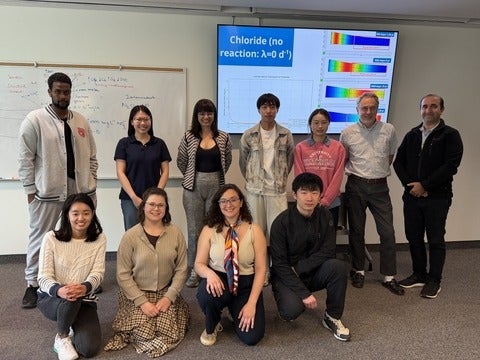
Reactive Transport Modelling course was a success!
From May 11 to 22, 2026, Philippe Van Cappellen and Fereidoun Rezanezhad offered EARTH 652: Reactive Transport Modelling at the University of Waterloo.

CLAWAVE Online Workshop Showcases New Web Tool
On May 7 and 8, the CLAWAVE team hosted an online workshop with practitioners and project partners to introduce the beta version of CLAWAVE, a new web-based tool for exploring chemical loads in river systems.