Blog

Filter by:

Limit to posts where the title matches:
Limit to posts where the date of the blog post:
Date range
Limit to posts tagged with one or more of:
Limit to posts where the audience is one or more of:
Tuesday, October 13, 2026

To make is to be human

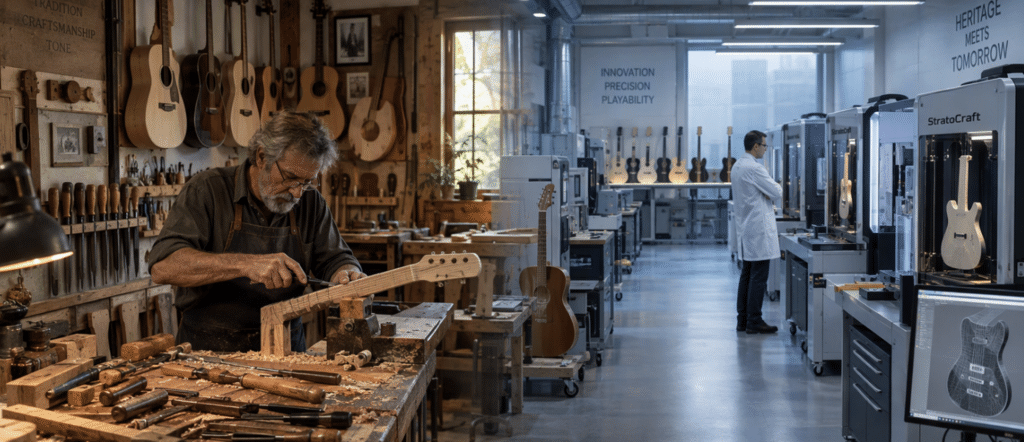
Prof. Stephen Quilley’s project ‘Embodied Technics in an Age of Automation: Craft Practice, Skill, and the Transformation of Work’ received funding from the Social Sciences and Humanities Research Council (SSHRC).

The question at the heart of the project relates to the future of hands-on craftwork in a world increasingly dominated by A.I., the 4th industrial revolution, the ‘Internet of Things’ and technologies such as 3D Printing. 

Dr. Mathieu Feagan writes about the Just Transitions project and its report and case studies. The project brought into relation three distinct contexts where migrant, settler and Indigenous communities are confronting displacement, extraction, environmental injustice, and the consequences of top-down policy in different ways. 

The accompanying Just Transitions from the Bottom-Up reports offer a closer look at what emerged through these exchanges.

Friday, August 14, 2026

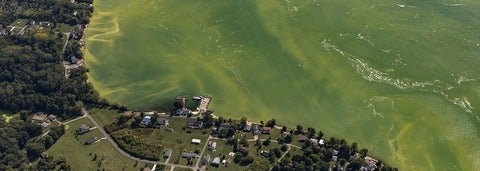
Coordinating clean water

PhD student Fridah Silas calls for a coordinated adoption of agricultural Best Management Practices at the watershed scale rather than the individual farm scale for the best result for water quality improvements.

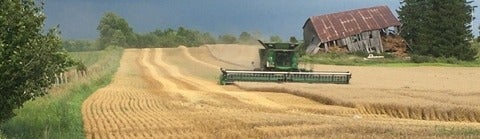
Henri Chevalier, a SERS PhD student, writes that “Farmers are facing a cost squeeze as seeds, fertilizers, machinery and land become more expensive. In Canada, the value of machinery per farm rose … a 35-fold increase even after inflation.” 

In an article in The Conversation, Chevalier notes that many farms have to keep getting bigger just to survive, and that this growth imperative is unsustainable, for the environment and for farmers themselves.

Ocean conservation efforts are often guided by ambitious global targets, from protecting 30 per cent of marine and coastal areas to advancing the United Nations Ocean Decade goals. But new thinking co-authored by Derek Armitage and published in The Conversation argues that targets alone are not enough to ensure meaningful progress.

Monday, December 1, 2025

A new look at ecohydrology trends

A new paper led by SERS PhD student Mackenzie Jones in Dr. Chantel Markle’s Lab takes a global look at how researchers are studying the interactions between ecology and hydrology, an interdisciplinary field known as ecohydrology. Find out how we can advance wildlife ecohydrology research and how it can help guide future conservation and management efforts. There's a wonderful infographic which communicates the information as well.

Have you considered the environmental impacts of industrial tequila production?

While many consume the beverage, in Jalisco State in Mexico, the region’s ecosystems are being destroyed and replaced by a uniform crop that is prone to pest outbreaks.

Prof. Brendon Larson and colleagues outline several issues with industrial production of tequila and highlight a shift to the more traditional use of mezcal.

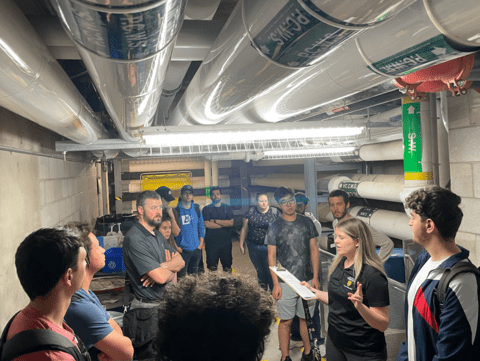
After a period of time in an administrative role, Dr. Ian Rowlands returned to the rhythm of being a 'regular' professor. He offered a brand new, experiential learning course on "Energy and Society in Ontario" which comprised classroom and field trip instruction.

Wednesday, September 24, 2025

Beyond Borders' Ghana field school

Interested in seeing the world, while also building career and research skills?

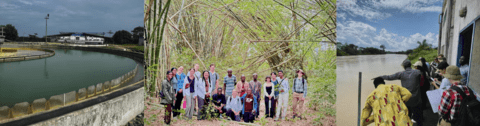
Third year ERS student Jordan Wilton spent two months of the spring 2025 term studying environmental issues through the Beyond Borders: Field School in Ghana. Check out the blog and video diary Jordan created during the course.

Prof. Bob Gibson urges the federal government to assess the benefits, risks and uncertainties of proposed national interest projects openly and thoroughly before granting pre-approvals.