The 75th Annual Meeting of the Canadian Association of Geographers (CAG) took place from May 20th to May 23rd, 2025, at Carleton University in Ottawa. The conference theme, “Confluence,” transcended the idea of geographical convergence to embody the interplay of various forces that shape our understanding of space, place, and identity. The conference aimed to foster collaboration by bringing together diverse perspectives, ultimately creating new avenues for addressing and understanding complex geographical issues that influence communities and societies globally. The conference featured a variety of sessions organized to reflect the broad scope of geography as a discipline. This structure not only facilitated learning but also offered valuable networking opportunities with leading researchers and scholars within the field.
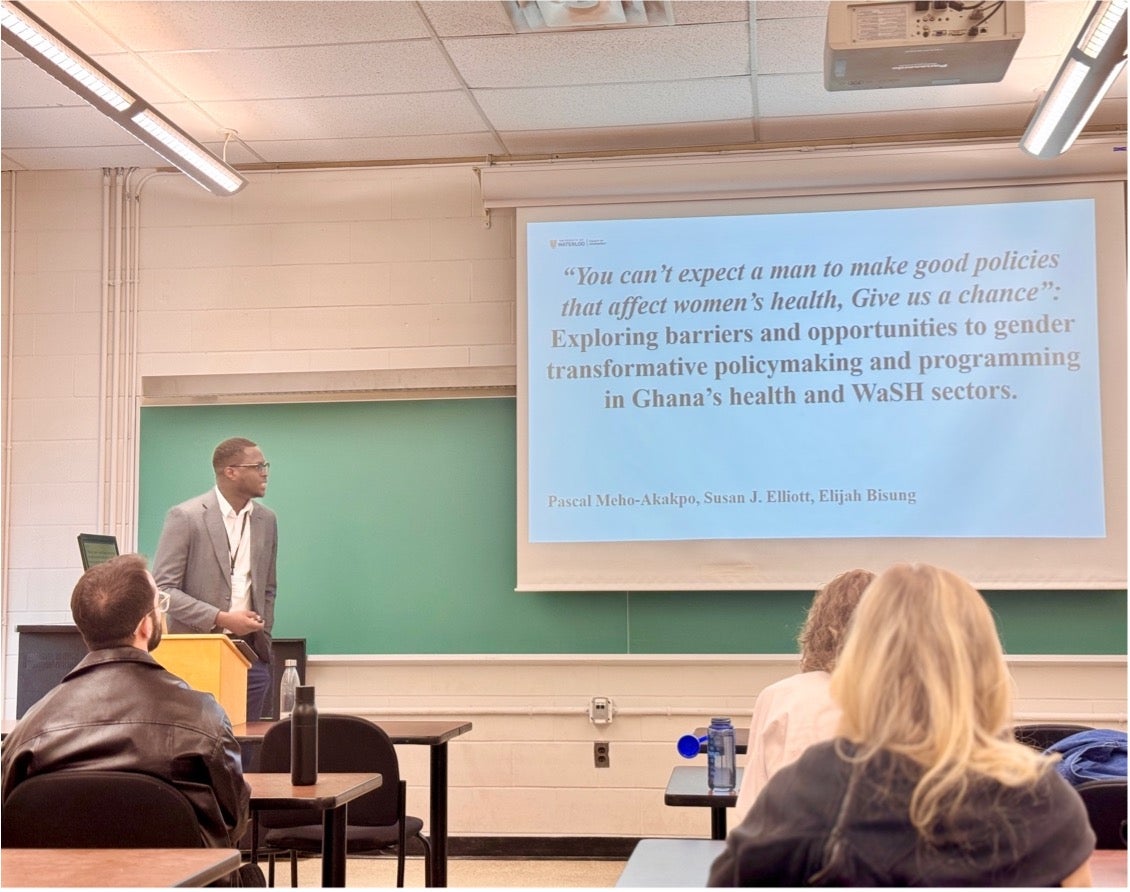
Personally, as a health geographer, I found the experience particularly enriching as there were various presentations of similar issues of health I was interested in. I also had the opportunity to attend numerous health-related sessions, where I got inspired by presentations delivered by esteemed colleagues, faculty members, and passionate students who contribute to the dynamic discourse in health geography. One of the highlights of the conference for me was the opportunity to present my research paper titled “You Don’t Expect a Man to Make Good Policies That Affect the Women’s Health: Exploring Barriers and Opportunities to Gender-Transformative Policymaking and Programming Across Ghana’s Health and WaSH Sectors.” My presentation aimed to shed light on the significant challenges and barriers that hinder progress toward gender-transformative policymaking and programming in low- and middle-income countries (LMICs), with Ghana serving as a case study. This topic is particularly relevant, as it underscores the need for policies that not only recognize but actively address the distinct health needs of women and marginalized groups in society.
Throughout the conference, many health-related presentations stood out for their focus on the pressing global issue of health inequities. A number of presenters dedicated their research to understanding the complex interplay of factors contributing to gender inequalities in health and well-being. This collective effort to highlight and analyze these issues was not only thought-provoking but also necessary for advancing the dialogue surrounding these critical topics. As I listened to various presentations, I became increasingly aware of the importance of interdisciplinary collaboration in tackling health-related challenges. The diverse methodologies and perspectives presented by fellow researchers reinforced the notion that a multifaceted approach is essential for effectively addressing the nuances of health inequities. Through engaging discussions and shared insights, I was able to gain a deeper understanding of how geographical contexts, socio-cultural, and political factors influence health policies and outcomes.
Attending the conference allowed me to connect with like-minded individuals who share a passion for improving health equity. The exchange of ideas and experiences enriched my knowledge and inspired me to continue exploring solutions to gender-related health challenges in my own research. I left the conference feeling motivated and equipped with new knowledge and connections that I hope to integrate into my future work in health geography. The experience reaffirmed the importance of ongoing dialogue and collaboration among researchers, policymakers, and practitioners to create meaningful change in health and well-being across communities.