Keeping curiosity alive
From full-time careers and family responsibilities to retirement and caregiving, mature students are proving that curiosity and lifelong learning have no age limit
Each student’s experience is unique; some begin university right out of high school, while others return to study later in life. For the latter, there may be multiple priorities to juggle — full-time work, childcare or elder care responsibilities— all on top of their schoolwork.
University education later in life is a big commitment, yet a surprising number of students make that leap back to school. In the Faculty of Arts, mature students make up 13 per cent of the undergraduate population (age 25 and up) and 26 per cent of the graduate student population (age 30 and up).
How do they manage all their priorities? What drives them in their pursuit of education?
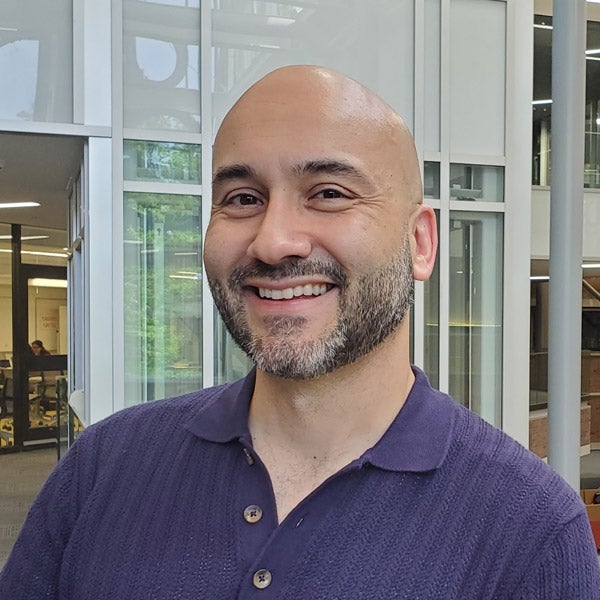
Initially, he said he struggled with imposter syndrome but soon learned to feel confident in his work and the ideas he contributed. He found that studying for knowledge’s sake rather than with a career goal in mind was very freeing. “I could focus on knowledge and giving flight to ideas that had been fluttering in my mind for years”.
Stroubakis also found his classroom peers to be very supportive and keen to engage in discussion about research ideas and scholarly interests, despite any differences in age. “I am really proud of the community we fostered in our department,” he says.
Now, with his dissertation well underway, he reflects: “If, overall, the experience has been transformative, if it turned me into a better communicator and a better thinker, my mission is accomplished. The goal for me is to be able to engage in the tradition of my discipline to add my voice to the collective endeavour of ideas, and to be a contributing force for good.”
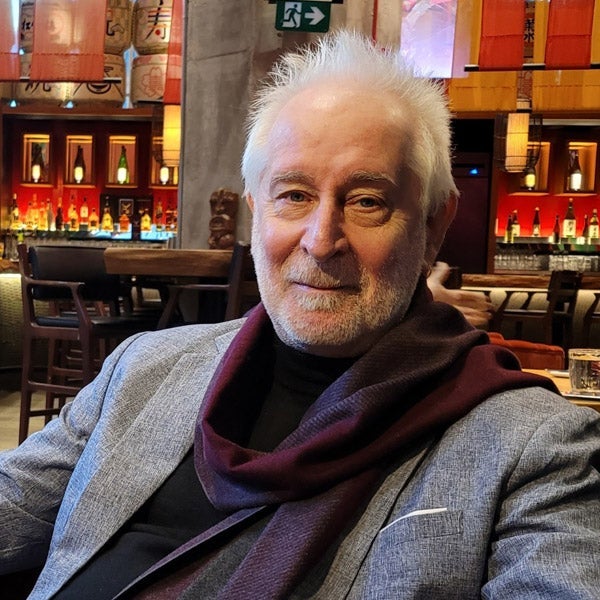
His continued education was always a part of daily life, which made time management a necessary skill. “I treat school each term as a marathon,” he says. “I pace myself and know how to teach myself.” For Matlock, each new discipline is built on the last, which allowed him to think critically about knowledge and knowing, he says.
Along with supporting his own academic work, Matlock considers his maturity, life experience and breadth of knowledge as an asset that he readily shares. “I have taught other students about art, history, physics, math, programming, and electricity,” he says.
As he completes his Philosophy degree, we look forward to seeing what Matlock will choose next in his journey of lifelong learning.
Not all mature students have the luxury of studying purely for the love of knowledge. Khadijah Vakily returned to university initially to stay competitive in her career as a schoolteacher. Now receiving her degree in Liberal Studies, Vakily feels excited by learning and is considering graduate studies.

Reflecting on her return to school, Vakily says it’s never too late to try something new. “Having this kind of open-minded approach has allowed me to explore new interests, new languages, and new yet lasting friendships.”
Curiosity is key, she says. “Keeping that curiosity alive is what will give you the energy and motivation to keep life interesting, no matter your age.”
Mature students inspire us to seek out new knowledge and understanding of the world and our place in it — and above all, to stay curious.