Connecting the dots for our clean energy transition
Industry partners and talented Waterloo students envisioned a decarbonized future and how they can drive transformative change in the energy sector
“For too long, we’ve looked at energy as an infrastructure issue, but we have to think about how it drives society” Chris Henderson said, opening his keynote at Waterloo’s inaugural Energy Transitions Networking Forum.
At 2.7 trillion, the estimated cost of realizing the energy transformation underscores its urgency. However, Henderson pointed out that the real challenge will not be funding, but our ability to shift away from managing change in narrow, linear ways. The change that is required isn’t just financial, it’s systemic, and demands new approaches that link communities, technologies and policy.
Using the example of P.E.I.’s electric school buses powering emergency warming centers during outages, Henderson challenged the audience to see the energy transition as more than a technical or financial hurdle. He encouraged them to think more broadly and connect the dots. To recognize how separate challenges can intersect, creating opportunities for multifaceted solutions.
With this message top of mind, the room of co-op employers, industry partners, alumni, professors and students convened to share knowledge, skills and experience in four speed-networking sessions, which offered a platform for meaningful dialogue on workforce needs and innovation.
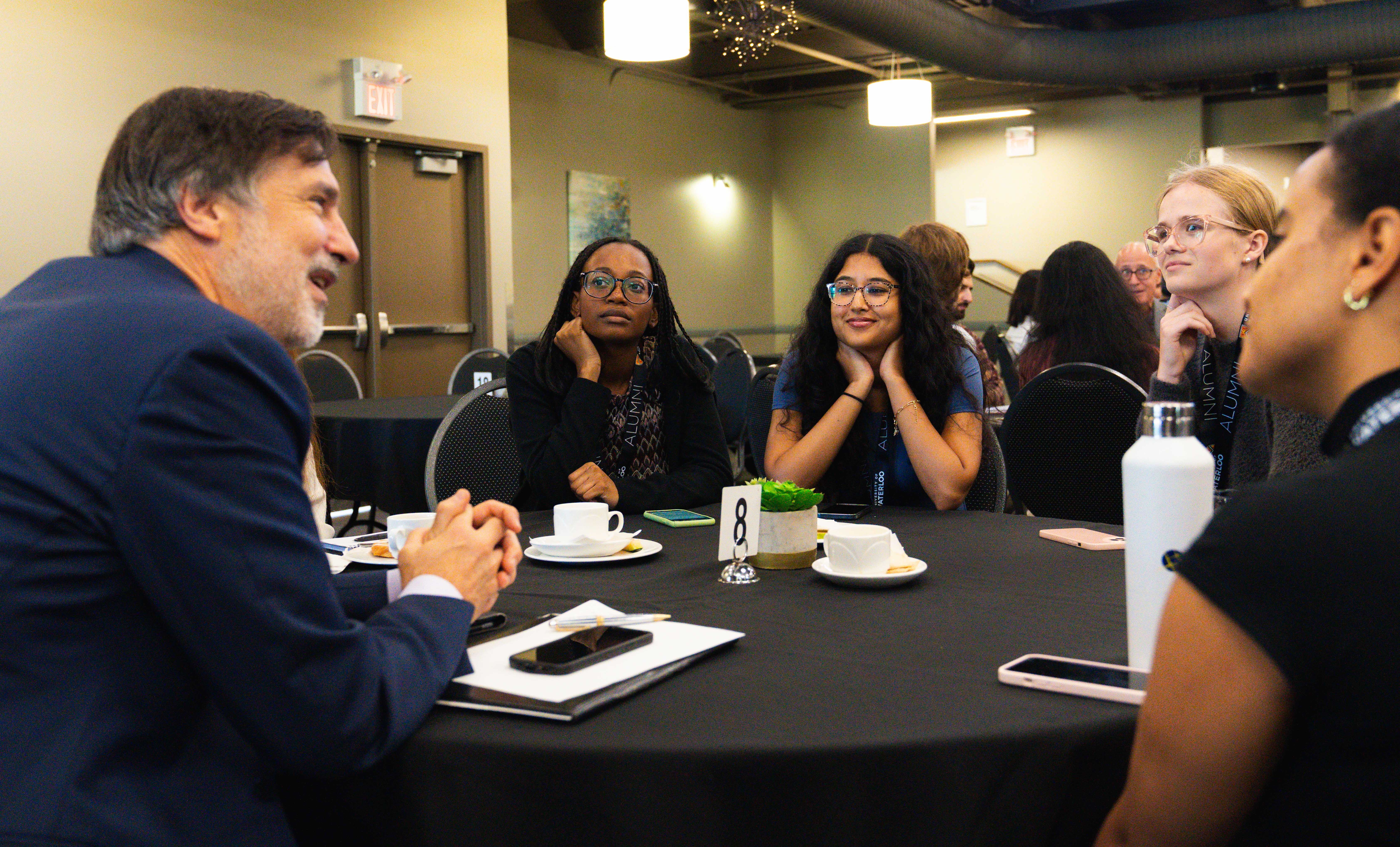
Students met with employers, industry partners, alumni and professors during four speed-networking sessions.
“It was refreshing to hear students and faculty discuss possible strategies to accelerate our national and international energy transition efforts,” said Mike Voll, Global Sector Leader, Smart Technologies at Stantec. “The overarching theme of this session (along with many other recent industry events I have attended) focused on continuing to invest in technology and business cases which can inform policy reform even if current Canadian and U.S. governments do not fully support them. This is the advice I provided to the networking clusters I participated in which was well received. I am encouraged that our next era of energy practitioners shares my view of a decarbonized planet.”
For students, these sessions were also a chance to see where their degree could take them or how they could see themselves shaping a cleaner energy future. For Carol Liberty, a fourth-year Environment and Business student, speaking with Henderson was a highlight.
“For my capstone project I am working with the City of Peterborough to propose solar panels over parking lots to mitigate the heat and water run off,” she said. “When I told him about some of the challenges we were worried about, he countered with solutions and examples in other municipalities. I learned about heated solar panel technology and discovered some of the unexpected added benefits of installing the panels at a sheep farm in Conestoga.”
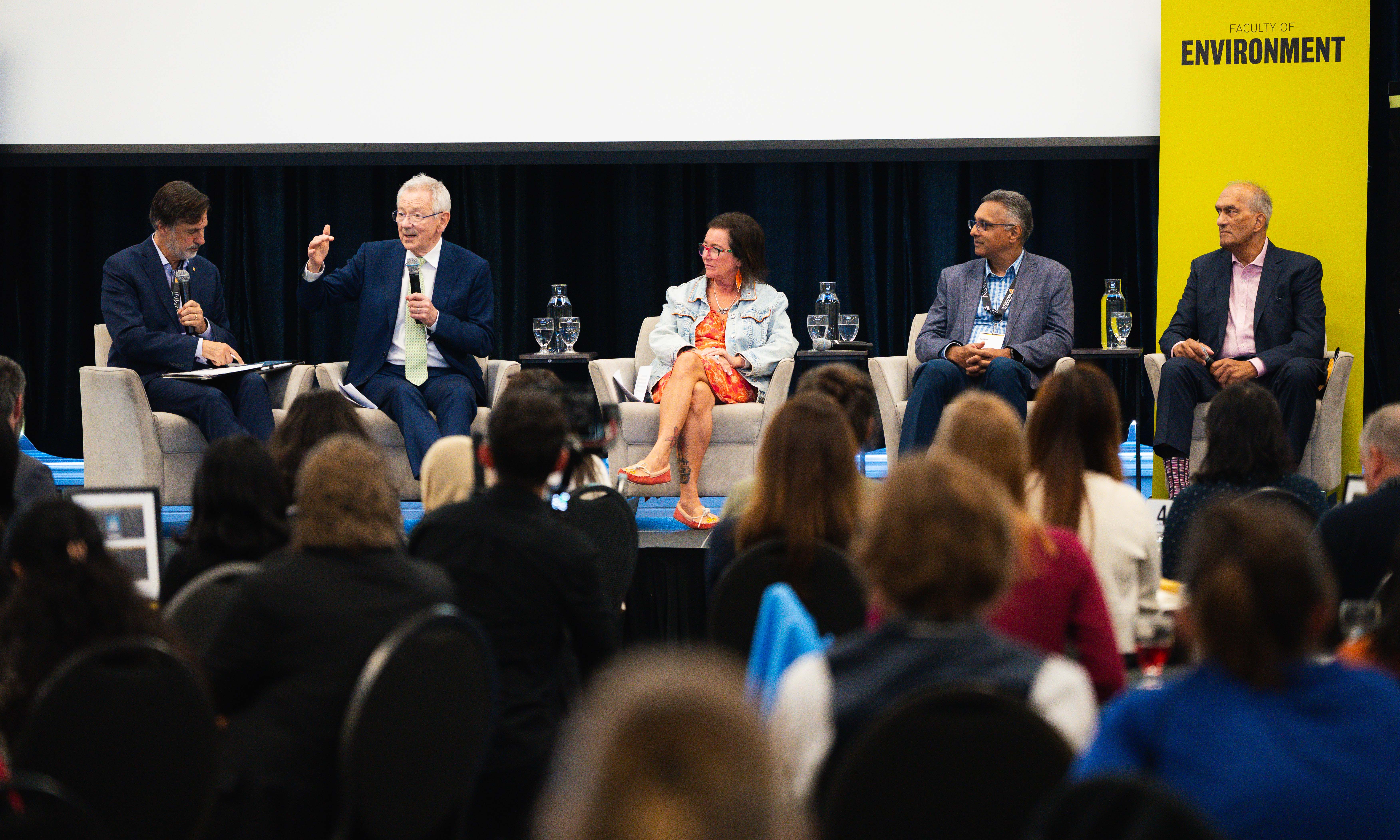
Moderator, Dr. Ian Rowlands, with Sir Andrew Steer, Tracy Primeau (BA '98), Tej Gidda and Chris Henderson speaking about tackling Canada's biggest energy challenges.
To cap off the day of networking and learning, Henderson was joined by Tej Gidda, Tracy Primeau (BA '98) and Sir Andrew Steer, our 2025 TD Walter Bean Professor in Environment, to discuss tackling Canada’s biggest environmental energy challenges and inspire the next generation of leaders from across the University. They started by sharing a significant moment from their career before moving into their visions for a positive path for clean energy, which featured prioritizing scaling up technologies and solutions, as well as pursuing reconciliation and shared collaboration between communities, industry and governments.
As the next 40 years will be the most decisive in history, the panel reminded students that they will play an integral role in helping drive transformative change for people and planet. Follow your passion, find great people to collaborate with and take work that matches with your values were all takeaways that were imparted to the students.
The Energy Transitions Networking Forum was hosted by the Faculty of Environment on September 29. It was the first event in the Faculty’s Sustainable Futures for Tomorrow’s Leaders Series; linking student talent, industry and government to shape a changing workforce and drive economic prosperity and sustainability.