Skip to main Skip to footer
University of Waterloo
  • Admissions
  • About Waterloo
  • Faculties & academics
  • Offices & services
  • Support Waterloo
  • COVID-19
Search
  • Home
  • 1974-75 Waterloo Warriors Mens Basketball season
  • AI Workshop Fall 2024
  • Real Research
  • The Sultans of String musical performance
  • Admissions
  • About Waterloo
  • Faculties & academics
  • Offices & services
  • Support Waterloo
  • COVID-19
Waterloo News
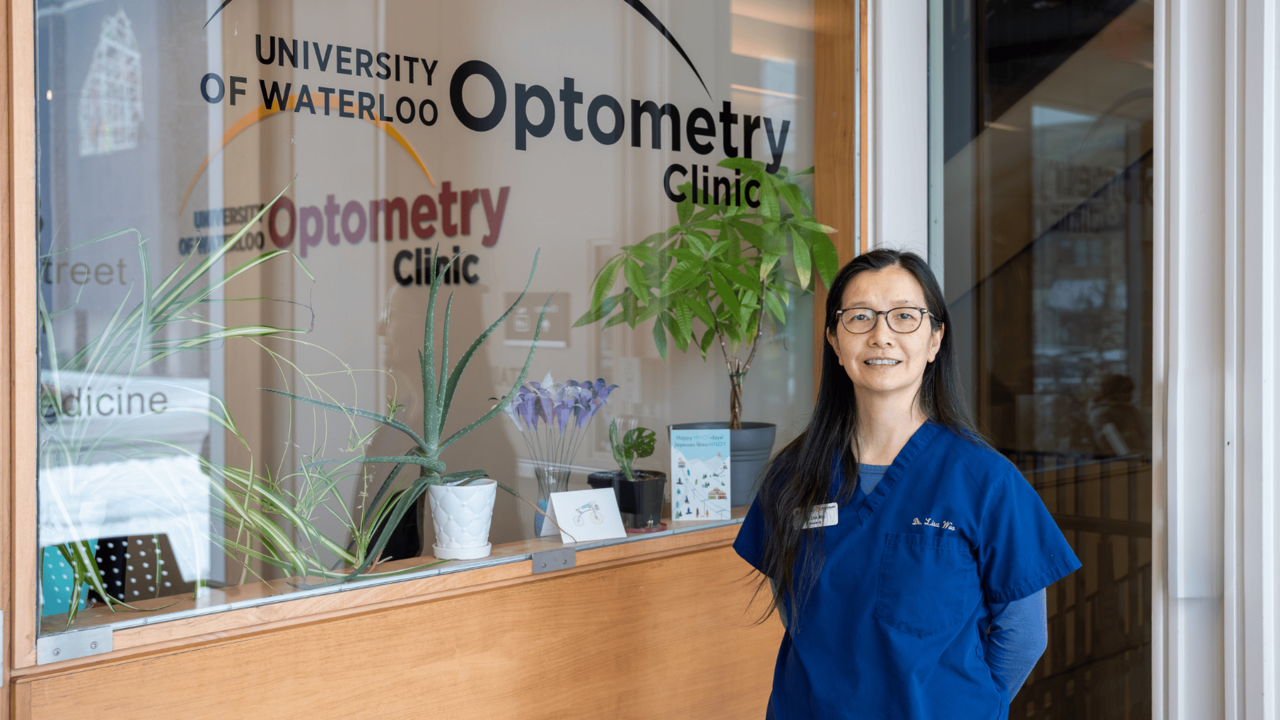
Dr. Lisa Woo standing in front of a window decal thay says
March 19, 2026

Eye clinic delivers services for refugees

The Waterloo Eye Institute provides eye care for newcomers and refugees to support their transition to the local community

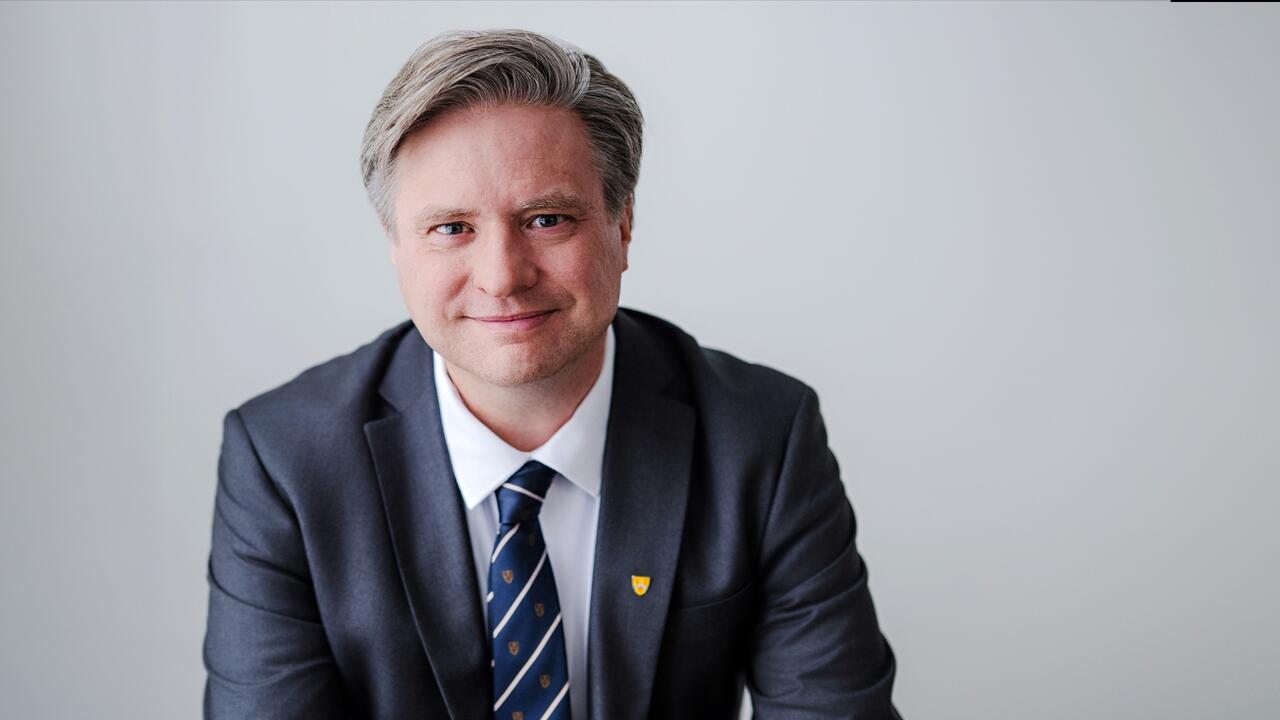
Dr. Bill Rosehart sitting down
March 9, 2026

Dr. Bill Rosehart named next President and Vice‑Chancellor of the University of Waterloo

Transformational academic leader and Waterloo alum appointed as the University’s eighth president

Two research use sensors while examining a pelvis in front of a wall of xrays
March 3, 2026

Intellijoint Surgical Inc. and Vena Medical awarded $1.9 million from Ontario’s Life Sciences Scale-Up Fund

Two University of Waterloo affiliated health-tech companies secure major provincial investment to bring lifesaving innovations to market

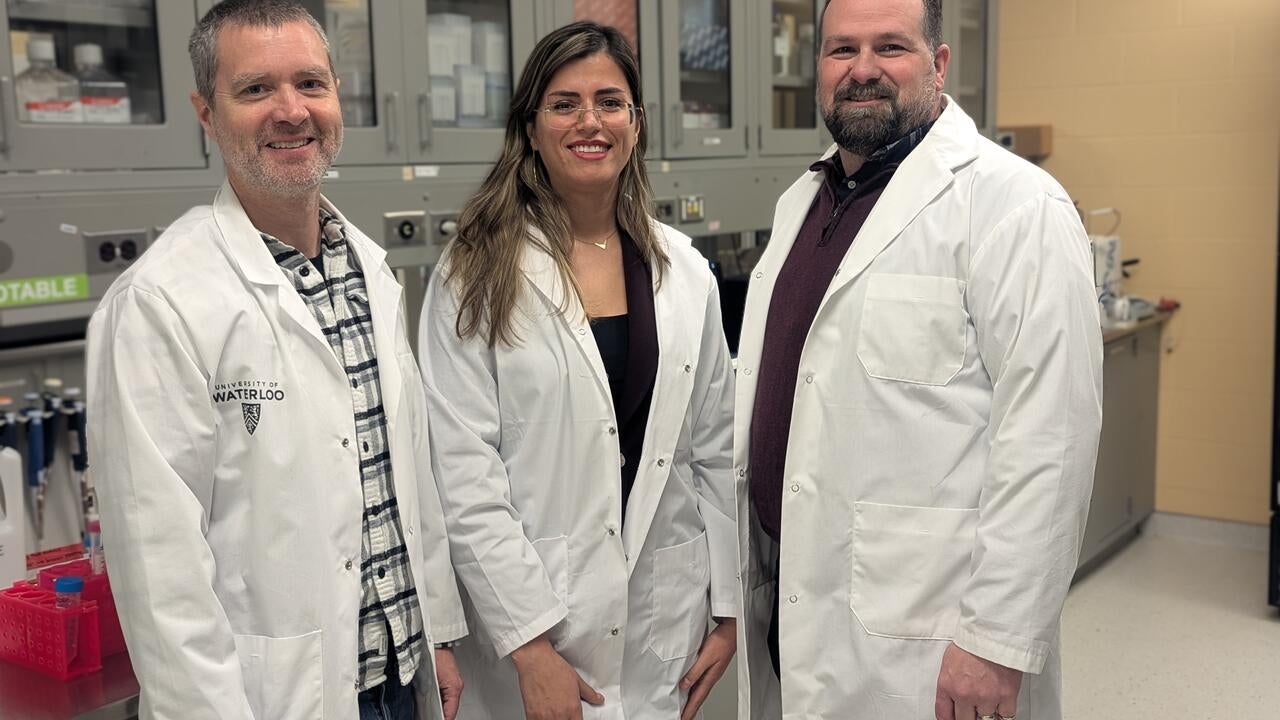
Waterloo researchers (L to R) Dr. Brian Ingalls, Dr. Sara Sadr and Dr. Marc Aucoin
February 24, 2026

Beating cancer by eating cancer

Researchers engineer bacteria capable of consuming tumours from the inside out 

February 17, 2026

Dean of Engineering appointed to Order of Ontario

Dr. Mary Wells recognized for decades of leadership in higher education

Chemical composition of a lithium-ion battery
August 23, 2012

Building better batteries

Canada Research Chair Linda Nazar is turning her attention to lithium-sulfur (Li-S) and lithium-oxygen (Li-O2) batteries. Because of their energy density, they have the potential to achieve a far higher energy density than their lithium-ion counterparts.

Mark Servos
August 23, 2012

Managing the risk of new contaminants

Mark Servos, who is Canada Research Chair in Water Quality Protection, studies the cumulative effects of diverse human activities in watersheds on ecosystem health.

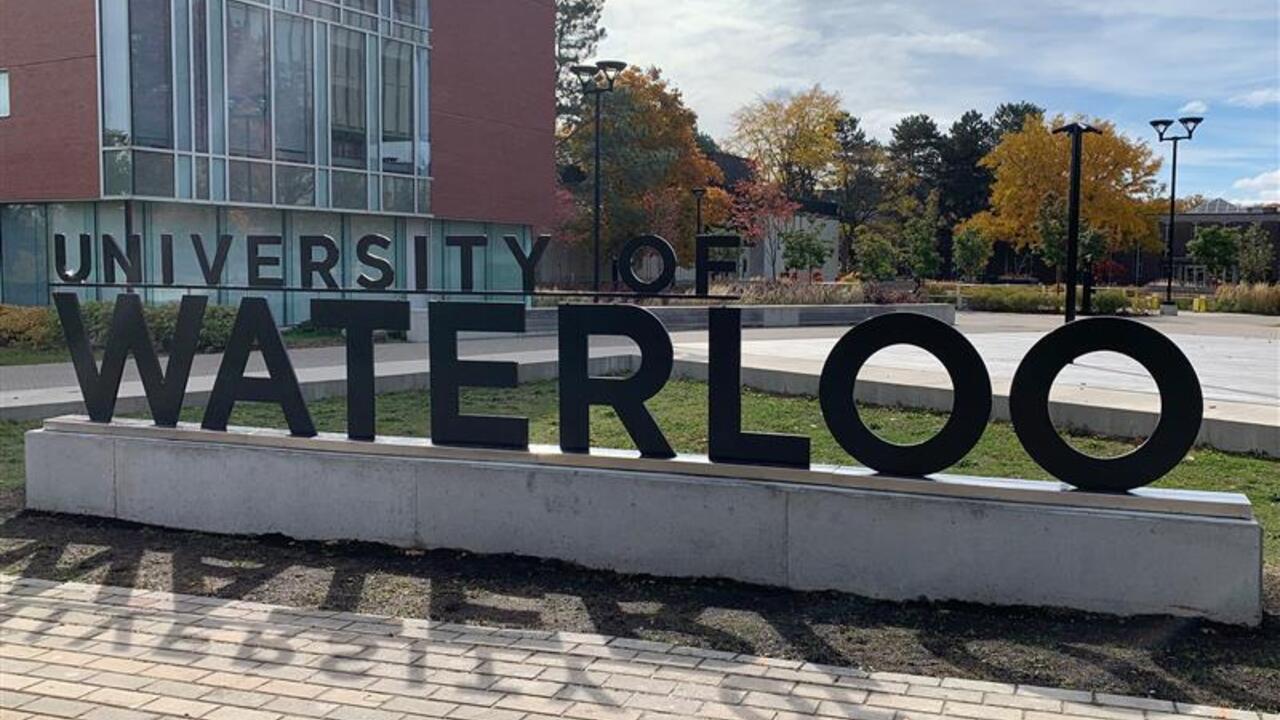
Waterloo University sign
August 15, 2012

International survey ranks University of Waterloo among top universities

The Academic Ranking of World Universities (ARWU) has again named the University of Waterloo among the top 200 universities in the world.

Waterloo University sign
August 3, 2012

Professional Services Building ‘TechTown’ donated to the University of Waterloo

The University of Waterloo today announced that TechTown, a 60,000 sq. ft. building has been donated to the university.

University of Waterloo sign
August 3, 2012

Five-year survey confirms Uruguay’s world-leading tobacco control strategy is delivering results

The International Tobacco Control Policy Evaluation Project (the ITC Project) today launched a new report on the effectiveness of tobacco control policies in Uruguay

Daniel Scott on a beach littered with debris, natural and man-made.
August 1, 2012

Protecting coastal communities from climate change

Socially, badly eroded or submerged coastlines would affect millions who live in places such as New York, Prince Edward Island and Shanghai. To help people at least consider the unknown, and prepare for the worst, several Waterloo researchers are participating in a five-year, $2.5-million project called the Partnership for Canadian Caribbean Community Climate Change Adaption. 

A snow covered landscape with trees in the distance
July 31, 2012

Reading our future in the snow

Richard Kelly doesn’t mind digging himself into a hole. Interpreting the climate change stories found in layers of snow is what he does for a living. Kelly is one of many researchers at the University of Waterloo closely studying how climate change will reshape civilization.

Christopher Fletcher
July 31, 2012

Using math to map climate change

University of Waterloo researchers bring gauges, satellites and their own keen eyes to the study of climate change. They are also using another tool — numbers. By feeding patterns and probabilities into computers, researchers can create numerical weather. 

Man's hand holding a glass of beer on a bar.
July 31, 2012

Breaking the link between alcohol and bad decisions

Judgment is something Mark Zanna has been studying for decades as a professor in the psychology department at the University of Waterloo. Recently, his research focused on decisions made while drinking.

Myra Fernandes
July 31, 2012

What we know about forgetting

Research at the University of Waterloo suggests we shouldn’t be too quick to blame faulty neurons for memory lapses: It’s probably context. 

Jonathan Fugelsang
July 31, 2012

The trick to truth

Research at the University of Waterloo is getting to the truth about truth. People are more likely to believe something given as fact if it is backed up by something authoritative, such as a statistic. Jonathan Fugelsang of Waterloo’s psychology department, and Jason Ozubko of the psychology department at the University of Toronto, teamed up to publish a study that took the search for truth a step farther.

Christine Purdon adjusting a camera mounted on a helmet being worn by a young woman.
July 31, 2012

Moving beyond doubt

Everybody does it: Walk out of the house, close the door, then wonder whether the stove was turned off or the lights left on. For some, however, it becomes a debilitating loop. Christine Purdon, a clinical psychology professor at University of Waterloo, explores obsessive compulsive disorder.
  • Load more
  • Share via Facebook
  • Share via Twitter
  • Share via Google+
  • Share via LinkedIn
  • Share via Email
  • TOP
  • Share
Waterloo news

Find an expert

Contact Media Relations


University of Waterloo
43.471468
-80.544205
200 University Avenue West
Waterloo, ON, Canada  N2L 3G1
+1 519 888 4567
  • Contact Waterloo
  • Maps & Directions
  • WatSAFE
  • Accessibility
  • Privacy
  • Copyright
  • Media
  • Careers
  • Feedback
@uwaterloo social directory

The University of Waterloo acknowledges that much of our work takes place on the traditional territory of the Neutral, Anishinaabeg, and Haudenosaunee peoples. Our main campus is situated on the Haldimand Tract, the land granted to the Six Nations that includes six miles on each side of the Grand River. Our active work toward reconciliation takes place across our campuses through research, learning, teaching, and community building, and is co-ordinated within the Office of Indigenous Relations.