Recovering Black legacies in Waterloo’s past
Discover the meticulous work that uncovered Black stories on campus and preserved them for the future
It’s not rare for the University of Waterloo’s archivists to feel like they’re looking for a needle in a haystack. But for one particular project, they weren’t sure what was inside the haystack.
The Ujima Black History Month project seemed simple enough: create informational posters featuring Black faculty and students from Waterloo’s past. In reality, it was difficult to know where to start.
“People will come to us and say, ‘So-and-so is retiring.’ Or, ‘We’re curious about this particular faculty member.’ This project was trickier because we didn’t have names to start the search with,” Danielle Robichaud says.
Robichaud is a digital archivist in Waterloo’s Special Collections and Archives (SCA), a part of the Libraries that acquires distinctive collections and makes them available to researchers, teachers, learners and community members. In many ways, archivists like Robichaud are keepers of the University’s history. They research and uncover stories that are waiting to be told.
“When we have a clear sense of where we come from, we are better positioned to make sense of where we are today” Robichaud says. “The poster project allowed us to study the early beginnings of international students, for example, or people in diaspora communities who were studying and teaching at Waterloo.”
Learning more about Black students and faculty members during Waterloo’s early years is especially important. Their stories offer new perspectives on a time when the University community was much more homogenous than it is today.
But first, the SCA team had to identify who they were.
Clues lead to individual histories
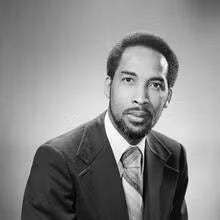
Given how respected and impactful his research was, he was already a known figure in our community. But the SCA team knew there were plenty of others without the same documented history. Archivists continued their search by looking through campus publications and taking stock of any potentially helpful information.
“We did know there was a group of students from various countries in Africa who received bursaries and scholarships to come study here,” Robichaud says. “Could we find pictures of any of those students, could we correctly identify them, and could we find consistent spelling for their names?”
Thanks to campus publications like yearbooks and newspapers, they could. One of those students was Ekwele Lobe Nwalipenja (BA ’66), a teacher from Cameroon who received a scholarship from the Presbyterian Church of Canada to study at United College (formerly St. Paul’s University College), an affiliated institution of Waterloo. After completing a political science degree, Nwalipenja returned to Cameroon and held many roles in government.
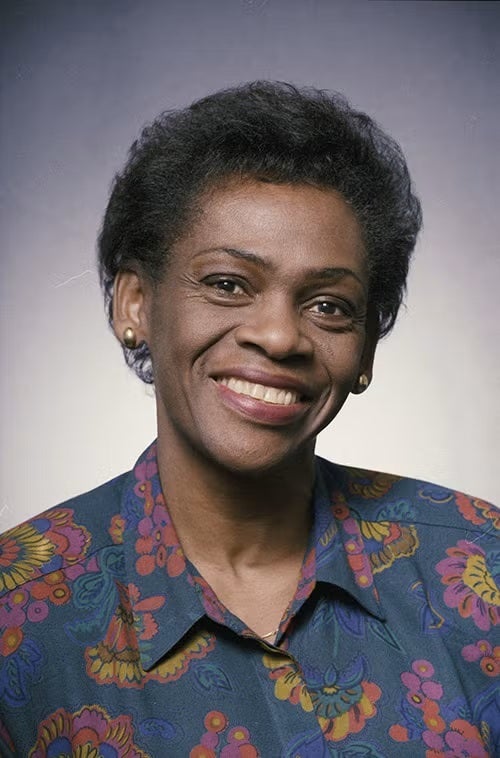
In the end, SCA staff identified multiple important figures from our history. Staff from the Faculty of Arts were able to use their findings to create posters that featured Black students, faculty and staff — including their images, names and influence on Waterloo. The posters were hung in campus buildings in February 2022. Years later, many of them still remain.
Creating history, thanks to you
Projects like the Ujima Black History Month poster series often aim to share a particular aspect of our history. But the histories they uncover will live on in SCA for years to come. For example, archivists were able to create authority records for many of the Black community members they identified. Anyone can view the records on SCA’s Archives Database. You can even request to see images, newspaper clippings and more from SCA.
To get the high-quality images needed for the archive, SCA team members use costly, specialized scanners and spend significant time reproducing each item. Much of this essential equipment is made possible by donor funding. Some of their most-used equipment are flatbed scanners, which often break down and need to be replaced within just two years. For more fragile items that can’t be flattened, they rely on two overhead scanners, including one that is available to the public and reduces the human labour that was once needed for all scanning.
Thanks to support and requests, Robichaud and her colleagues continue to build a history that can be shared by everyone in the Waterloo community.