WAT connects us
A closer look at the University of Waterloo’s beloved network of pedestrian tunnels and bridges
Although at times bewildering, the tunnels and bridges connecting buildings at the University of Waterloo have become beloved spaces for the generations of students who pass through them. So much so, in fact, that in March 2025, Waterloo students spontaneously held a funeral for an unlikely subject: the bridge between the Davis Centre (DC) and Math and Computer Building (MC).
“I know we are all still heartbroken by the loss of our favourite campus bridge, and the MC-M3 one,” wrote user Individual_Price2745 on the University’s subreddit. “We can put up some posters, say a few words and share our favourite memories of the bridge(s) … We should all band together during these trying times. They were taken from us too soon. Never forget.”
“That bridge was the best,” commented u/mr_gooses_uncle. “Everything connects to that bridge. It saved me from pouring rain, awful snow, ice storms and insanely hot days.”
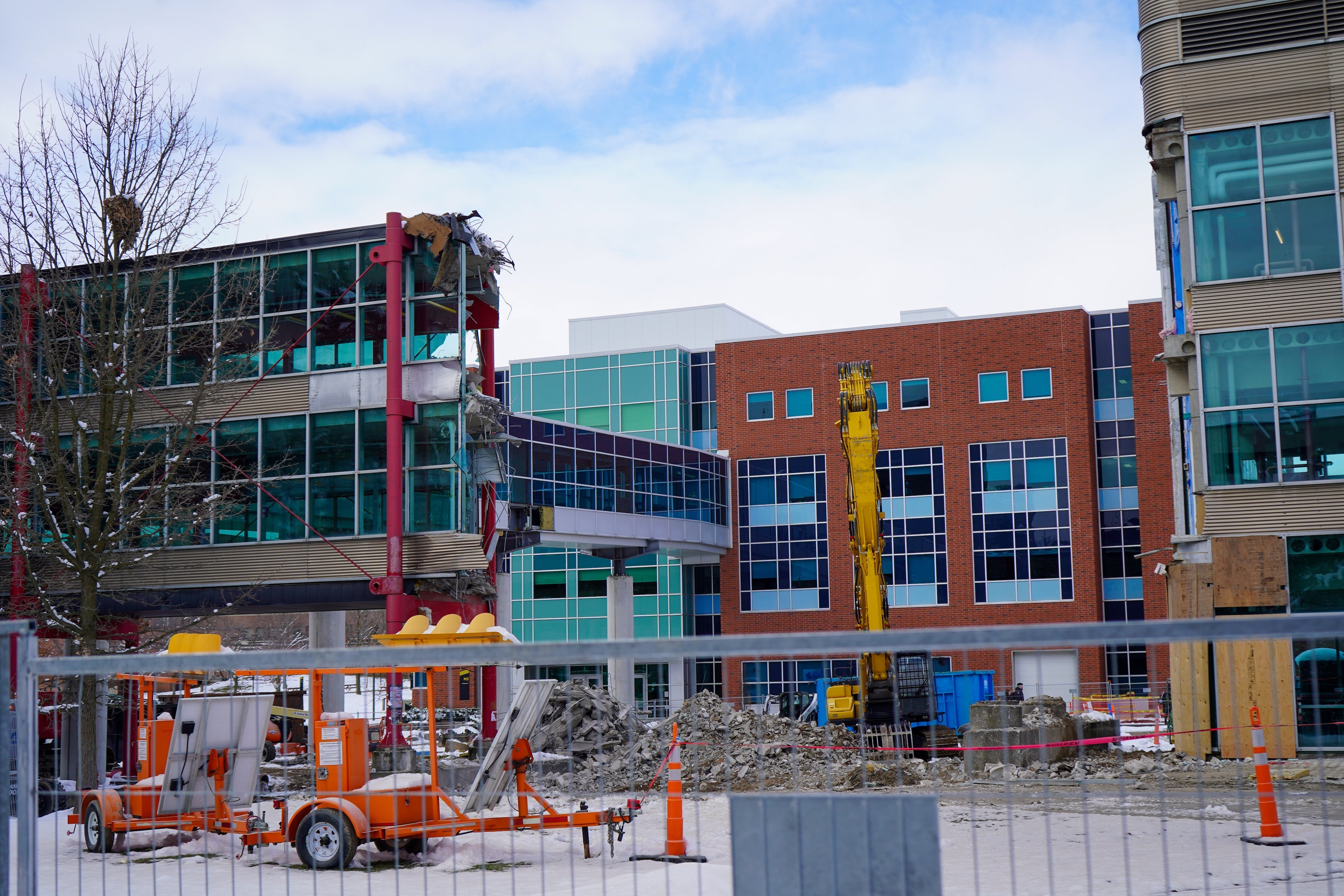
While the bridges were demolished back in December 2024 for a good cause — construction of the cutting-edge Mathematics 4 (M4) building that will open for business in 2027 — the students’ outpouring of feeling speaks to the crucial role that bridges and tunnels play at the University of Waterloo, particularly during harsh Canadian winters.
Fortunately, even with the DC and M3 bridges gone, campus is still home to an extensive network of tunnels and bridges: 641.96 metres of them in total.
“The tunnels were incorporated into the earliest iterations of the campus master plan and were part of the first generation of buildings on campus,” explains Rob Hunsperger, senior director for planning, design and construction at Plant Operations.
Many of the campus’s first tunnels were service tunnels, built to accommodate high pressure steam, electrical cabling and other infrastructure needs. As new buildings were added, pedestrian tunnels and bridges became integral parts of the building designs.
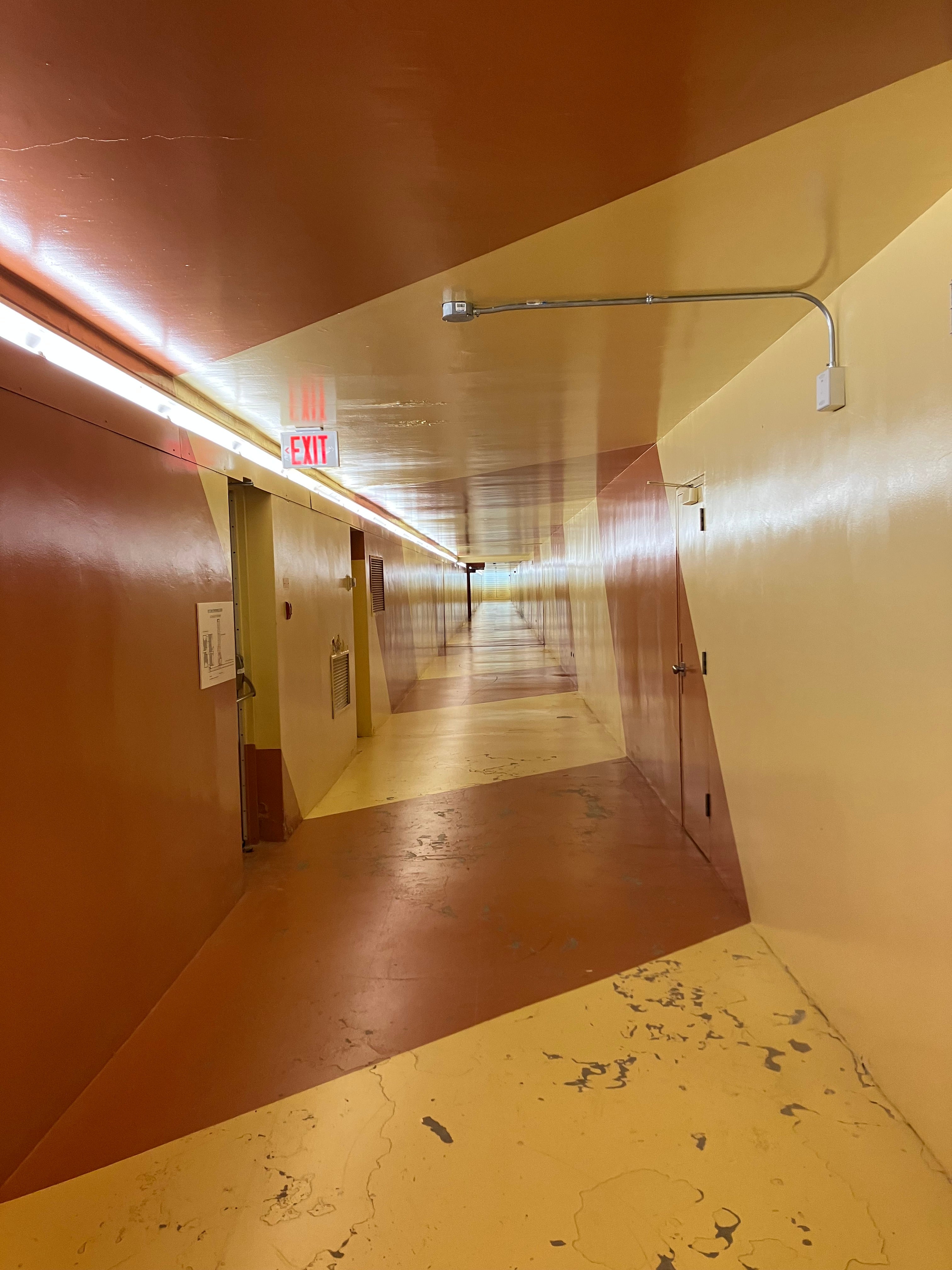
A September 1970 Waterloo Quarterly article celebrated the opening of the new tunnel connecting South Campus Hall and Arts Lecture Hall, with an “interesting optical effect”: the psychedelic yellow-and-orange artwork that remains 55 years later.
“This means of connecting buildings — particularly in campus architecture in the cold climates of Canada — emerged as a popular architectural strategy in the late 1960s and 70s, and was particularly popular in Ontario, Quebec and the Canadian prairies with some examples also found in the Maritimes,” says Dr. John McMinn, professor of architecture at the University of Waterloo. “The practice also extended to commercial and government building complexes during this period, as seen in the bridge connections in places as diverse as Calgary, Gatineau and Montreal.”
As beloved as they are, Waterloo’s tunnels and bridges do have downsides. Their locations and connections can be confusing; so much so that multiple students have created apps over the years to address the problem. The most recent intervention for navigating the tunnels, WATisGrass, was created in 2024 and has a web version as well as a mobile app.
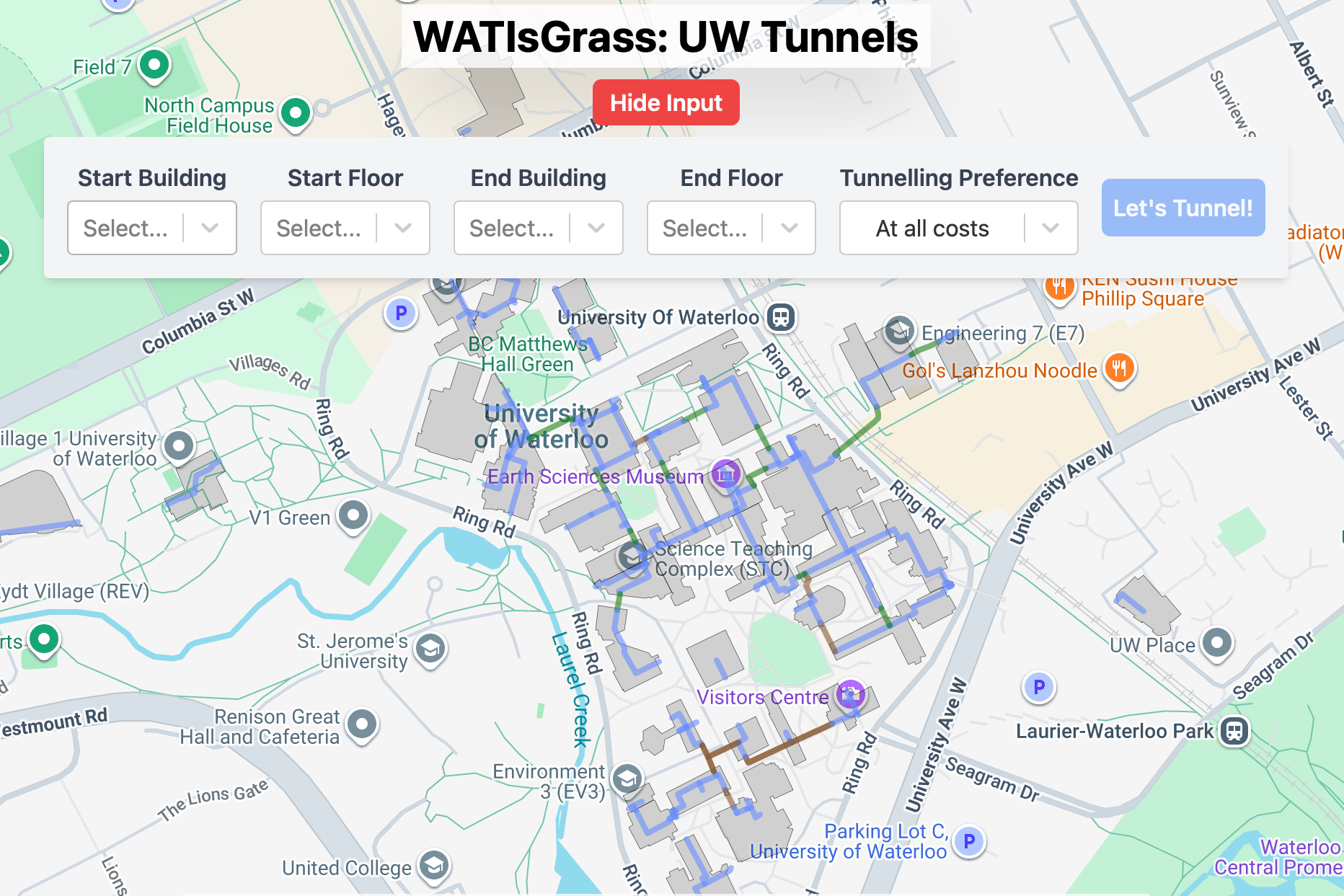
In at least one case, the labyrinthine nature of those connections has been appreciated: last January’s “Key Clues” puzzle hunt. Dr. Ty Ghaswala, assistant professor, teaching stream in the Centre for Education and Computing and principal engimatologist of the competition, used the layout of the tunnels and bridges for the hunt’s final puzzle. “There are lots of online maps of the tunnels, and nicely organised graphics of which buildings are connected to which — a puzzle writer’s dream” he says.
While tunnels and bridges have faded from popularity in North American cities and campuses because they can be confusing and difficult to maintain, they remain popular at universities like Carleton University, McMaster University and Waterloo.
As another winter looms, Waterloo’s tunnels and bridges aren’t going anywhere.
Looking ahead, M4 will incorporate a wing of DC and restore the bridges to M3 and MC, explains project manager Tyler MacIntyre, but the “entire building will connect directly to MC, allowing seamless transition from each building.”
In other words, the beloved DC-MC connection will live again.