July 5, 2012
Portable, on-site testing for toxins
Testing for toxins normally involves taking samples to a lab. Chemistry professor Janusz Pawliszyn has developed a portable system that gives immediate results.
Testing for toxins normally involves taking samples to a lab. Chemistry professor Janusz Pawliszyn has developed a portable system that gives immediate results.
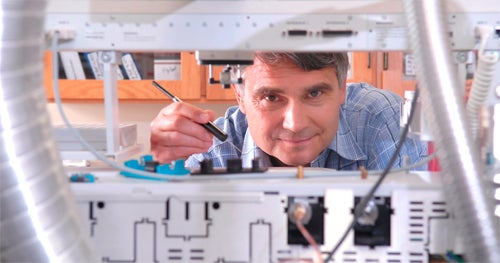
When the World Trade Center fell in 2001, investigators needed a way to test for toxins in the air. The work was dangerous, the scene a jigsaw puzzle of chaos. They needed a solution that would give them the data ASAP.
So they turned to system that used solid-phase microextraction (SPME). The technology, invented by Janusz Pawliszyn, a Waterloo analytical chemist, has revolutionized chemical testing.
SPME is widely used in laboratories, but the most exciting application for the technology is found on-site. Rather than collecting samples of air, water, soil, or blood and transporting them back to the lab for analysis, SPME allows samples to be tested where they’re taken.
The result? A sample preparation that produces faster and more reliable data, says Pawliszyn, who holds the Canada Research Chair and NSERC Industrial Chair in new analytical methods and technologies.
To sample environmental toxins or food contaminants, or perform in-vein blood analysis, the tester:
“Research requires an understanding of the depth of the subject and a vision of where analytical chemistry is going,” says Pawliszyn. “You need to try different things and commit time to it.”
Waterloo helps makes that happen.