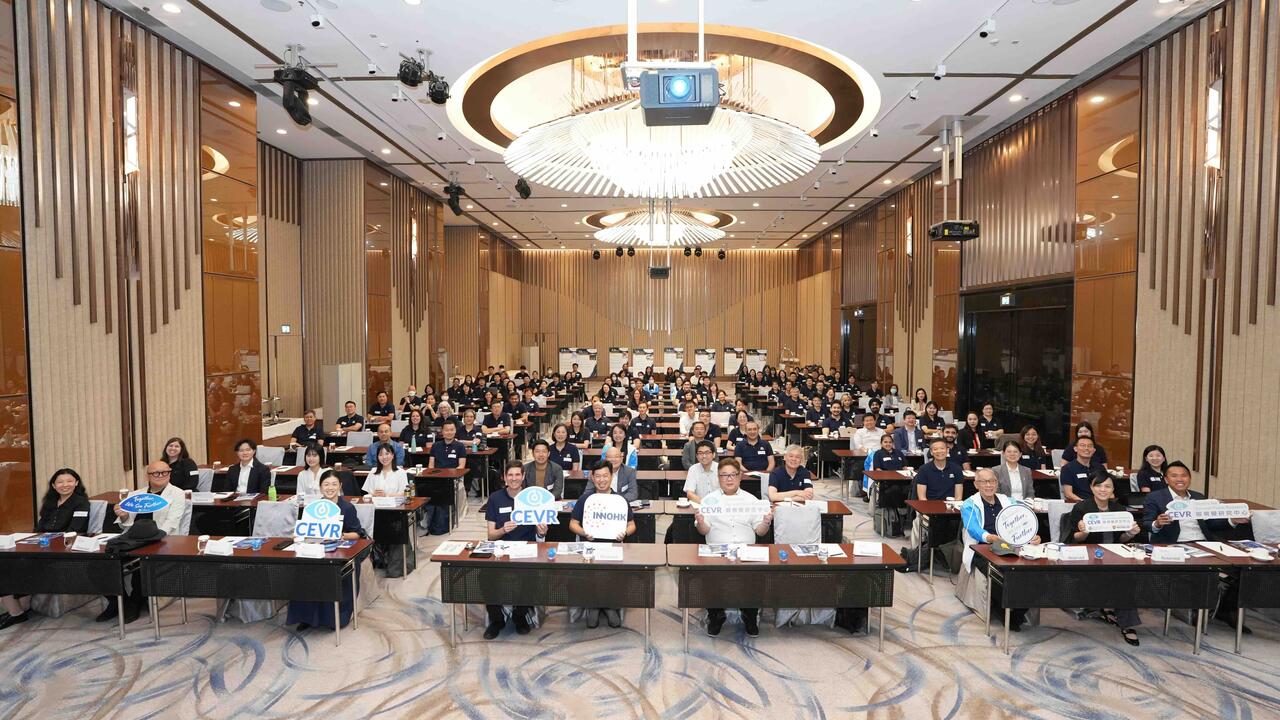
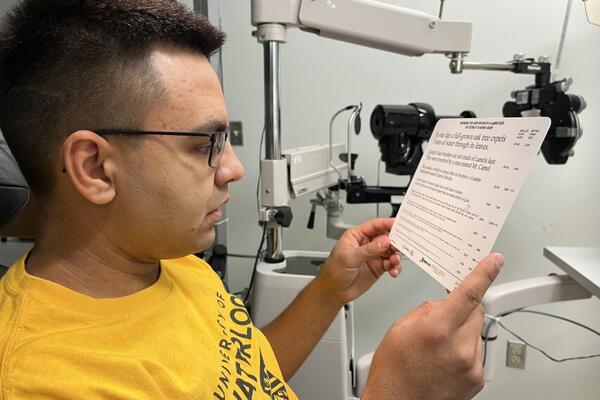
The world’s first international hub for vision science, a research collaboration between the University of Waterloo and The Hong Kong Polytechnic University (PolyU), has had its funding extended through to 2030.
The mission of the InnoHK Centre for Eye and Vision Research (CEVR) is to generate technologies that prevent, detect, treat and mitigate vision loss. Its goal is not only to conduct world-leading vision science research but also to explore opportunities for translating innovations into practical solutions that enhance eye health.
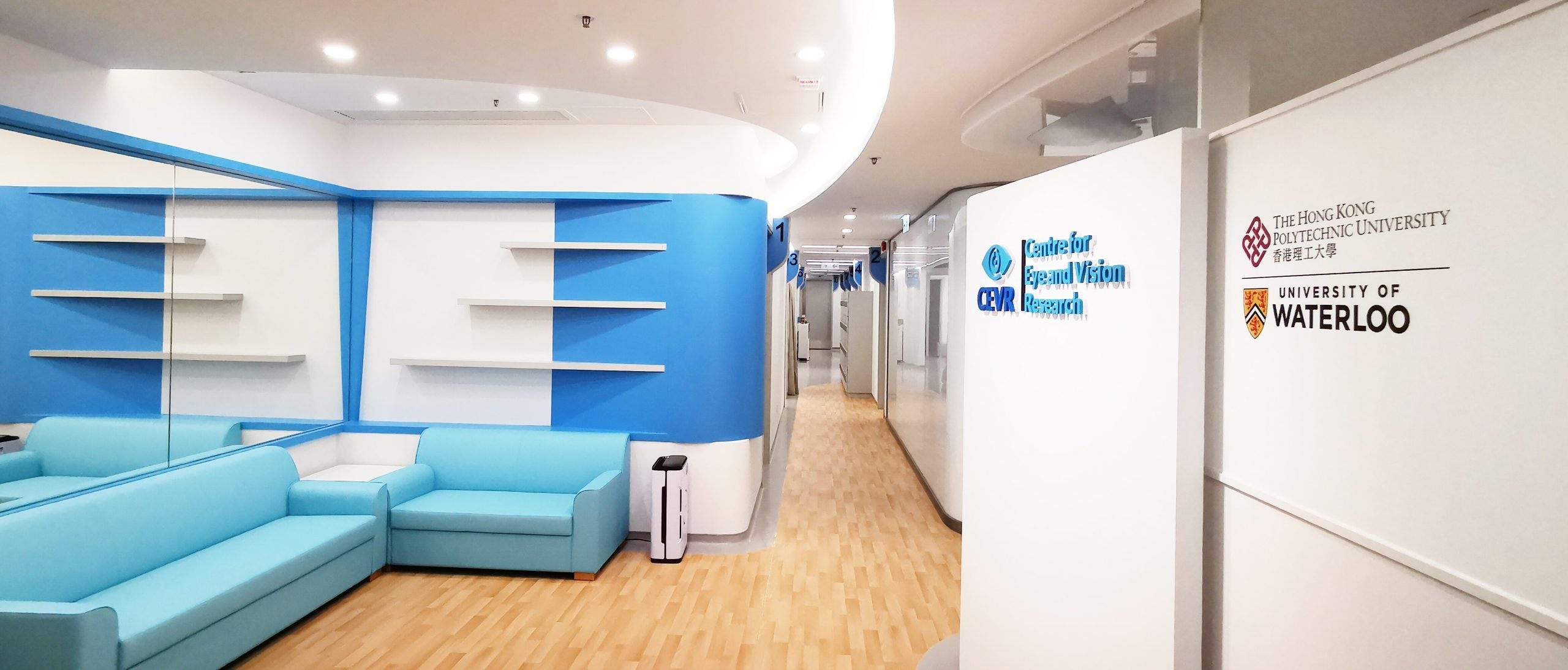
This type of focused international collaboration allows researchers to share diverse perspectives, unlocking new insights and driving innovation. Located in Hong Kong’s Science and Technology Park, CEVR was launched in 2021 with an initial five-year funding commitment from the InnoHK initiative of the Innovation and Technology Commission of the Hong Kong Special Administrative Region of the People’s Republic of China.
CEVR’s CEO and scientific director is Dr. Ben Thompson, a Waterloo Faculty of Science professor and director of the School of Optometry and Vision Science. The COO and deputy scientific director is Prof. Allen Cheong, who is also associate head of PolyU’s School of Optometry.
“We are delighted to have CEVR’s funding extended for another five years,” Thompson says. “CEVR has already come a long way in advancing its projects and bringing them to market. We have launched companies, won innovation awards and secured early customers. This new funding will allow our companies and technologies to mature and for our research to be brought into use in clinics, at companies and perhaps in patients’ homes.”
“CEVR is working hard to improve eye and vision health through research creativity, collaboration and market solutions,” Cheong says. “We believe the centre will ultimately be self-sustaining, because with an aging population, there is enormous need for the technologies we are developing to help people see as well as possible.”
CEVR teams have won multiple medals at the Asia Exhibition of Innovations and Inventions and the International Exhibition of Inventions in Geneva. Other honours include a China Association of Inventions award and a Lucian Blaga University award for scientific creativity and originality.
Each CEVR project has co-principal investigators from Waterloo and PolyU as well as collaborators from a range of fields. An initial 25 projects have been whittled down to 16 focuing efforts on those with the greatest health impact and market potential.
Projects include an “eye on a chip” preclinical testing platform that replicates the complexity of the eye’s cellular environment and augmented reality software for smart glasses or headsets to help people with vision impairment navigate their environments independently.
Other developments include anti-myopia screens that make screen time safer for children’s developing vision and a biomimetic drug delivery platform that uses natural immune cell membrane materials to target and deliver drugs directly to sites in the retina.
To learn more, visit CEVR’s website.