Reducing a business’ carbon footprint is no small task. For Ontario’s Electrical Safety Authority, which operates province-wide and logs eight to nine million kilometers annually, the challenge is especially complex. Recognizing the scale of the issue, they turned to the next generation of climate adaptation thinkers at the University of Waterloo to explore solutions.
 Signing on as an industry partner in Waterloo’s Environment and Business Capstone Project, Eric Kingston (BES ’97), Vice-President Operations, posed their electrification challenge to students asking them to consider their operational needs and challenges across jobs, locations and cost.
“We cover such a vast geography,” he explains. “Having one solution isn’t feasible. What we need from a vehicle for Downtown Toronto might be very different than a mining site.”
With a clear picture of the scope of the issue, the students worked independently to develop a solution, meeting with Kingston at regular intervals to refine the proposal.
“That back and forth, that iterative piece is where the value was for both them and for me. They got a better appreciation of the complexities of the business, and we were able to step back and reflect a little more on what we were doing and why. It was fresh eyes to an old problem, and it was also dedicated eyes to a problem.”
The final proposal included an emissions tracking system to establish the base emissions for the first time so that measurable goals could be set in the future. This was paired with recommendations to change the mix of vehicles used in operations.
“We started right away,” says Kingston. “We put the tracking in place, and then we started transitioning some of our vehicles to smaller, more fuel-efficient models and incorporating electrification into our fleet.”
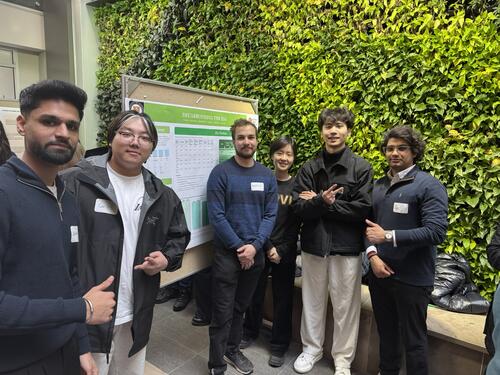
Since the capstone, nearly a third of the Electrical Safety Authority’s fleet has been shifted. Over the past year, 31 vehicles have changed to either plug-in hybrid electric, full electric or hybrid models, and approximately 100 vehicles have been transitioned to mid-sized trucks that are more fuel efficient.
As the Electrical Safety Authority continues to transform their fleet, it has entered the next phase of the students’ proposal. They are conducting a cost analysis for each vehicle to assess balancing the business needs, affordability and environmental impact. A balance that they learned together is not only possible, but achievable.
By combining technical expertise with environmental and business insights, Waterloo students are helping industry leaders like Kingston chart a more resilient future, proving that the next generation isn’t just ready for the climate crisis, they’re already helping to find solutions. In fact, this solution is one of many original ideas to emerge from capstone courses across Waterloo some of which were highlighted at the inaugural Environment Capstone Symposium this past March.
As Waterloo continues to bridge academia and the workforce, we invite you to collaborate. Whether you share an industry challenge and become an industry client, engage an intern or hire a co-op student, let’s solve our greatest challenges together.