The Waterloo alum helping power the Blue Jays
Jeremy Reesor's journey from biology student to VP of Baseball Operations shows how critical thinking and data science help fuel a championship‑calibre team
For most kids, the dream is to hit the game-winning home run. For Jeremy Reesor (BSc ’12), it was to build the roster that made it possible. While his friends played baseball video games one game at a time, Reesor was simulating entire seasons, crafting lineups and imagining what it would take to run a Major League team.
Today, that childhood passion has become reality. As vice-president of Baseball Operations for the Toronto Blue Jays, Reesor is at the heart of the decision-making that shapes one of baseball’s most exciting franchises, a team that came within two outs of winning the World Series last season.

But his path to the front office was anything but straight-forward.
A top student in Stouffville, Ontario, Reesor followed his older brother to the University of Waterloo, enrolling in biology with plans for medical school. Living in residence at Conrad Grebel University College, he found a welcoming community and a program that challenged him to think critically.
“About halfway through second year, I decided to shift gears and go into the ecology side of biology,” Reesor says.
It was in courses related to data science and statistics that Reesor started to link his love of baseball and sports with analytics. At the same time, he began to lean towards graduate studies and possibly a career in academia or industry.
“I did a field course in the Bahamas with now emeritus professor Ralph Smith and that led to an undergraduate thesis in his lab.”
After graduating, Reesor decided to take a year to contemplate what to do next. He briefly worked for a sports fantasy startup and applied for an internship with the Jays.
The internship didn’t pan out, but he did manage to land a role with the team’s grounds crew where he’d help roll up the turf between events.
“I was a bit naïve to think that the role might lead me to bumping into someone in the front office and talking my way into an operational job with the team,” Reesor explains.
Instead, he applied for another analytics internship and this time, he got it. He then worked himself through the ranks to where he is today.
Especially at the start of his time with the Jays, he battled imposter syndrome. “I’d never played competitively, so I worried I didn’t know what I didn’t know,” he says. But his analytical mindset, sharpened at Waterloo, proved invaluable.
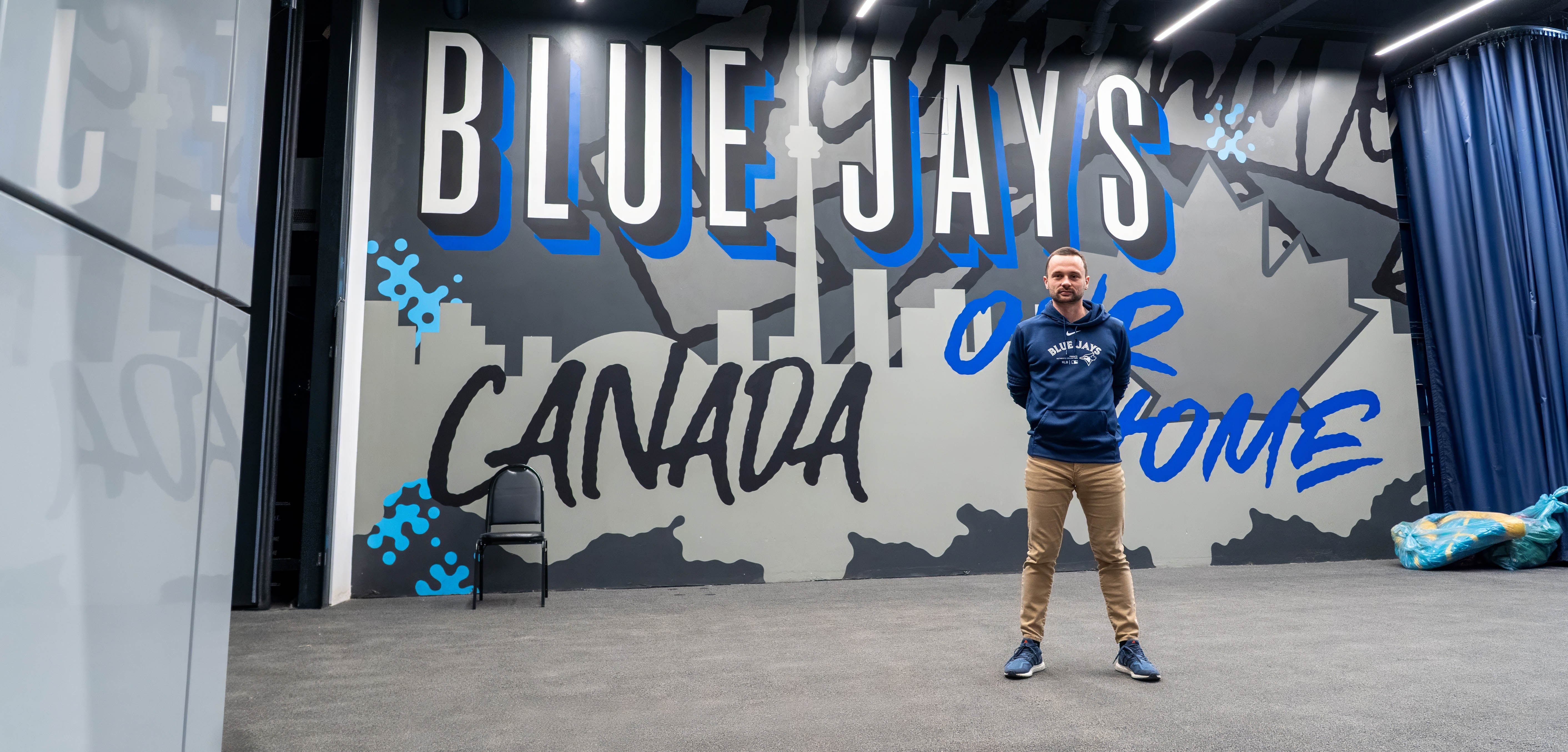
More than a decade later, Reesor is part of the Blue Jays’ senior leadership team, reporting directly to general manager Ross Atkins. He works alongside the team’s assistant general managers focusing primarily on the Major League roster including trades, free agents, day-to-day transactions, player development and the strategy behind how they deploy players.
Having been with the team for more than a decade, Reesor has experienced the same highs and lows as the team’s fans. He says the front office atmosphere tends to stay pretty steady, never getting too high when things are going well and never getting too low when the team isn’t winning.
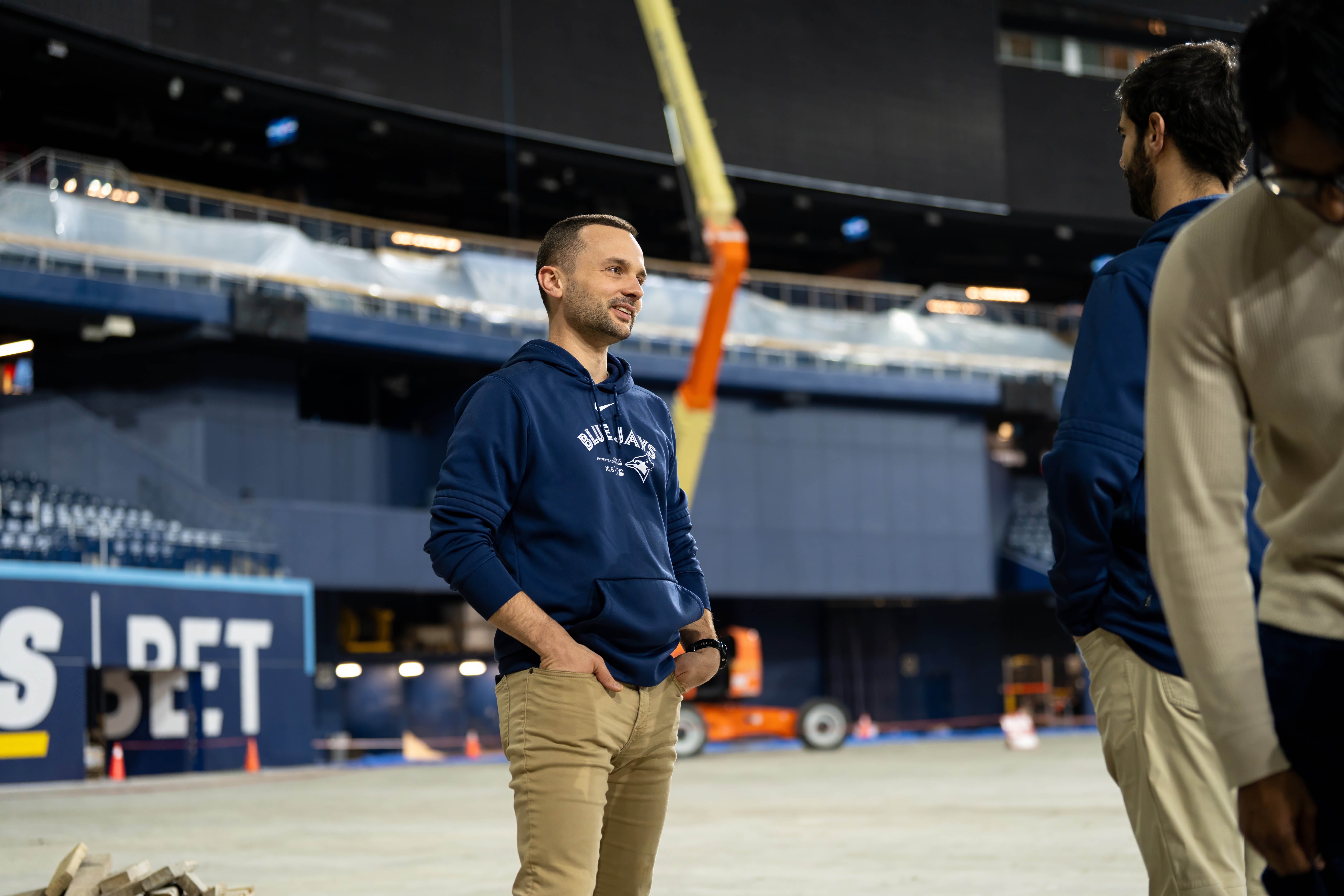
He has watched as the team’s culture has evolved across different management groups. The evolution has seen the team prioritizing players’ needs and thinking every day about how they can get better through finding small edges, whether in facilities, development or acquisitions.
“The goal is simple: win a World Series,” Reesor says. “This is an organization people want to be part of, and that’s a big reason for our success.”
Reesor credits Waterloo for shaping the analytical approach that drives his work today. “Waterloo taught me how to think critically and that’s been essential.”
He’s not alone. The Blue Jays’ growing investment in technology has created opportunities for Waterloo alumni in data science, web development, computer engineering and health. “When you’re hiring tech talent in Toronto, there’s a good chance they’re from Waterloo,” Reesor notes.
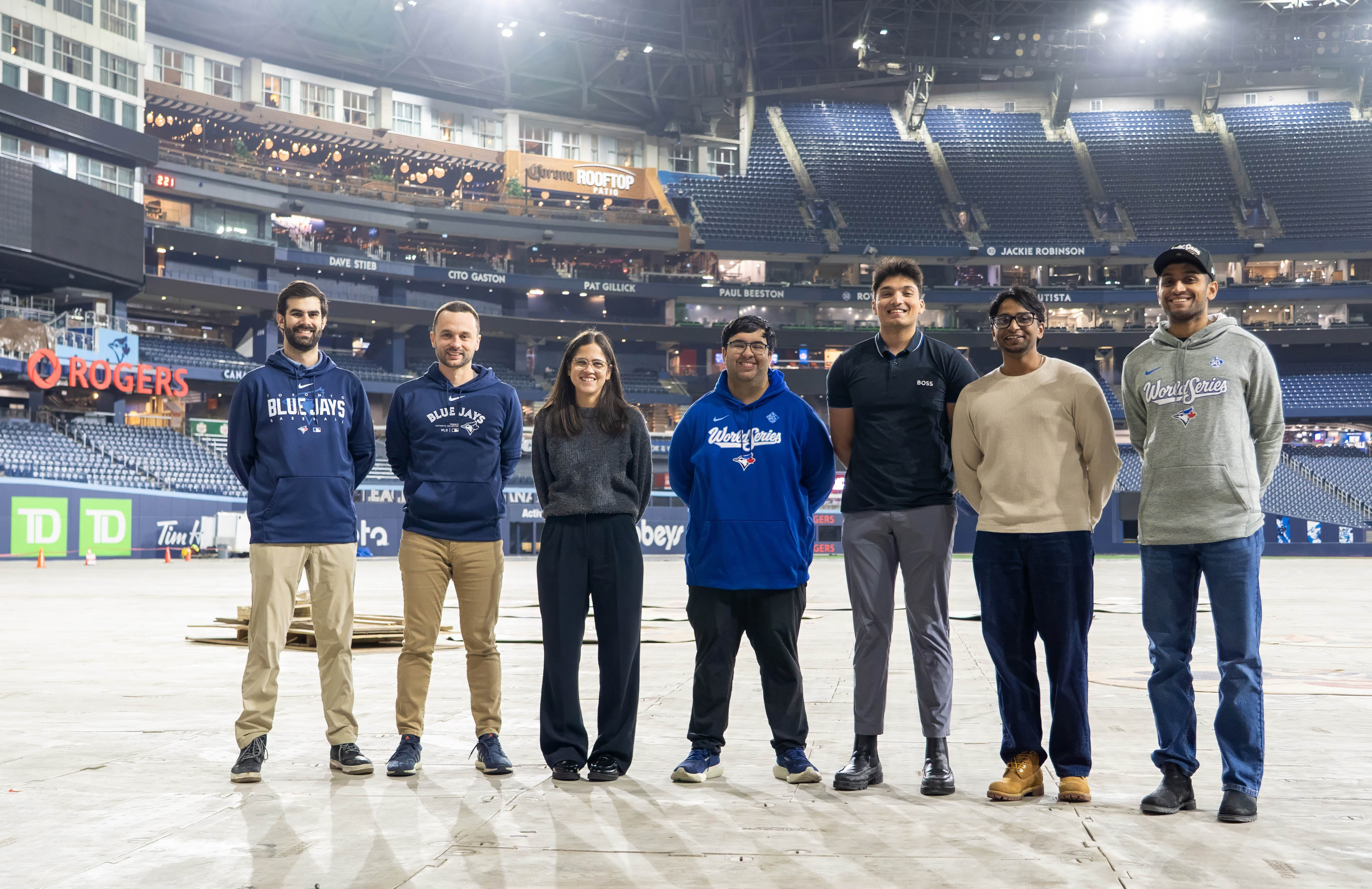
Some of the University of Waterloo Alumni who work for the Blue Jays (Pictured left to right: Tommy Farah, Sr. Analyst, Player Analysis; Jeremy Reesor, Vice-President, Baseball Operations; Gabrielle Campos, Senior Data Engineer, Baseball Systems; Khalid Talakshi, Baseball Systems Engineer; Jalal Zaheed, Player Valuation Analyst; Joshua Poozhikala, Machine Learning Engineer and Adam Sequeira, Data Engineer, Baseball Systems)
The team is also a Waterloo co-op employer and hires students to support the building of technical tools.
After one of the most memorable seasons in Blue Jays history, Reesor and the team’s front office have been busy trying to make the team even better in 2026.
“I’m proud to represent the Blue Jays as a Waterloo alum and am looking forward continuing to do so for a long time.”