Implementations of quantum systems and their use
As part of the Q4Health Information Session series, TQT hosted the fourth session on Implementations of quantum systems and their use.
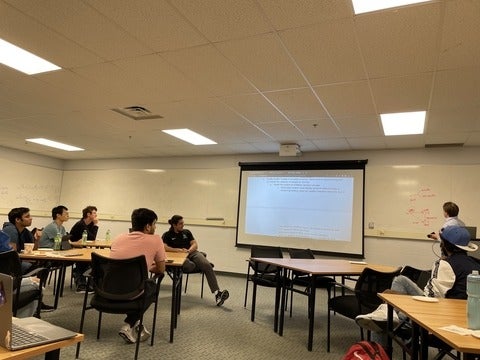
As part of the Q4Health Information Session series, TQT hosted the fifth session on Quantum Algorithms.
As part of the Q4Health Information Session series, TQT hosted the fourth session on Quantum Simulation.
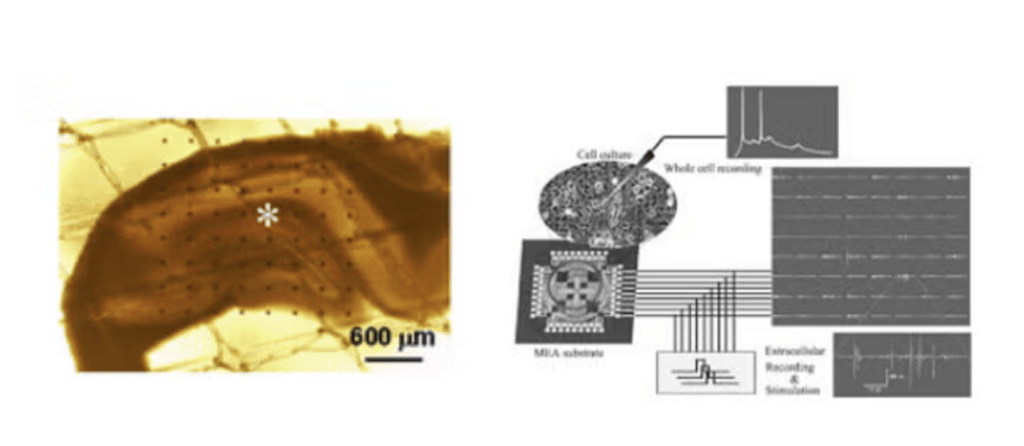
Professors Michel Gingras and Zoya Leonenko from the Physics & Astronomy Department have recently started a new research effort in Quantum Neuroscience. With their colleagues Professors Michael Beazely (School of Pharmacy) and John Mielke (School of Public Health and Health Systems), they are combining their expertise in physics, biology and neuroscience with the ambitious goal to discover novel quantum effects in neuroscience, an exciting direction within the growing field of quantum biology.
Researchers uncovered new information about an important subatomic particle and a long-theorized fifth force of nature.
A team of researchers at the Institute for Quantum Computing (IQC) have developed a new quantum simulator that uses microwave photons in a superconducting cavity to simulate particles on a lattice similar to those found in superconductors or atomic nuclei.
Researchers have developed a new way to measure how quantum information behaves in correlated quantum systems that could be useful for understanding and improving quantum devices and quantum error correction codes.
Aravindhan Ganesan, a pharmacy professor, and Subha Kalyaanamoorthy, a chemistry professor, are two of these scientists. The husband-and-wife team are new to the University of Waterloo, joining just months before COVID-19 sent students and faculty alike to remote learning and working. In a recent publication, they showed how drug design methods can be refined to target the main protease, or Mpro , a part SARS-CoV-2 which contributes to viral replication.
Two projects most recently supported by the Quantum Quest Seed Fund (QQSF) aim to make quantum concepts more easily understood. The goal of one project is to explain how differences in cultural background influence perception and acceptance to the basic principles of quantum physics, while the other aims to use interactive digital storytelling to advance quantum literacy.
Researchers at the Institute for Quantum Computing (IQC), the Massachusetts Institute of Technology and the University of Texas at Austin, as well as Qingdao University and Shandong University in China, harnessed a technique normally used in physics to investigate batteries and discover their inner workings.