
As part of the Water Institute's WaterTalks lecture series, Ali Ameli, Professor & Director of HydroGeoScience for Watershed Management (HGS-WM) Research Group, UBC, will present The functional reality of watersheds: Complexity, time-variance, and the limits of current deep learning models.
This event is in person in DC 1302.
More Info
As rainfall–runoff datasets expand and machine learning models achieve unprecedented predictive skill, a deeper question arises: are these tools truly learning the complex ways that watersheds store and release water—what hydrologists call watershed hydrologic function—or are they merely fitting statistical shadows of spatial processes they cannot see?
This talk explores three interconnected questions:
How prevalent is functional complexity and time-variance? Drawing on data from over 80,000 watersheds across 97 countries, I examine where and how often consistent, deterministic rainfall–runoff functional relationship occurs—and where, and to what extent, this relationship varies over time.
What drives functional time-variance? Even under similar water inputs and antecedent soil moisture conditions, watershed functional behaviour varies strongly over time. I investigate how climate variability and lateral heterogeneity in landscape properties interact to produce temporal variability in watershed hydrologic function.
What do deep learning models actually learn? Despite high predictive accuracy, do LSTMs capture the underlying mechanisms and time-variance of hydrologic function, or default to simplified correlational patterns when mechanisms are inaccessible? I use a new explainable AI framework to probe the LSTM models.
I close by discussing implications for modeling and monitoring network design—and offer a call to re-ground hydrologic modeling in the functional reality of the systems we study.
Speaker Bio
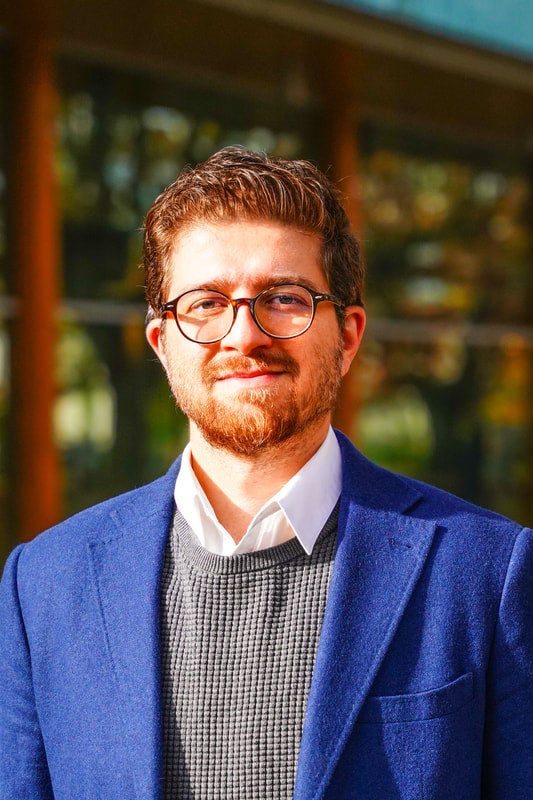
Ali Ameli is an Assistant Professor in the Department of Earth, Ocean and Atmospheric Sciences at the University of British Columbia. His research sits at the intersection of hydrology, hydrogeology, and data science, focusing on how the physical structure of landscapes governs water movement from rainfall to streamflow. He combines mechanistic modeling with machine learning and remote sensing to improve predictions of water availability, flood risk, and water quality—particularly in ungauged basins. His work spans scales from individual hillslopes to continents, with applications to climate change impact assessment, wetland conservation, and groundwater management. He collaborates with government agencies and conservation organizations to translate scientific insights into practical tools for water resource decision-making. Ameli is a recipient of the 2025 Canadian Geophysical Union Early Career Award.