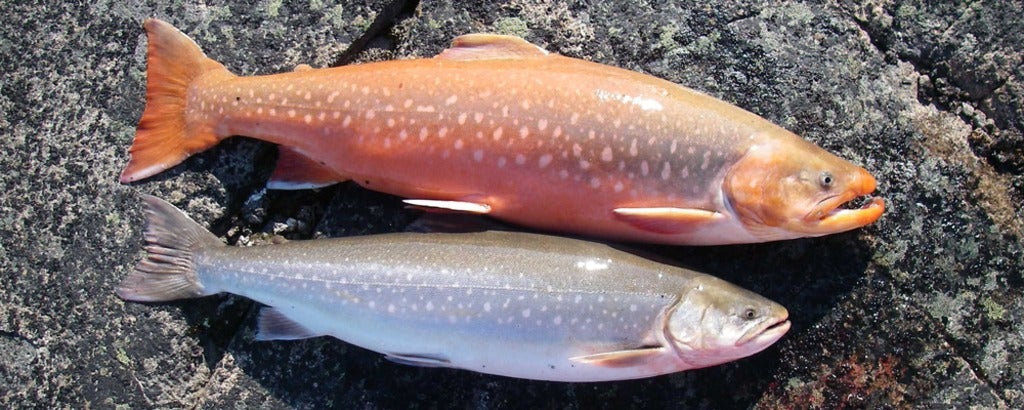
Feds invest $1.2 million into Waterloo research on Nunavut fisheries
Research will address climate change and rise of land masses after last glacial period.
Research will address climate change and rise of land masses after last glacial period.
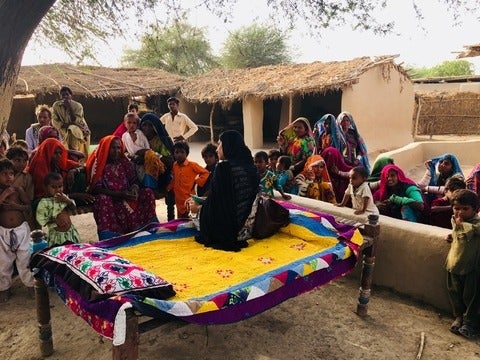
It’s 8:00 in the morning in the Sindh province of Pakistan, and Sajida Awan is preparing to head back into the field to conduct a full day of interviews with local farmers. The temperature is rising, it will be 50 degrees Celsius by mid-day, and it will take her at least two hours to get to her location.

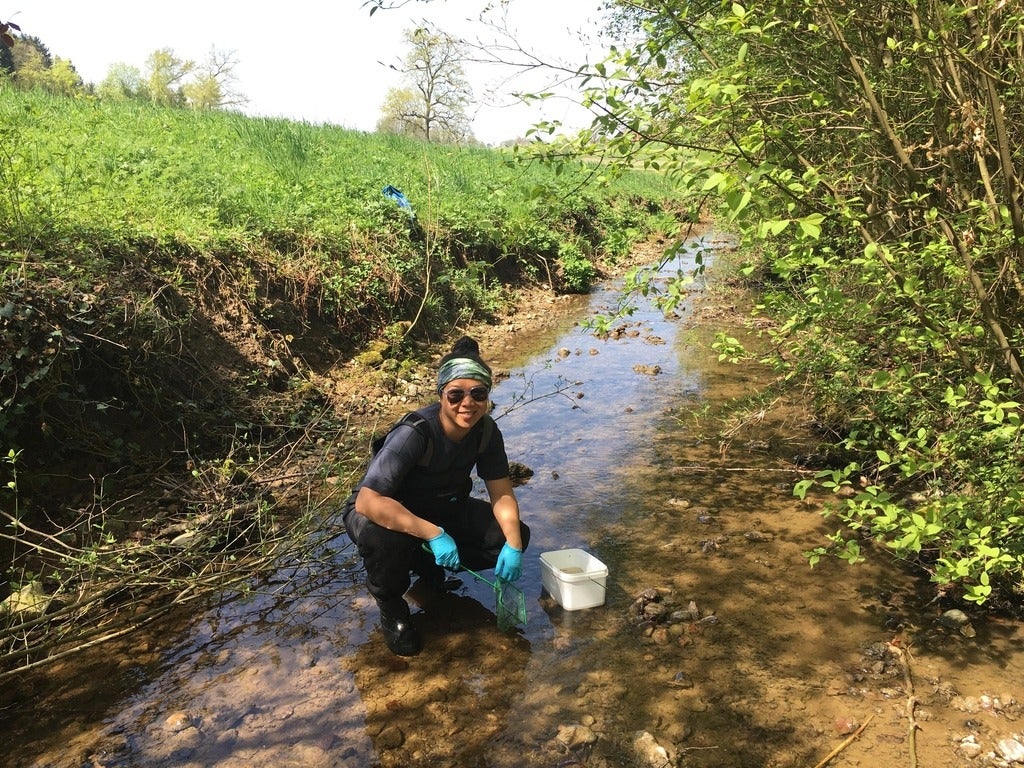
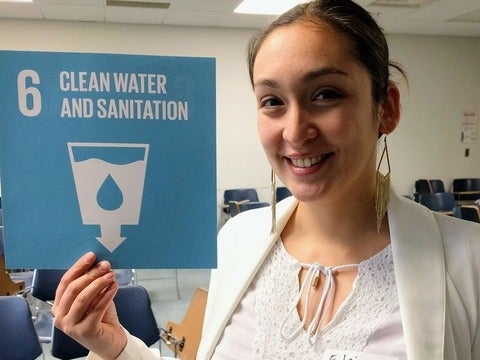
Elaine Ho, PhD student in Waterloo’s School of Environment, Resources and Sustainability, has always had an affinity for water. As a child, Elaine was fascinated at the world beneath the surface that is so different from our own.
Facilitating and promoting interdisciplinary water research and education is a primary role of the Water Institute at the University of Waterloo. On a regular basis, the Water Institute brings an RBC Visiting Fellow to campus to stimulate discussion and the exploration of collaborative research opportunities with Water Institute faculty and students.
A Canadian Water Network expert panel which includes Water Institute member and professor in Waterloo’s Department of Biology, Mark Servos, is pushing for a more holistic and localized approach to wastewater management as the list of potential contaminants flowing to treatment plants across the country continues to expand.
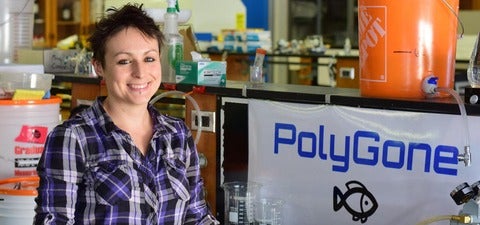
Lauren Smith, a graduate of Waterloo's Collaborative Water Program, and her Velocity Science start-up PolyGone Technologies are developing products to tackle the bigger fish in the microplastics problem – microfibres.

Water Institute member and professor in Waterloo's Faculty of Environment, Derek Armitage, is this year's winner of the 2017-2018 Award of Excellence in Graduate Supervision at the University of Waterloo.
Four interdisciplinary teams led by University of Waterloo researchers are set to advance water research in creative, unconventional ways. New approaches to detect and manage micropollutants, techniques that predict the impacts of climate change on snow and lakes, and new modelling techniques will be explored through $69,000 in Water Institute seed grants.
Today, the Water Institute announced the winners of its most recent competition.
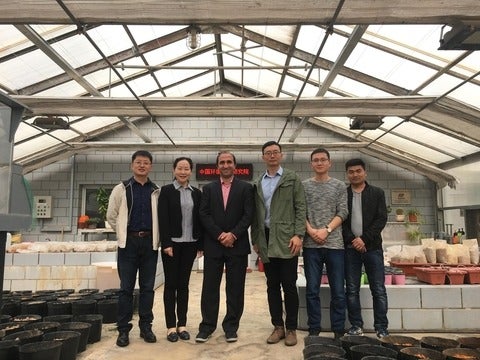
Water Institute member Fereidoun Rezanezhad, assistant professor in Waterloo’s Department of Earth and Environmental Sciences, attended a meeting in Beijing, China to discuss how to strengthen and develop collaborations in soil science environmental projects and technology between Water Institute members and the China Research Academy of Environmental Sciences (CRAES).
For Water Institute member James Craig, surface water modelling started out as a side project.