Agricultural drainage has transformed many peatlands across North America, creating challenges for climate regulation, biodiversity, and water quality. During the September 2026 Can-Peat knowledge sharing session, researchers from Michigan Technological University shared lessons from the PeatRestore Project, a U.S.-based initiative focused on restoring peatlands in agricultural landscapes. A key theme throughout the session was that restoring hydrology is only the first step in what is often a long and complex ecological recovery process.
Agricultural peatlands present unique restoration challenges
Dr. Dominic Uhelski (pictured right), from Michigan Technical University, highlighted the growing need to restore agricultural peatlands as a pathway to reducing greenhouse gas emissions, improving water quality, and recovering wetland biodiversity. Unlike relatively undisturbed peatlands, agricultural sites often contain extensive drainage networks, roads, altered water flows, and decades of nutrient inputs that continue to influence ecosystem processes long after restoration begins. As a result, successful restoration requires more than simply rewetting the landscape. Historical phosphorus and nitrogen enrichment can affect water quality, vegetation recovery, and greenhouse gas dynamics, making agricultural peatlands among the most challenging peatland systems to restore.
Armstrong Farm demonstrates restoration in a working landscape
Dr. Uhelski shared a case study from Armstrong Farm in Minnesota that illustrated how restoration can be implemented while maintaining compatibility with neighbouring farms. The site had been extensively modified through drainage ditches, tile drains, and road infrastructure. Restoration efforts focused on reconnecting hydrology by redirecting tile drains, installing culverts beneath roads, and restoring water movement across the site. From 2015 to 2025, monitoring showed increased water levels and improved hydrological function across the site, while neighbouring agricultural properties continued to maintain necessary drainage. The project demonstrates the importance of balancing ecological goals with practical land-use considerations and stakeholder needs.

Balancing restoration strategy to avoid climate and water quality trade-offs
The session highlighted the trade-offs associated with different restoration approaches. Rewetting in general reduces peat oxidation and associated carbon dioxide emissions, helping protect peatland carbon stores. However, small differences in level of the water table can have widely varying outcomes. Flooding former agricultural soils can increase methane emissions and release phosphorus that was previously bound within drained soils. An oxygenated layer of soil is needed to limit methane and phosphorus release, meaning water levels must be high enough to limit peat oxidation but low enough to limit greenhouse gas and water quality trade-offs. Approaches such as slow rewetting or topsoil removal to help manage these risks. While these methods can improve outcomes, they may require either decades of monitoring and management or significant up-front resources, and site-specific planning.
A major knowledge gap: Vegetation recovery time
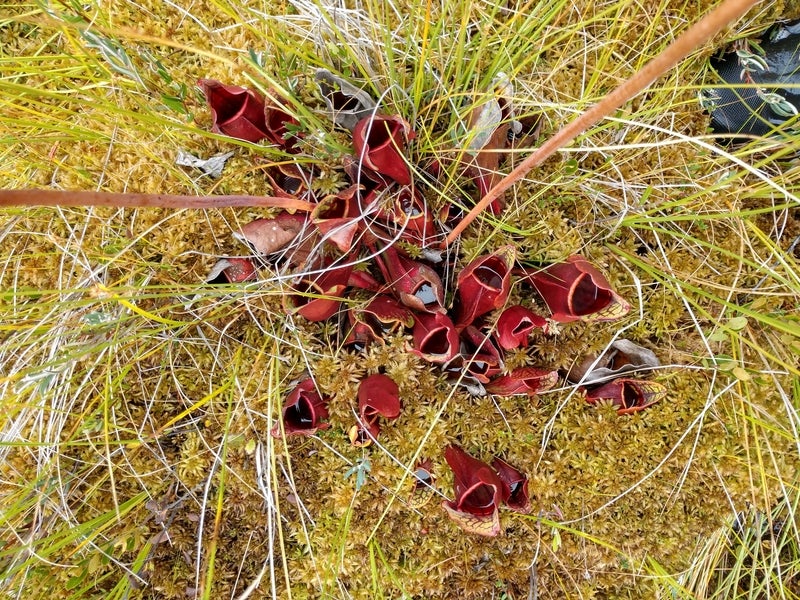
Participants discussed how long it takes peat-forming vegetation to recover on former agricultural lands. Current evidence remains limited. Rewetted sites often develop marsh-like vegetation before peatland species become established, and recovery trajectories can vary substantially between locations. Understanding how and when moss communities return remains an important area for future research.
New tools to support restoration planning
Dr. Moira Hough introduced a map-based decision-support tool being developed through the PeatRestore Project. The platform combines peatland mapping, land-use data, infrastructure information, site feasibility assessments, and restoration planning resources to help identify opportunities for restoration and the key considerations when undertaking a restoration project. The step-by-step process helps users identify promising sites, evaluate constraints, and compare restoration opportunities. It aims to reduce barriers to peatland restoration and support more informed decision-making.
Looking ahead: Full recovery of peatland ecosystems takes time
The session demonstrated that restoring agricultural peatlands offers significant opportunities for climate mitigation, biodiversity conservation, and water quality improvement. At the same time, it highlighted the importance of long-term planning, adaptive management, and continued research. Hydrological restoration may be the first milestone, but the full recovery of peatland ecosystems can take many years and remains an active area of study.
Find out more about PeatRestore: https://research.fs.usda.gov/nrs/projects/bil-peatrestore
Read the introduction of PeatRestore to Can-Peat: https://uwaterloo.ca/can-peat/news/introducing-peatrestore
PeatRestore map of US-based peatlands: https://peatlands.mtri.org/