Editor:
Brandon Sweet
University Communications
bulletin@uwaterloo.ca
Eye clinic delivers services for refugees
By Sarah Fullerton. This article was originally published on Waterloo News.
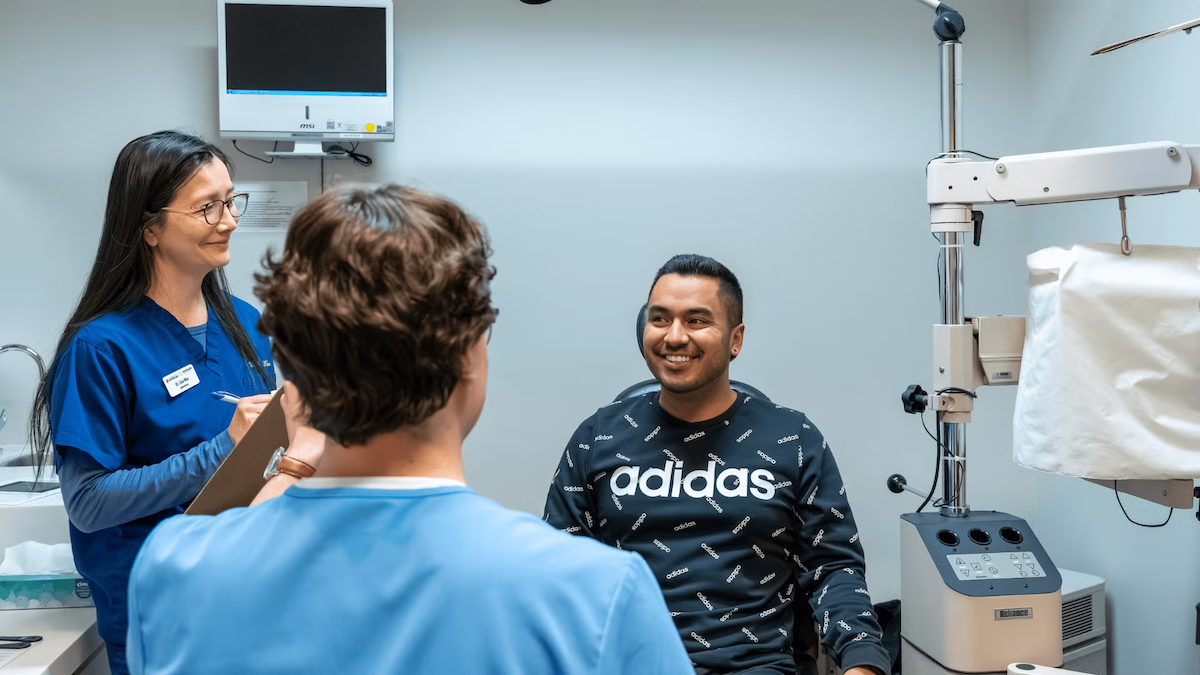
The Waterloo Eye Institute clinic in downtown Kitchener helps ensure that poor vision is one less barrier for those seeking refuge in the community. The School of Optometry & Vision Science has provided eye care to the refugee population for many years, and Dr. Lisa Woo, who became head of the Health Sciences Optometry Clinic eight years ago, continues this commitment, providing care to more than 300 newcomer and refugee patients each year.
The clinic has partnered with local organizations such as Reception House Waterloo Region and Community Healthcaring Kitchener-Waterloo for more than a decade, playing a critical role in helping families integrate into their new lives.
The clinic sees newcomer patients daily, but for the past two years, in partnership with Reception House, it has run a dedicated clinic day each month specifically for refugee patients in the Waterloo Region.
Patients of all ages receive eye exams, ongoing eye care, and eyeglasses supported through federal and provincial benefit programs that are now being reduced. “For many of my patients, this is their first eye exam,” Woo says.
For Woo, giving back to the community through this service is deeply personal. She arrived in the U.S. as a young refugee from Vietnam and recalls that the journey to her new home was only the start of an onset of challenges that come with moving your life to a new country.
“Once you’re in a new country, there’s the challenge of learning a new language, and adapting to a new culture and community,” she says. “Health concerns make that adjustment even more difficult.”
Woo has treated infants and toddlers with congenital eye conditions and eye turns, as well as adults with more complex vision problems due to limited access to care in their home countries. For patients that require tertiary care or surgery, they are referred to surgeons or specialty care ophthalmologists.
“Eye care shouldn’t be an additional issue that newcomers have to worry about,” Woo says. “Through providing this service to them, it is assisting them with being successful here in Canada.”
Receiving proper eye care can be critical to helping newcomers integrate into their new community. Healthy vision is essential for learning English, finding employment, driving, and contributing to the community. Routine exams also help detect eye diseases and prevent further complications.
Over the next few weeks, the clinic is adding additional days to its schedule to accommodate even more patients prior to government funding changes that will require Interim Federal Health Program beneficiaries to pay 30 per cent of their vision care costs. From now until the changes take effect on May 1, they hope to help as many patients as possible with eye exams and eyewear, knowing the upcoming changes will create new barriers to care.
The clinic will offer additional days for refugees and newcomers on March 30, April 6 and April 13. To learn more about the clinic, visit their website.
It's the end of the line for the HelpLine - emergency poles to be removed
A message from the Safety Office.
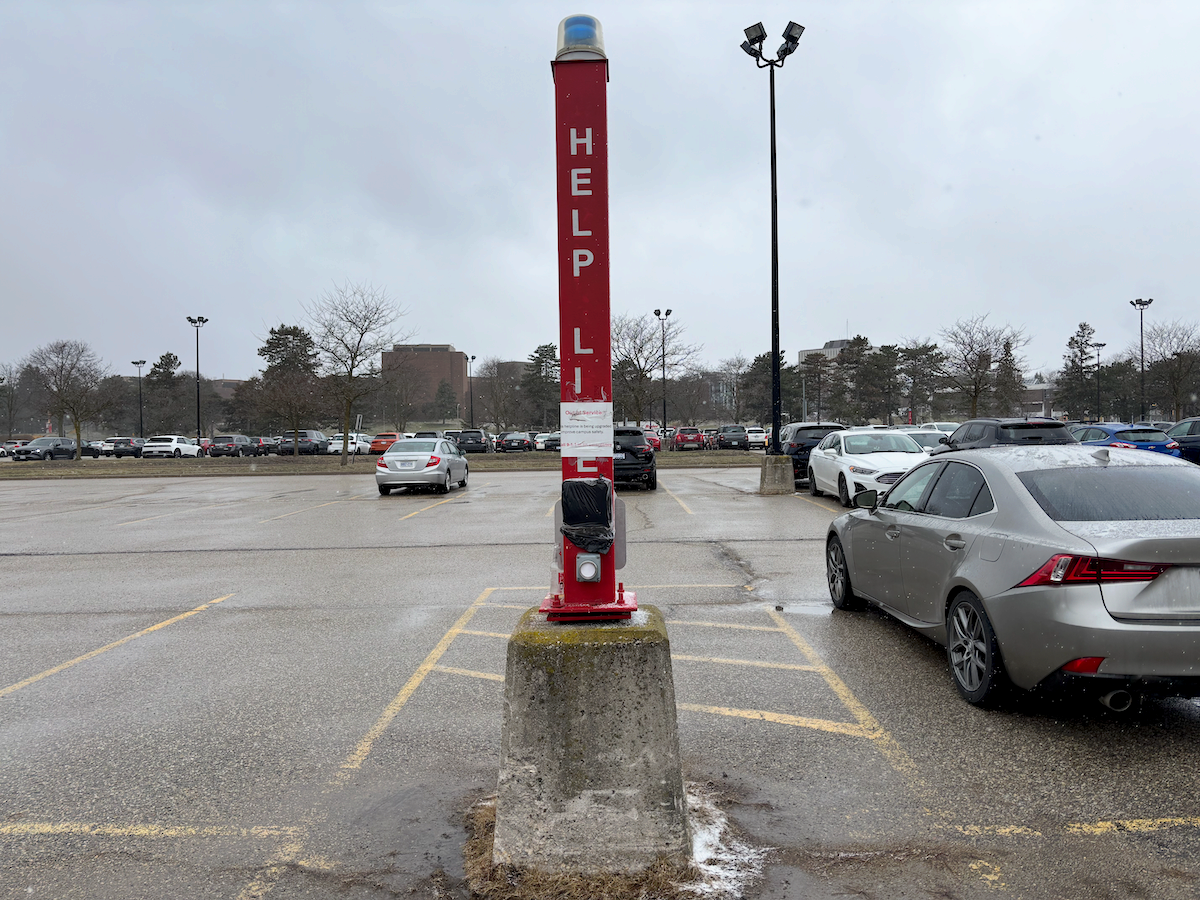
You may have noticed one of 13 emergency poles across campus.
These emergency poles were a helpline that connected to Special Constable Services if someone needed immediate emergency assistance. Installed in the 1990s, these poles have not kept pace with advancements in safety technology and were not always reliable. In October 2024, the helplines were temporarily taken out of service. Since that time, we have continued to monitor whether the temporary decommissioning of the helplines has resulted in any complaints, concerns, or incidents and have received none.
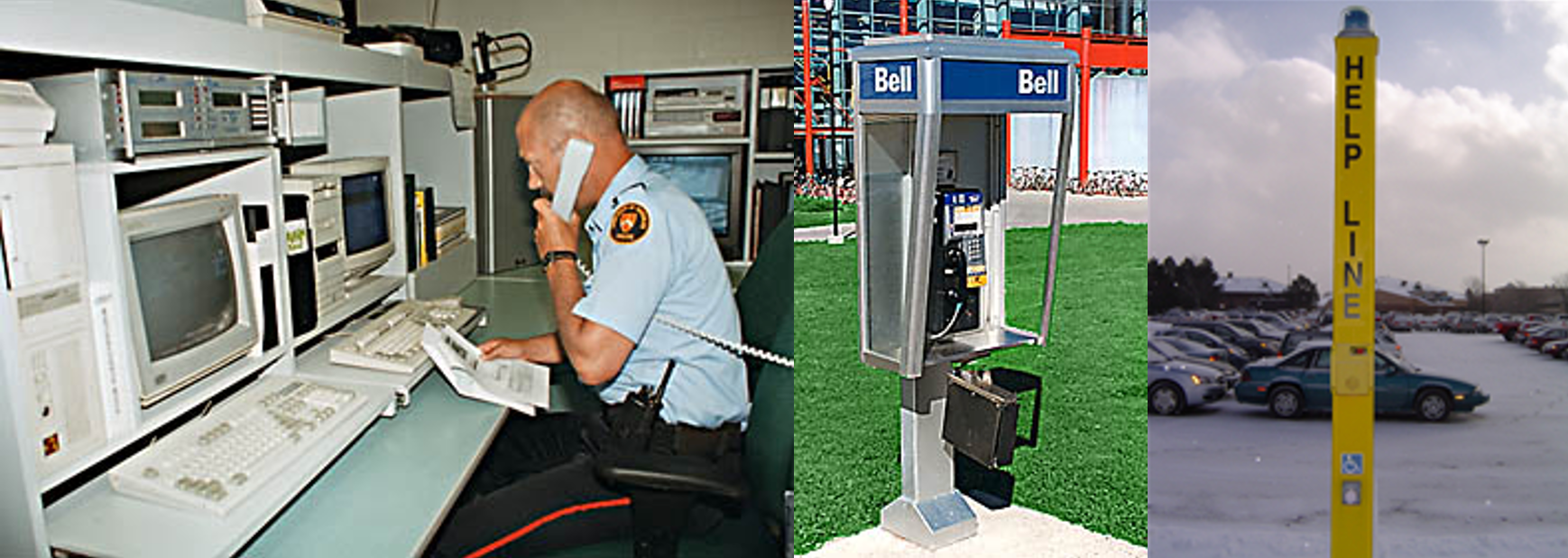
The help line poles were once part of a network of safety resources that included emergency buttons on campus payphones and desk phones that would connect to UW Police (now Special Constable Services).
After a comprehensive review of their usage and relevance in today’s safety landscape, Waterloo has decided to permanently disable and remove these poles.
Today, individuals typically carry a phone and can make a call while remaining mobile. These factors, in conjunction with the significant cost of repairing or replacing the helplines, further supports the decision to remove the poles. This work will begin in spring 2026.
Alternative safety measures
Regroup Mobile, an emergency notification app, is the main means of communicating about emergencies on our campus. Please download Regroup mobile from the Apple Store or Google Play to ensure you recieve emergency communications from the University. In an emergency, call 911 or Special Constable Services at 519-888-4911 for campus assistance.
Until April 2, WUSA is piloting WalkSafe, a peer-led service where trained volunteers accompany students to their destination across campus after dark. Feedback is welcome to help shape the future of the program. The University will continue to focus on safety improvements like parking lot lighting. If you have any safety concerns or questions, please contact Special Constable Services.
Experiences in Political Science Symposium showcases student learning
A message from the Integrated Teaching Support Unit.
Looking for a fresh perspective on how political science education is prepping Waterloo students for the real world? We are calling all faculty, staff, and students to join us for an afternoon of discovery, dialogue, and free food at the Experiences in Political Science Symposium.
Experiences in Political Science Symposium details
- Who: Undergraduate students enrolled in PSCI 424 will showcase their self-directed learning experiences.
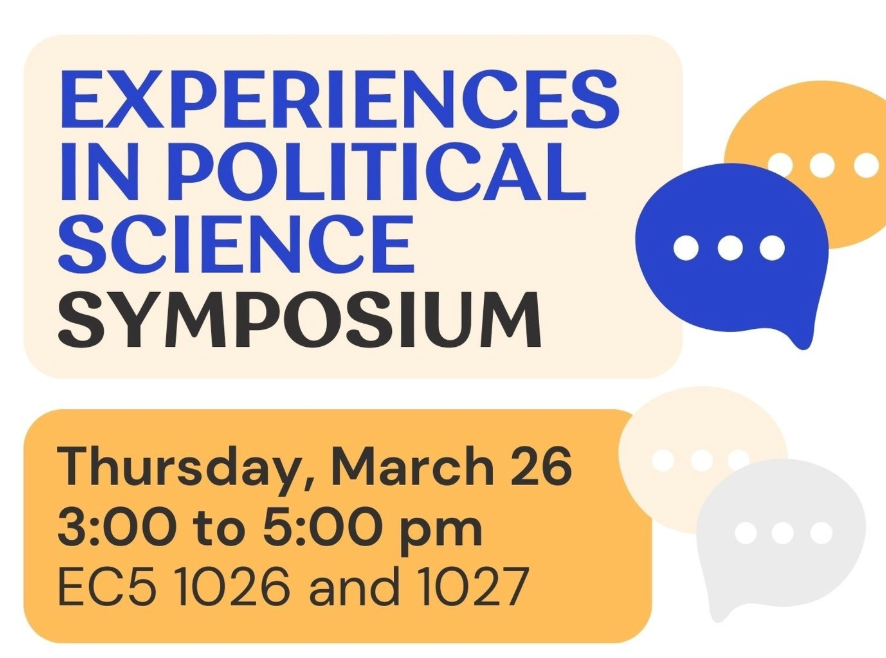
- When: Thursday, March 26, 3:00 p.m. to 5:00 p.m.
- Where: EC5, Rooms 1026-1027
What is the PSCI 424 Experience?
PSCI 424: Experiences in Political Science Beyond the Classroom is not your average course. Using the SLICC Framework (a self-directed, experiential, and reflective framework), students take the driver's seat of their own education. From the initial proposal to the final evaluation, these students have managed their own learning journeys, set their own goals, and navigated the uncertainties of real-world applications of their education.
What to expect at the Symposium
This drop-in event is your chance to engage directly with undergraduate students who have spent the term connecting theoretical political science to hands-on experiences. You’ll see a wide variety of creative final outputs, including:
- Posters
- Websites, blogs, videos, and podcasts
Explore projects covering a diverse range of topics, such as:
- Internships in MP offices and volunteer positions with Ontario non-profits
- Deep dives into current political issues
- Community engagement and governance projects
Come learn about the skills these students have developed, the deep reflections they've captured, and how experiential learning opportunities are increasingly equipping UW students with critical transferrable skills for the workforce.
Map the System finals coming up and other notes
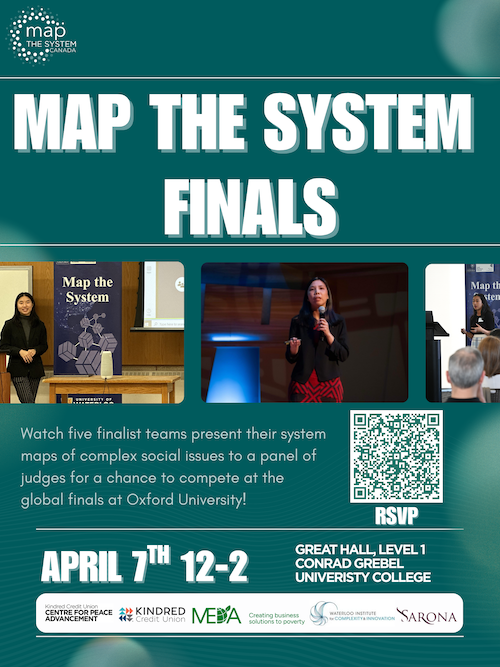
"Students from across all faculties are taking part in this year’s Map the System competition, using systems‑thinking approaches to explore global health, social, economic, and environmental challenges," says a note from the Centre for Peace Advancement. "On April 7, five finalist teams will present their work to a panel of judges. The winning team will advance to the Global Finals at the University of Oxford, while the remaining finalists will receive up to $500 to continue their research. Faculty, students, and community members are invited to attend."
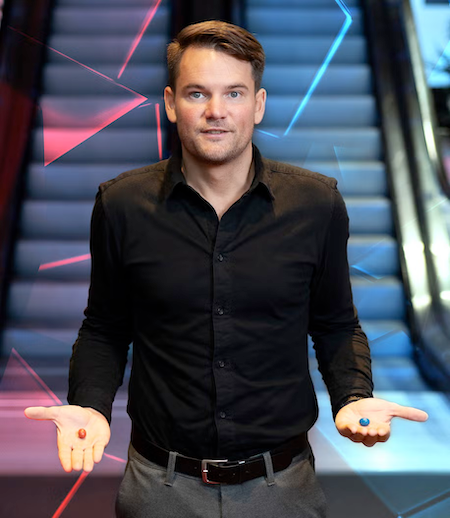
The latest event in the Critical Tech Talk series takes place tonight. Critical Tech Talk 13: The Digital Data Divide: Speculative Futures of Technology, Care, and Society. "Technological innovation increasingly shapes how we live, care, decide, and relate to one another," says the event blurb. "Yet conversations about these futures often revolve around regulations, technical feasibility, or business models. What happens if we create spaces where these futures can be felt, questioned, and collectively imagined?"
The talk features Sjors Groeneveld, a senior lecturer at Saxion University of Applied Sciences (School of Nursing) and a PhD candidate at the University of Twente in the Netherlands. His work explores how emerging technologies, particularly AI and data-driven systems, reshape professional practice, education, and our understanding of care. The Digital Data Divide is an immersive speculative project that invites audiences to experience contrasting futures shaped by personal data and AI. Rather than arguing for or against technology, the project creates moments for reflection on autonomy, dignity, surveillance, and solidarity.
The event runs from 4:30 p.m. to 6:00 p.m. in ECH 1205.

"Should social media be banned for teens under 16? As social media has become a large part of how people interact, we have also begun to understand its downsides. Although we have never been more connected and informed, social media brings trade-offs that may outweigh the benefits: addiction, self-esteem issues, and vulnerability to predators. Some jurisdictions have already started to act with Australia introducing a ban on social media for those under the age of 16. The Waterloo Forum asks, should Canada implement such a ban? Might it have unintended consequences?"
Come and see this relevant and engaging debate on Thursday, March 26, at 4:30 p.m. in E6 4022. The event is free and open to the University community but registration is required as food will be provided to attendees.
Link of the day
Martial artist and meme legend Chuck Norris, 1940-2026
When and where
The Campus Wellness Student Medical Clinic offers healthcare visits with Physicians and Nurse Practitioners to current undergraduate and graduate students. Services include: vaccinations, immunity testing, naturopathic services and more. Counselling Services offers appointments with counsellors in person as well as via phone and video. Students can book appointments for these services by calling Campus Wellness at 519-888-4096.
The privately-run Student Health Pharmacy (located in the lower level of the Student Life Centre) is now offering new COVID booster shots and flu shots. Covid booster shots are available by appointment only – please call ext. 33784 or 519-746-4500. The Student Health Pharmacy’s summer hours are Monday to Friday, 9:30 a.m. to 4:30 p.m. Naloxone kits are still available – pick them up in the pharmacy at no charge.
The Waterloo Eye Institute optometry clinics in Waterloo and downtown Kitchener offer comprehensive eye exams and eyewear, including glasses and contact lenses, with the Waterloo location offering various specialized services including urgent eye care. Discounts apply for University of Waterloo students and employees. The Waterloo Clinic is at a nearby interim location, 419C Phillip St, during construction at the School of Optometry and Vision Science. The Kitchener Clinic remains at the Health Sciences Campus, 10B Victoria St. S. Book online or by phone at 519-888-4062.
Warriors Winter Youth Camps, registration is now open for multi-sport and games, baseball, basketball, eSports, football and hockey camps for boys and girls ages 5 to 18. Register today!
Critical Tech Talk 13: The Digital Data Divide: Speculative Futures of Technology, Care, and Society, Monday, March 23, 4:30 p.m. to 6:00 p.m., ECH 1205.
ENVigorate annual sustainability festival, Tuesday, March 24 to Thursday, March 26. Register now.
Computer Museum Open House, Tuesday, March 24, 10:00 a.m. to 4:00 p.m., DC 1316.
Sampling in Survey Research - Workshop, Tuesday, March 24, 1:00 p.m. to 4:00 p.m., DC 1568.
CrySP Speaker Series on Privacy featuring Professor Thomas Ristenpart, University of Toronto, “For All Tomorrow's Survivors: Computer Security in Interpersonal Threat Models,” Tuesday, March 24, 1:30 p.m., DC 1304 and online via Zoom.
Cooperathon powered by Desjardins X Velocity Speed Challenge, Tuesday, March 24, 4:30 p.m. to 8:00 p.m., SCH 228.
Phyllis Webstad in KW, Tuesday, March 24, 7:00 p.m. to 9:30 p.m., Conrad Grebel University College dining room.
NEW - Theatre & Performance presents: The Nether and Post-Show Symposium Series, Wednesday, March 25 to Saturday, March 28, 7:00 p.m. to 9:30 p.m., Theatre of the Arts, Modern Languages. General admission $15, students $10, high school students $5.
Master of Taxation Virtual Information Session, Wednesday, March 25, 12 noon.
Fruit and Veg Market, Wednesday, March 25, 12 noon to 4:00 p.m., SLC lower atrium, Engineering 6, EV3 1st floor. $10 for a bag of assorted produce while supplies last.
NEW - CareNext Coalition presents Better care, same team: Inside a pharmacist-led model changing cancer care, Wednesday, March 25, 12 noon to 1:00 p.m., online.
Waterloo Knowledge Mobilization Community of Practice, “Engaging with Multiple Knowledge Users: Patients, Physicians and Policymakers,” with Jacquelyn Coyne, Scientific Specialist, Waterloo Regional Health Network, Wednesday, March 25, 1:00 p.m. to 2:30 p.m. on MS Teams. Contact Nadine Quehl to request a Teams invitation.
Co-op Student of the Year and Problem Awards ceremony, Wednesday, March 25, 1:00 p.m. to 2:00 p.m. Register today!
Explore Political Science Research, Wednesday, March 25, 2:30 p.m. to 4:30 p.m., Dana Porter Library.
NEW - FIRST Robotics Waterloo Regional Competition, Thursday, March 26 to Saturday, March 28, Physical Activitie Complex.
WIN-BME Joint Seminar: "Beyond Static Imaging: Structural and Functional Insights through X-ray microCT" with Marketa Kaiser and Jakub Salplachta, Thursday, March 26, 11:00 a.m. to 12 noon, QNC 1501.
CENIDE & WIN Seminar Series on 2D MATURE: "Spin Currents in atomically thin materials and interfaces" with Venkata Kamalkar Mutta, Thursday, March 26, 11:00 a.m. to 12 noon, QNC 1501.
Equity as Infrastructure: Recalibrating the foundations of scientific excellence, Thursday, March 26, 11:30 a.m. to 1:00 p.m., QNC 0101.
WIN Seminar Series: Prof. dr. Ir Martin Bennink, "Advances in molecular sensing and lab-on-a-chip technology," Thursday, March 26, 3:00 p.m. to 4:00 p.m., QNC 1501.
NEW - Experiences in Political Science Symposium, Thursday, March 26, 3:00 p.m. to 5:00 p.m., EC5 1026-1027.
The Language Café: Peer review and constructive feedback, Thursday, March 26, 3:00 p.m. to 4:15 p.m., Needles Hall 1124, International Experience Centre. Register online.
NEW - The Waterloo Forum presents "Should social media be banned for teens under 16?" Thursday, March 26, 4:30 p.m., E6 4022. Register today.
NEW - Faith and Nature: Respecting Our Reciprocal Relations, Thursday, March 26, 7:00 p.m. to 8:30 p.m., REN 3106.
Bechtel Lecture in Anabaptist-Mennonite Studies, "Who keeps us safe?" Christian Politics of Care, Thursday, March 26, 7:30 p.m. to 9:30 p.m., Conrad Grebel University College Chapel.
Introduction to sustainability education for post-secondary educators from any discipline, Friday, March 27, 10:30 a.m. to 12:30 p.m., Learning Lab (323), Dana Porter Library.
March Open House, Saturday, March 28.
Computer Museum Open House, Saturday, March 28, 10:00 a.m. to 4:00 p.m., DC 1316.
NEW - CPI 2nd Graduate Student Conference, Monday, March 30, 8:00 a.m. to 4:30 p.m., EC5 1111.
NEW - Nomad: Correcting the Narrative, Tuesday, March 31, 6:00 p.m. to 8:00 p.m., QNC 0101.
NEW - CareNext Coalition presents Better care, same team: Inside a pharmacist-led model changing cancer care, Wednesday, April 1, 12 noon to 1:00 p.m., online.
NEW - Co-op Workplace Simulation, Wednesday, April 1, 5:00 p.m. to 7:30 p.m., LIB 323.
Anti-Racism Reads Series: Algorithms of Oppression, Thursday, April 2, 12 noon to 1:00 p.m., Dana Porter Library Room 338.
The Language Café: Communicating with confidence: Skills for self-advocacy, Thursday, April 2, 3:00 p.m. to 4:15 p.m., International Experience Centre Global Lounge, Needles Hall 1124. Register online.
NEW - Friesen Prize Lecture with Dr. Brenda Andrews, “Accelerating discovery: The catalytic impact of interdisciplinary environments and collaboration on basic biomedical research,” Tuesday, April 7, 1:00 p.m. to 2:30 p.m., Needles Hall. Please register as seating is limited.
Upcoming service interruptions
Stay up to date on service interruptions, campus construction, and other operational changes on the Plant Operations website. Upcoming service interruptions include:
-
Quantum Nano Centre, Biology 1 and 2, Health Services, Science Teaching Complex fire alarm test, Monday, March 23, 6:30 a.m. to 8:15 a.m.
-
Bright Starts daycare, Toby Jenkins Building, Optometry, Columbia Ice Field fire alarm test, Wednesday, March 25, 6:30 a.m. to 8:15 a.m.
-
Waterloo South, Woolwich South, Beck Hall fire alarm test, Wednesday, March 25, 1:00 p.m. to 2:00 p.m.
-
East Campus Hall, Engineering 5, 6, Pearl Sullivan Engineering (E7) fire alarm test, Friday, March 27, 6:30 a.m. to 8:15 a.m.
-
Wilmot South, Wellesley South, Eby Hall, Claudette Millar Hall fire alarm test, Friday, March 27, 1:00 p.m. to 2:00 p.m.