Submit content for the Daily Bulletin through the Daily Bulletin intake form.
For all other requests, please contact communications@uwaterloo.ca.
Ontario Summer Games launches this week

The Ontario Summer Games will officially kick off in Waterloo Region this Thursday, July 30, with over 4000 athletes playing in 23 sports over four days.
As a proud sponsor of the event, the University will be hosting student athletes and coaches in our residences, and hosting rugby and basketball games at campus locations.
Move-in for the athletes will take place July 30 from 9 a.m. to 2 p.m. and will see increased traffic from Columbia to Ring Road and Residence Road. Opening ceremonies at Wilfrid Laurier’s University Stadium on Thursday are expected to draw approximately 5000 spectators, which will also see increased traffic in the area and potential street closures. To view the full competition schedule and for ticket information, visit the Ontario Summer Games website.
Thank you in advance for your patience and support of the Ontario Summer Games at Waterloo.
Professional development opportunities through WatSPEED
A message from WatSPEED.
Looking to build new skills, explore emerging technologies, or strengthen your leadership capabilities? WatSPEED offers flexible learning opportunities designed to help University of Waterloo employees continue their professional development through short courses, certificates, and executive education programs.
Whether you're interested in artificial intelligence and machine learning, data and analytics, project management, cybersecurity, software development, leadership, or digital transformation, WatSPEED offers a range of short courses, certificates, and more in-depth programs that can fit alongside work and other commitments.
Waterloo staff and board members can receive 50 per cent off a selection of WatSPEED courses and programs. To learn more about eligibility, contact watspeed@uwaterloo.ca.
Browse current programs and courses on the WatSPEED website.
Hidden risks in AI data centres spark new battery safety research
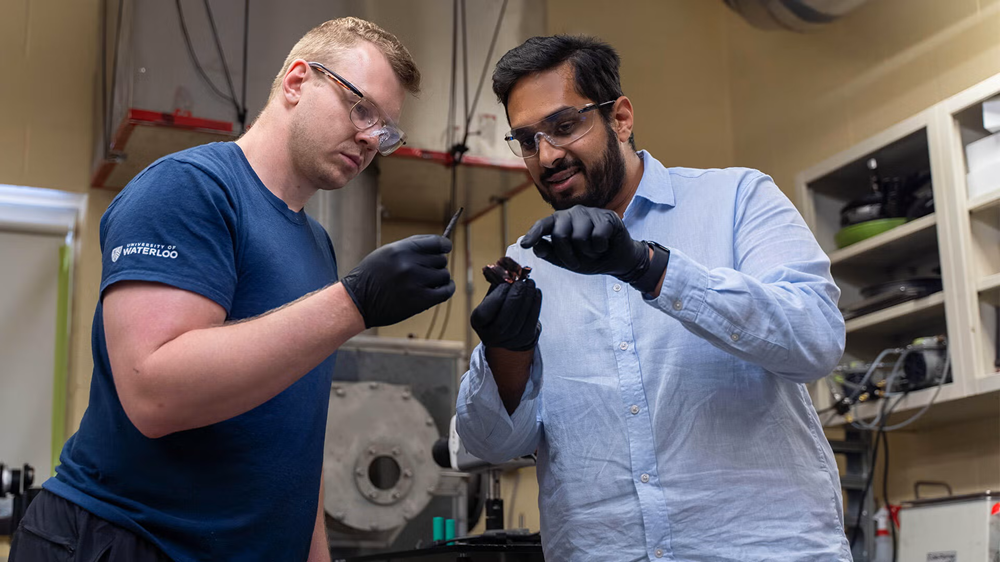
This is an excerpt from an article that was originally published on Waterloo News.
As artificial intelligence (AI) drives a global surge in data centres in Canada and around the world, a less visible but increasingly urgent challenge is growing alongside it. Researchers are beginning to investigate ways to manage the risks posed by the lithium-ion batteries that keep those facilities running.
At the University of Waterloo, Dr. Vinny Gupta is working to understand how and why these batteries fail and what can be done to prevent dangerous fires in the critical infrastructure underpinning the digital economy.
Lithium-ion batteries have become essential to modern life, powering everything from phones to electric vehicles. But in data centres, their role is both less visible and far more concentrated. Massive banks of batteries provide backup power, stabilize the electricity supply and ensure uninterrupted operation during outages.
“Pretty much every single data centre will have a huge quantity of lithium-ion battery storage embedded within it,” Gupta explains. That concentration creates a unique safety challenge.
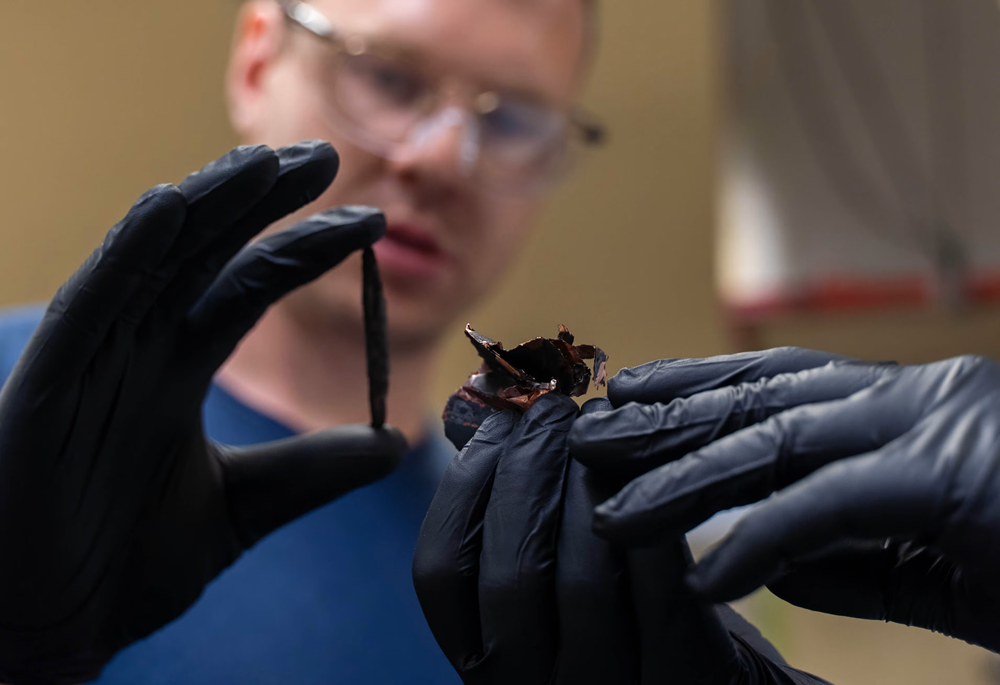
While individual battery cells are common and generally reliable, packing thousands of them together in confined environments increases the potential consequences when something goes wrong.
At the centre of the issue is a phenomenon known as thermal runaway, a cascading chain reaction that can cause batteries to rapidly overheat, release flammable gases and, in some cases, ignite.
“What makes a lithium-ion battery cell quite dangerous is that it can release all of that energy in a very short period of time,” Gupta says.
Read the full story on Waterloo News.
Q and A with the experts: Could the U.S. Cyclospora outbreak happen in Canada?

This article was originally published on Waterloo News.
Thousands of people across the United States have fallen ill in a growing Cyclospora outbreak, a parasite that causes severe diarrhea. Could a similar outbreak happen in Canada and how can people protect themselves? Dr. Abiola Olaitan, a professor in the University of Waterloo's Department of Biology whose research focuses on infectious diseases, including bacteria that can cause severe diarrhea, explains the risks, Canada's preparedness and what the public should know.
Could the U.S. Cyclospora outbreak happen in Canada?
While the risk is currently low, the answer is yes. Cyclospora infection is typically caused by consuming contaminated food or water, and Canada is not immune to food-borne outbreaks. According to the U.S. Centers for Disease Control and Prevention, additional cases have been reported among people who became ill after travelling outside the United States. With many Canadians travelling during the summer, exposure remains possible. Although no related outbreak has been reported in Canada to date, Canadians should remain vigilant and practice good food hygiene.
Why is Cyclospora so difficult to trace and stop?
Symptoms usually appear seven to 14 days after consuming contaminated food or water. Some infected individuals have mild or no symptoms, leading to underreporting. The delay between exposure and illness can make it difficult for people to remember what and where they ate, complicating efforts to identify and trace the source of contamination.
Should Canadians be worried every time they buy fresh produce?
No. Canadians should continue to enjoy fresh produce while following good food safety practices, such as washing their hands and rinsing fruits and vegetables before consumption. Public health officials are closely monitoring the U.S. outbreak, and identifying the source will help guide prevention efforts in Canada. Practicing good food hygiene remains important, especially when travelling outside Canada.
Could globalization and climate change make food-borne parasites like Cyclospora more common?
Yes. Cyclospora is most common in tropical and subtropical regions, and infections are often linked to travel or imported fresh produce. Increased global trade and travel may increase exposure. Climate change, particularly warmer temperatures and changing weather patterns, may create conditions that favour the parasite's survival and spread, increasing the likelihood of outbreaks in regions where it has traditionally been uncommon.
When and Where
The Campus Wellness Student Medical Clinic offers healthcare visits with Physicians and Nurse Practitioners to current undergraduate and graduate students. Services include: vaccinations, immunity testing, naturopathic services and more. Counselling Services offers appointments with counsellors in person as well as via phone and video. Students can book appointments for these services by calling Campus Wellness at 519-888-4096.
The privately-run Student Health Pharmacy (located in the lower level of the Student Life Centre) is now offering new COVID booster shots and flu shots. Covid booster shots are available by appointment only – please call ext. 33784 or 519-746-4500. The Student Health Pharmacy’s summer hours are Monday to Friday, 9:30 a.m. to 4:30 p.m. Naloxone kits are still available – pick them up in the pharmacy at no charge.
The Waterloo Eye Institute optometry clinics in Waterloo and downtown Kitchener offer comprehensive eye exams and eyewear, including glasses and contact lenses, with the Waterloo location offering various specialized services including urgent eye care. Discounts apply for University of Waterloo students and employees. The Waterloo Clinic is at a nearby interim location, 419C Phillip St, during construction at the School of Optometry and Vision Science. The Kitchener Clinic remains at the Health Sciences Campus, 10B Victoria St. S. Book online or by phone at 519-888-4062.
Warriors Youth Swim Lessons, registration is now open for LTS Child/Youth Preschool 1 – Swimmer 9. Group and private lessons available. Register today!
Warriors Summer Youth Camps, registration is now open for multi-sport and games, baseball, basketball, eSports, football and hockey camps for boys and girls ages 5 to 18. Register today!
Project 529 Bike Registry Registration Rallies: Monday, July 27 and Tuesday, July 28, 8 to 10:30 a.m., QNC/MC bike racks (by the overpass - weather dependent). Let's end bike theft. Bring your bike to register it and get a free 529 shield.
Capturing and converting photons at molecular photoelectrode and perovskite nanocrystal interfaces, Monday, July 27, 10 a.m., C2-361 (Reading Room). Host: Vivek Maheshwari
Computer Museum Open House: Re-Creations, Clones and Copies, Tuesday, July 28, 11 a.m. to 4 p.m., DC Fishbowl.
Your Voice Starts Here: The Staff Role in Decision-Making at UW, Thursday, July 30, noon to 1 p.m., EIT.
New Faculty Teaching Days Spring 2026, Tuesday, August 11 to Friday, August 14, 8:30 a.m. to 4:30 p.m., MC 2036
Who are our Learners (CTE9910), Tuesday, August 11, 10 to 11:30 a.m., MC 2036
Course Dynamics and Engagement (CTE9906), Tuesday, August 11, 1 to 3 p.m., MC 2036
What Our Community Is Saying About Health and Well-being, Wednesday, August 12, 11 to 11:45 a.m. on Teams.
Course Design Foundations (CTE6642), Wednesday, August 12, 9:30 a.m. to 3:30 p.m., MC 2036
Assessment as Learning (CTE9912), Thursday, August 13, 10 a.m. to noon., MC 2036
Course Outline Builder (CTE9916), Thursday, August 13, 1 to 2:30 p.m., MC 2036
Working Effectively with TAs (CTE7017), Friday, August 14, 10 to 11:30 a.m., MC 2036
Upcoming service interruptions
Stay up to date on service interruptions, campus construction, and other operational changes on the Plant Operations website.