News

Filter by:

Limit to news where the title matches:
Limit to items where the date of the news item:
Date range
Limit to news items where the audience is one or more of:

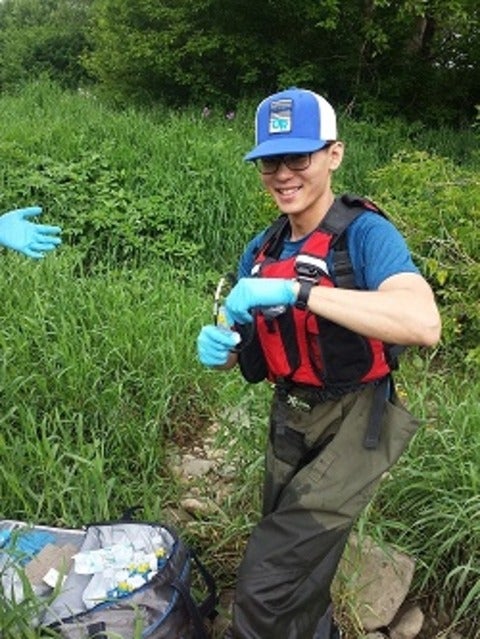
A new paper was published in the journal Ecological Indicators by ERG researchers Chris Wellen (now at Ryerson University) and Philippe Van Cappellen, together with colleagues from the Ontario Ministry of Environment, Conservation and Parks and Environment and Climate Change Canada. In this study, the authors estimate the sample sizes required to detect statistically significant changes in annual nutrient loads and flow weighted concentrations brought about by conservation measures in agricultural watersheds.

Saturday, October 17, 2020

Flavour du jour: Flavins

A new paper by ERG researchers and colleagues from China University of Geosciences, published in Environmental Science and Technology, sheds light on the role of flavins in iron redox cycling. Flavins are an important class of electron transfer mediators secreted by a variety of microorganisms and plants.

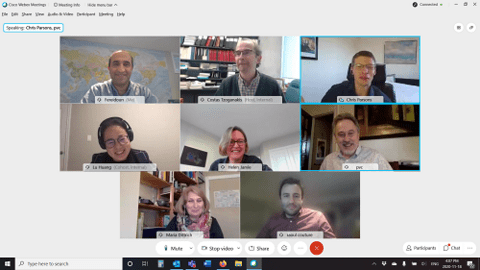
The annual meeting for a research project funded by NSERC’s Advancing Climate Change Science in Canada program and led by the University of Waterloo’s Ecohydrology Research Group was held virtually on September 16, 2020. The project, titled “Winter Carbon Losses in Wetland Ecosystems under Current and Future Climates,” includes researchers and collaborators from Laurentian University, Wilfrid Laurier University, Grenfell Campus of Memorial University of Newfoundland, and Natural Resources Canada.

The annual meeting for a Collaborative Research and Development project led by the Ecohydrology Research Group was held on September 10, 2020. The project, titled “Elucidating the biogeochemical processes controlling natural source zone depletion (NSZD) of petroleum hydrocarbons in contaminated soils under dynamic redox conditions,” is funded by an award from the Natural Sciences and Engineering Research Council of Canada and in partnership with Imperial Oil Limited for 3 years (2019-2022).

Zahra Akbarzadeh of the Ecohydrology Research Group has created two supplemental videos that help students choose the right scale (dimension) for their model when answering research questions related to aquatic systems. These videos discuss 0, 1, 2, and 3-D models, review the criteria for choosing one scale over the other, and comparatively assess the suitability of each for generating the desired output.

The recently published paper Changes in Sedimentary Phosphorus Burial Following Artificial Eutrophication of Lake 227, Experimental Lakes Area, Ontario, Canadapublished in Journal of Geophysical Research: Biogeosciences was selected as a Research Spotlight from the 22 peer-reviewed journals published by the American Geophysical Union (AGU).