Future students

Wednesday, November 4, 2026 10:00 am - 2:30 pm EST (GMT -05:00) Thursday, November 5, 2026 9:00 am - 4:30 pm EST (GMT -05:00)

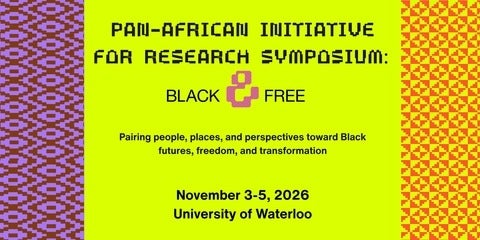
PAIR Symposium: Black And Free Edition

What does freedom look like across history, health care, the arts, technology and innovation?

This question will guide three days of conversation exploring Blackness and freedom, bringing together PAIR members, the University of Waterloo community, partners and guests to share ideas, build relationships and envision transformative futures.

From history and health care to the arts, technology and innovation, the program invites participants to consider how Blackness and freedom inform research, creative practice and everyday life.

The University of Waterloo’s Office of Equity, Diversity, Inclusion and Anti-Racism (EDI-R) was recognized for its leadership and partnership contributions to the Inter-Institutional Forum on Anti-Black Racism and Black Inclusion in Canadian Higher Education. The recognition, acknowledging Waterloo’s contributions in 2024, was presented at the biennial forum co-hosted by University of Ottawa and Carleton University in May 2026.  

At the University of Waterloo, the decisions we make about research, programs, policies, and even physical spaces ripple across campus life. So how do we ensure those decisions genuinely reflect the people they impact? The Community Engagement Guide was developed to help answer that question.

The University of Waterloo launches the Pan African Initiative for Research (PAIR), a new interdisciplinary research initiative designed to advance collaborative, community rooted, and globally engaged scholarship across Pan African contexts, including Africa, the Caribbean, Latin America, and Afro diasporic communities worldwide.

Living in a diverse environment is more than grabbing shawarma from the corner shop or dancing to Caribbean music at a summer festival. Our introduction to different cultures may begin there—but it shouldn’t end there. Diversity isn’t a playlist or a plate. It’s people

The Trans and Non-Binary Equity Strategy was informed and co-created by members of our 2SLGBTQIA+ communities—students, staff, and faculty who showed deep courage in sharing their experiences and speaking up in the hope of sustainable change. They didn’t just point to problems—they helped imagine solutions. They spoke up not only for themselves, but for those who couldn’t, or didn’t feel safe enough to. That is leadership. That is community in action. 

Friday, February 13, 2026

Fostering belonging and inclusion in Ramadan

by Mifrah Abid, Anti-Racism Specialist

Ramadan will begin on February 18 or 19 in 2026, depending on the sighting of the moon. Many members of the University of Waterloo Muslim community are observing this month of fasting and prayers.

What is Ramadan/ Ramzan about?

Ramadan/ Ramzan is a sacred month for the Muslim faith, where those observing it refrain from any food and water from dawn to sunset. This would translate to 11.5-to-13.5-hour long fasts (accounting for the varying sunrise and sunset times through the course of this month). Muslims dedicate the month (which can be 29 or 30 days long) to fasting, charity, spiritual reflection, seeking forgiveness and bonding with community. They often engage in long late-night prayers. Most people understand that Muslims may be a little low on energy during the day, but most don’t know that they also might be sleep-deprived.

Fostering belonging and inclusion for the Muslim community on campus

In keeping with University of Waterloo’s values of inclusivity and working together, here are some practices that foster the feeling of belonging within the Muslim community on campus.