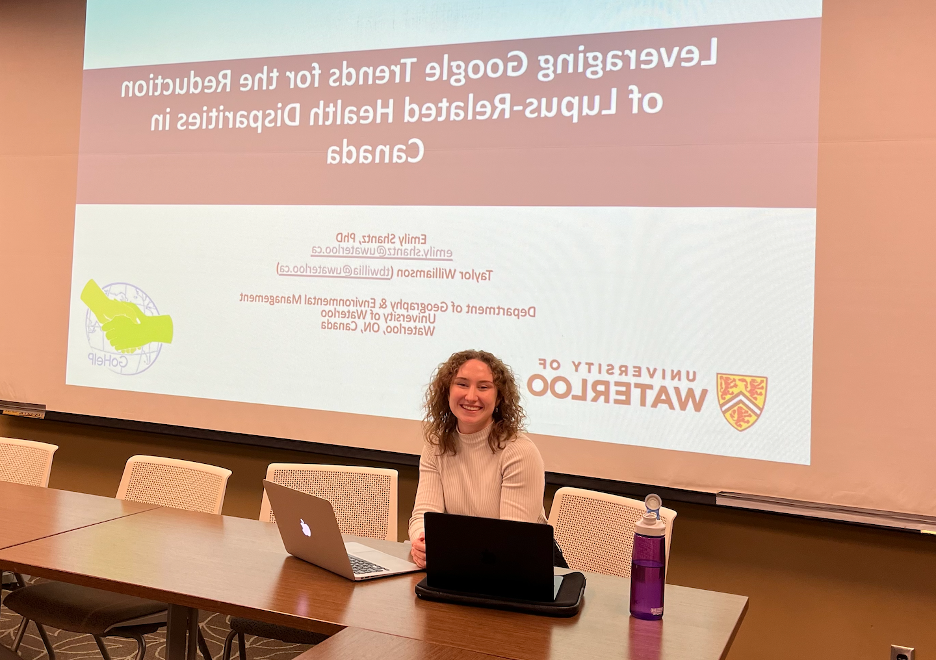
My name is Taylor Williamson, and I’m an undergraduate co-op student working in the GoHelP Lab at the University of Waterloo. One of the projects I contributed to during my placement is the GAPS Project (Google Trends Analysis of Public interest in SLE), which examines what Canadians are searching online about systemic lupus erythematosus (SLE) to identify potential gaps in public knowledge.
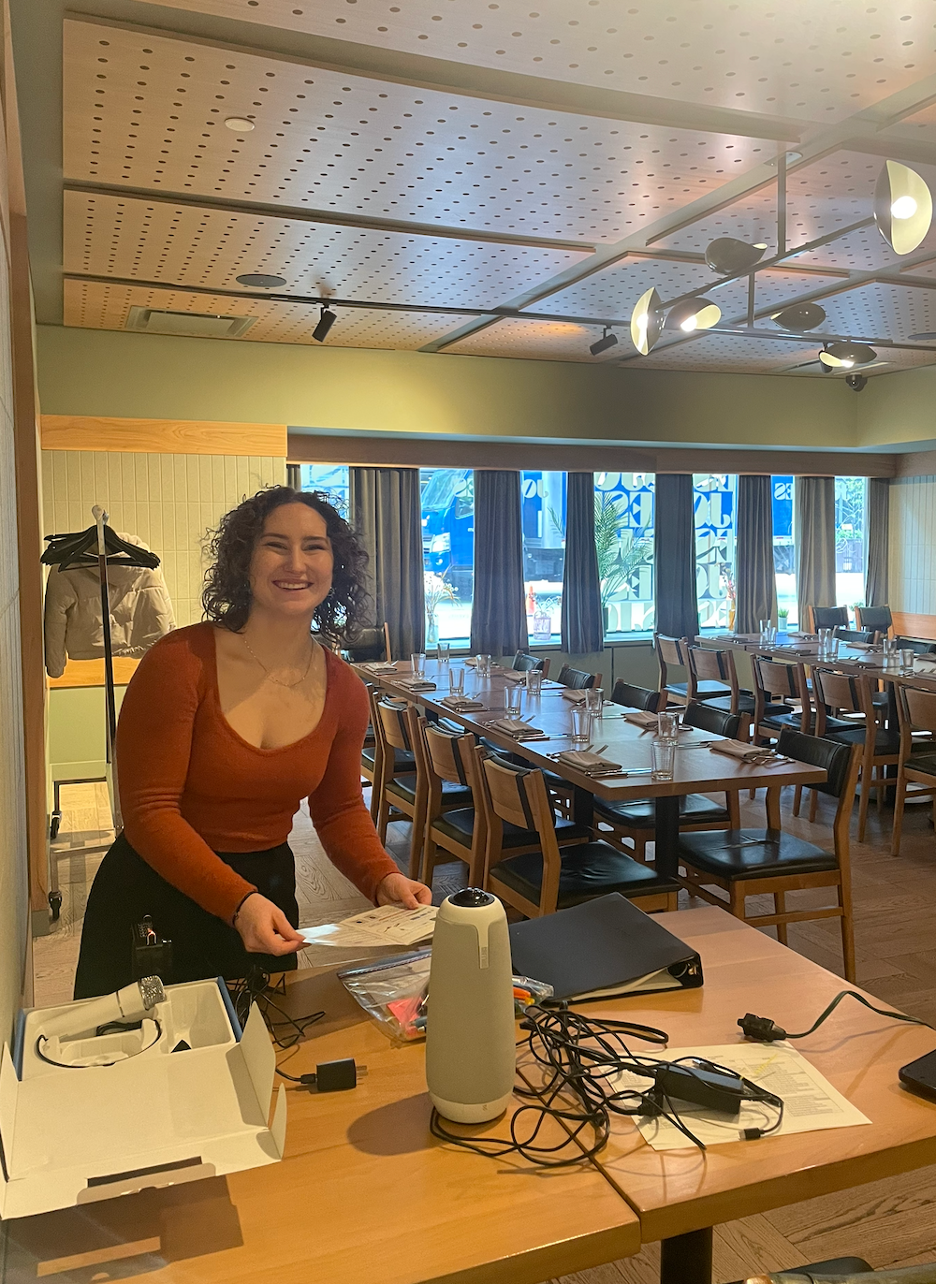
This summer, I attended the Lupus 2025 Conference, an experience that helped me connect our digital work to the lived realities of patients, clinicians, and advocates. I also co-hosted a deliberative dialogue, which expanded my research skills and provided valuable feedback to guide the next steps of our project.
What excites me most about the GAPS Project is how it bridges digital data with real-world health concerns. Using Google Trends and mapping regional search patterns, our team aims to identify areas where greater outreach and education on lupus may be needed. Attending Lupus 2025 allowed me to connect this digital work with on-the-ground efforts. The conference brought together researchers, clinicians and patient advocates to explore ways to improve equity, access, and awareness for people living with lupus and other autoimmune diseases.
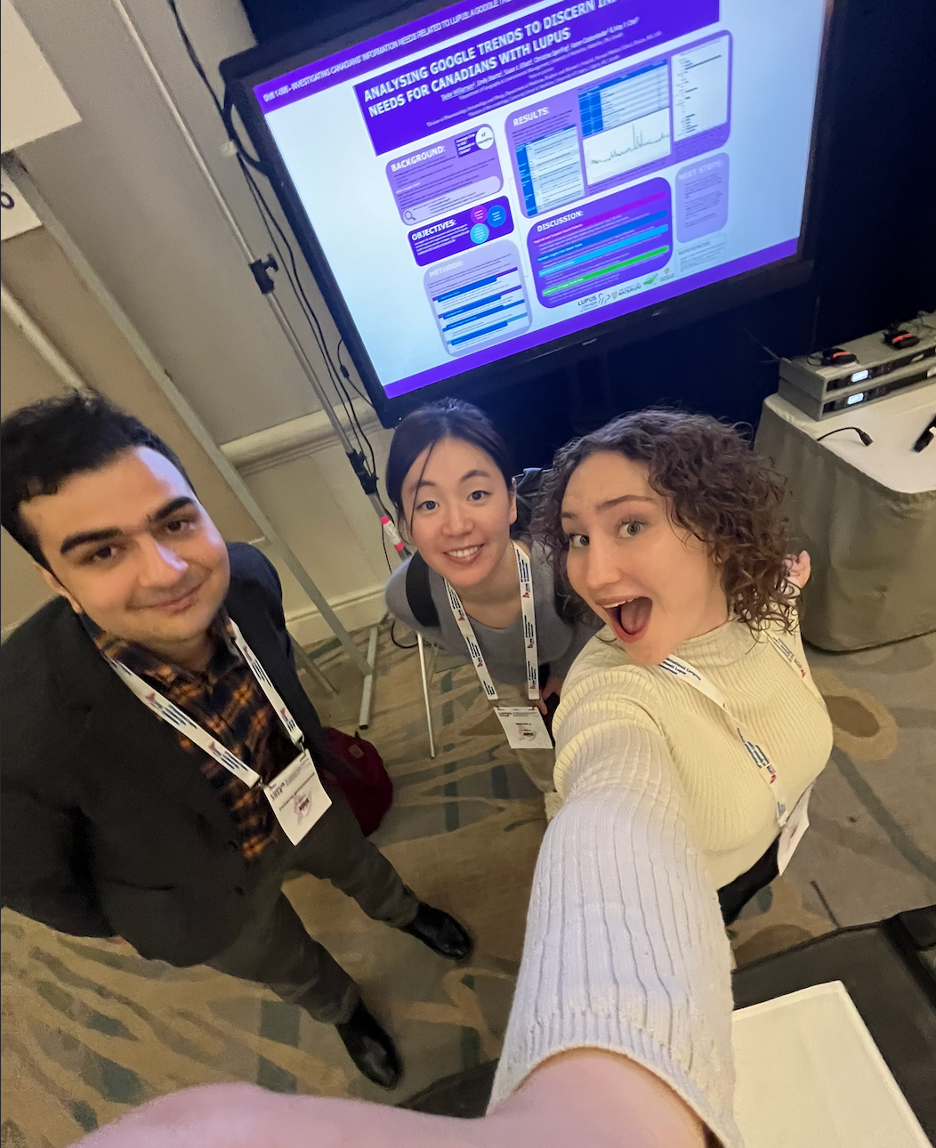
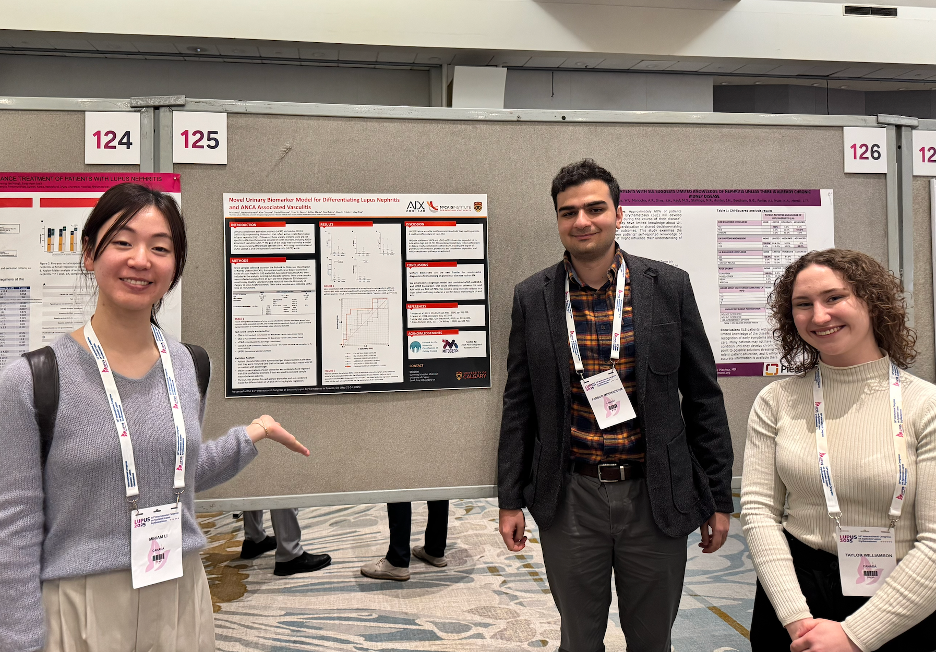
Presenting at the conference was one of the most valuable learning experiences of my placement. I created a poster to share our team’s early findings and took part in discussions about how digital tools can support patient-centered research. It was especially meaningful to present alongside mentors and collaborators who have guided and supported my work such as Dr. May Choi, a rheumatologist who we worked closely with throughout our project and member of the conference’s Local Scientific Committee. I was proud to represent our full team including our dedicated patient partner Christine Sperling, and my incredibly supportive supervisors, Emily Shantz and Dr. Susan Elliott.
As an undergraduate, I was initially nervous about presenting, but the welcoming and collaborative atmosphere made it an encouraging experience. I also met two wonderful young researchers in May Choi’s Lab which talked me through some of the other more complex topics during talks that weren’t my area of expertise. Engaging with attendees reminded me that there is space for early-career researchers to contribute meaningfully to conversations around chronic disease and health communication. I was particularly moved by the stories and insights shared by patients living with lupus. Hearing directly from them reinforced that behind every search query is a person looking for answers, support, or a sense of community.
Participating in the GAPS Project and attending Lupus 2025 has given me valuable experience in interdisciplinary research, data analysis, and knowledge translation. It has also encouraged me to think deeply about the role of digital tools in advancing health equity and patient engagement. This experience has strengthened my commitment to pursuing further studies in public health, particularly in understanding how people access, interpret, and act on health information. Moving forward, I hope to center empathy, collaboration, and responsiveness in all aspects of my work.
LUPUS 2025 conference photos