
Bridging Distance with Technology: Empowering Remote Care Through Teleoperated Robotics
By Elizabeth Drolle
Operations and Relations Manager, Network for Aging Research
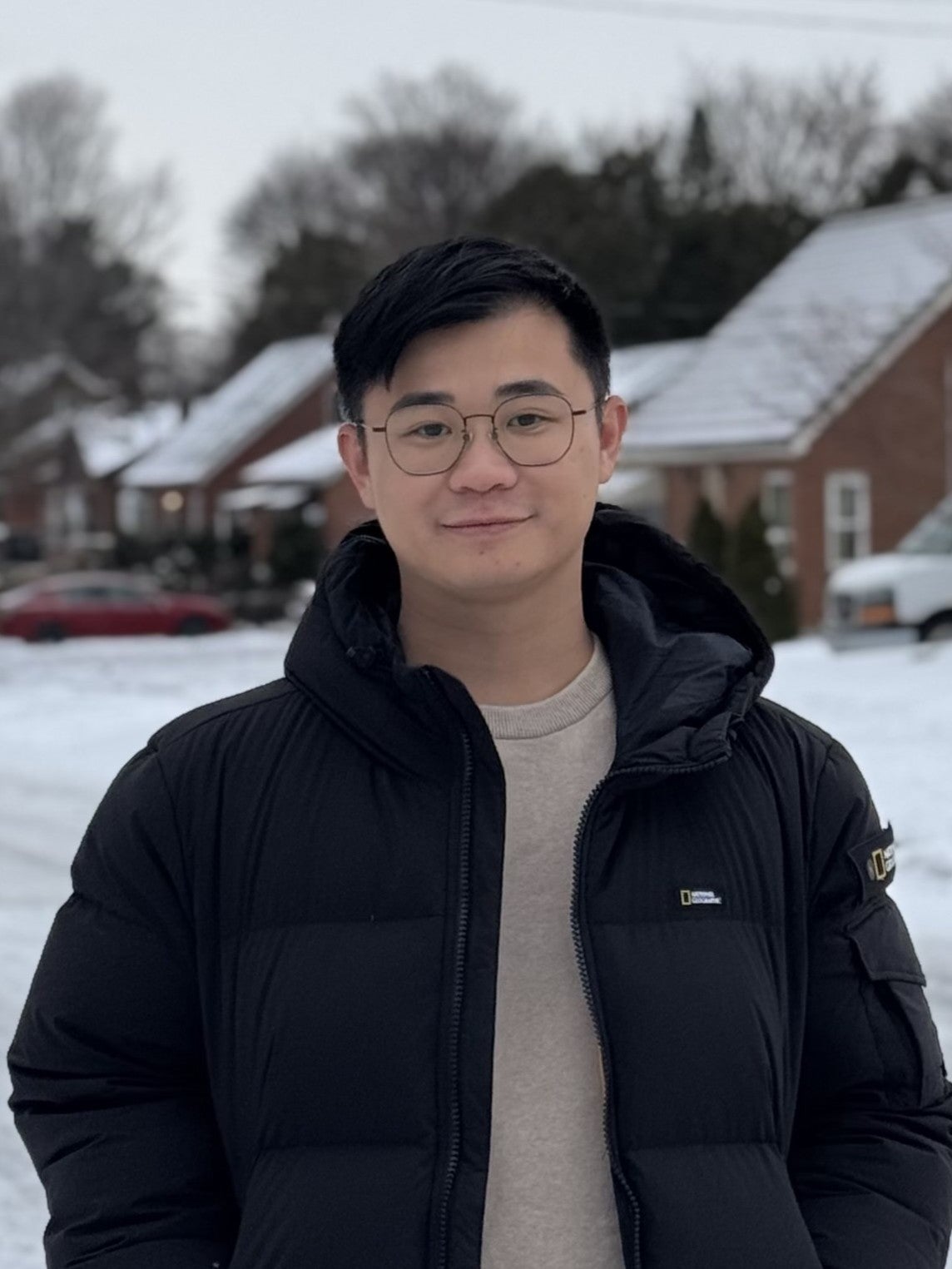
Dr. Thomas M. Kwok’s journey into aging research began not just with a breakthrough in biomedical engineering, but with a personal story of distance, disconnection, and a deeply felt desire to make a difference. Now a postdoctoral researcher focused on teleoperated robotic caregiving, Dr. Kwok is pushing the boundaries of how we imagine support for older adults, especially those in underserved and remote communities.
From Engineering to Aging Innovation
Dr. Kwok earned his Ph.D. in Integrative Sciences and Engineering (Biomedical Engineering) from the National University of Singapore. His doctoral research focused on upper-limb exoskeletons for stroke rehabilitation, his first encounter with aging-related applications. It was during this time that he observed a troubling gap between technological innovation and practical application, particularly in the lives of older adults.
"Aging is a pressing global challenge," Dr. Kwok notes. "By 2050, more than 22% of the world’s population will be over 60. Yet access to care remains limited, especially in rural areas where older adults may face long travel times and shortages in healthcare staff."
For Dr. Kwok, the statistics became personal. Living in Canada while his aging parents remained in Hong Kong, he experienced firsthand the helplessness that can come with geographical separation, especially when his father had an accident that he didn’t hear about for days. That experience crystalized his vision: a future where teleoperated robotic systems enable real-time, remote caregiving across borders.
Teleoperation as a Tool for Aging-in-Place
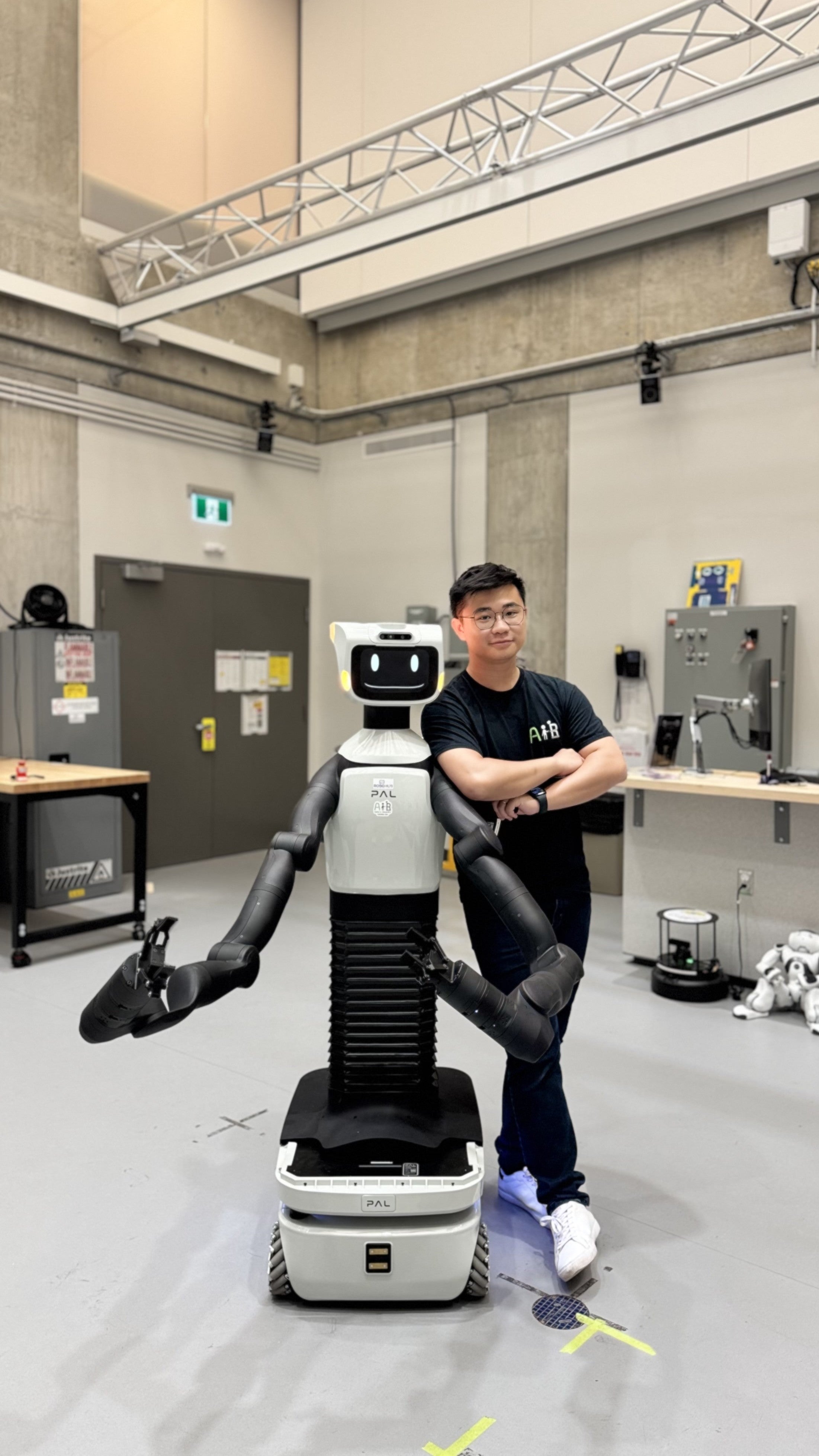
Now working under the mentorship of Prof. Yue Hu, Dr. Kwok is developing a novel shared-autonomy teleoperation framework that allows caregivers to control assistive robots remotely, while also enabling these robots to carry out autonomous functions. The system is designed to respond intelligently and flexibly to the dynamic needs of older adults in home settings.
“At its core,” he explains, “my research asks: How can a robot interact effectively with both caregivers and older adults to ensure intuitive control, user safety, and meaningful assistance?”
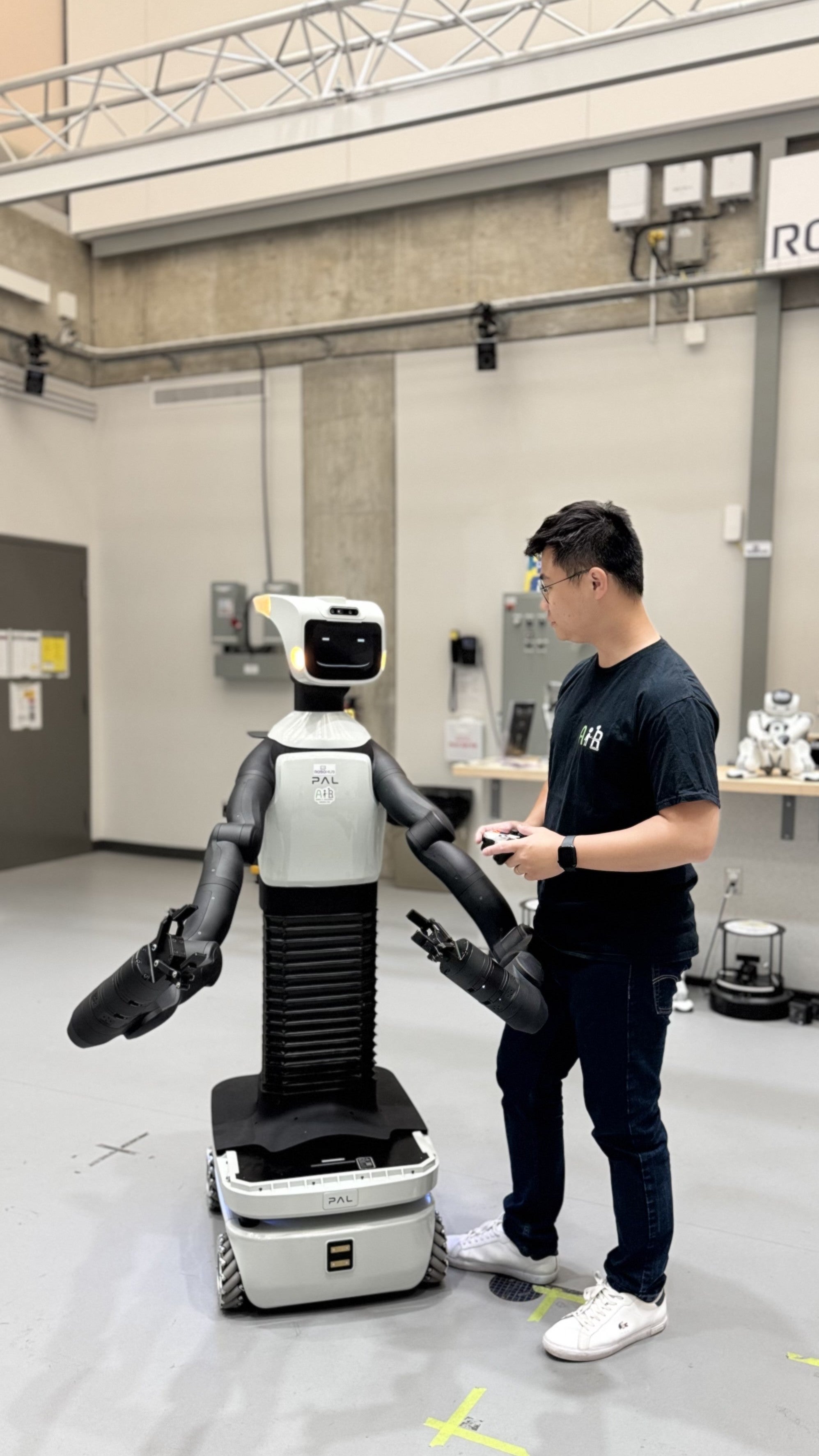
To answer this, his approach integrates several advanced technologies into a cohesive system. He employs high-level robot control through a single-camera setup paired with Spatio-Temporal Graph Convolutional Networks (ST-GCN) to accurately recognize caregiver actions. In parallel, he incorporates real-time monitoring tools - such as MediaPipe Pose and DeepFace - to assess the physical, emotional, and cognitive states of older adults. Finally, the system enables autonomous assistance through reinforcement learning and diffusion models, developed in the Active & Interactive Robotics Lab (AIR Lab) where Dr. Kwok is currently a postdoctoral scholar, working on the project funded by the National Research Council (NRC) under the Aging in Place Challenge Program - ARC: Intelligence Assistive Robots for Caregiving, which is an international collaboration with Japan under the Japan Science and Technology Agency (JST) Strategic International Collaborative Research Program (SICORP).
Rather than targeting a specific condition, Dr. Kwok is building a flexible system that can support a wide range of aging-related challenges - from mobility assistance to emotional monitoring - by pairing human expertise with robotic capabilities.
A Vision for Globally Connected Care
Dr. Kwok envisions a globally connected healthcare delivery network, where caregivers and technologies can transcend geographic barriers to provide professional, compassionate care.
“Caregiving is deeply personal,” he says. “But that doesn’t mean it can’t be powered by technology. If we do this right, we can relieve caregiver burden and enhance older adults’ independence, at the same time.”
Combining human-robot interaction, biomechanics, and human cognition, Dr. Kwok’s work takes an interdisciplinary approach to supporting aging-in-place. Drawing on his background in biomechanics and collaborations with Dr. Clara Colombatto and her Vision and Cognition Lab in UW’s Department of Psychology, they are developing technologies that provide both physical assistance and cognitive awareness. Looking ahead, he anticipates that remote caregiving will increasingly address broader themes such as ethics, privacy, and cultural sensitivity to better meet global aging needs.
Challenges and the Road Ahead
While the promise of this work is significant, it is not without challenges. Current limitations include response delays due to action recognition latency and the need for pre-trained action sets that restrict flexibility. Dr. Kwok is now investigating combining the action-recognition-based teleoperation with motion-mapping teleoperation to allow real-time mirroring of caregiver movements, even when unfamiliar actions occur.
Another pressing obstacle is funding. “Without sustained financial support, this research may not be able to continue,” he shares. Current limited funding mainly supports technology development but not community partnership and deployments. He’s actively seeking long-term academic opportunities and funding to move the technology from lab to home environments through user studies and real-world deployment.
Empowering the Next Generation of Aging Researchers
For those considering a path in aging research, Dr. Kwok offers this advice: “Engage directly with older adults. Listen to their stories. Their lived experiences are the most powerful guide we have in creating meaningful solutions.”
He also stresses the importance of collaboration. “No one discipline has all the answers. Whether you’re an engineer, a psychologist, or a designer, your insights are vital. Aging is a multifaceted journey, and it will take all of us to support it with dignity and care.”
As Dr. Kwok continues his work, his vision is clear: to transform caregiving into something more accessible, responsive, and globally connected, bridging distance not only with technology, but with empathy.
Dr. Thomas M. Kwok is a postdoctoral scholar in the Mechanical & Mechatronics Engineering at the University of Waterloo, supervised by Dr. Yue Hu. He holds a Ph.D. in Integrative Sciences and Engineering (Biomedical Engineering) from the National University of Singapore. His research focuses on teleoperated robotic systems for remote caregiving, combining human action recognition, real-time monitoring, and autonomous assistance to support aging-in-place. Driven by both personal experience and global healthcare challenges, his work aims to bridge technological innovation with practical solutions for older adults. For research inquiries, he can be reached at thomasm.kwok@uwaterloo.ca.
If you are interested in nominating a student for NAR's Emerging Researchers series, please contact us at nar@uwaterloo.ca.