Aerial surveillance company still leading the flock
Aeryon Labs' surveillance unit, Scout, has aided freedom fighters, monitored oil spills and helped guide emergency deliveries to an ice-bound town.
In the four years since Aeryon Labs launched its first unmanned surveillance unit, its snap-together Scout has aided freedom fighters, helped guide emergency deliveries to an ice-bound town, monitored oil spills and shaped fire-fighting plans.
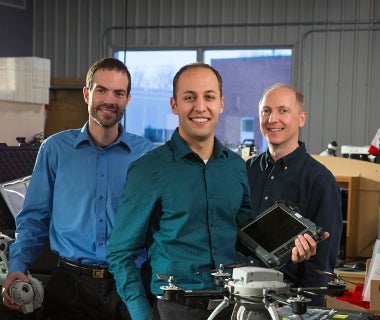
Now, the Waterloo company is focused on keeping its easy-to-use "aerial intelligence platform" at the top of an increasingly competitive market.
"We were years ahead of the market when we began developing our product," says Dave Kroetsch, who founded Aeryon Labs in 2007 with Mike Peasgood and Steffen Lindner. "We've got a great head start, but we can't rest on our laurels."
What started as a three-person team now has 47 people on the payroll and strong cache in an increasingly competitive market. Aeryon's lightweight, snap-together Scout surveillance drone is easy to use and easy to fix if it has to make a rough landing.
That makes it perfect for a vast range of uses that have caught the eye of military, public safety and corporate users, as well as media around the world.
"Probably our greatest public success so far was the use of our system by the Libyan rebels, but we've been fortunate enough to be involved in several big news stories," says Kroetsch.
But as an entrepreneur, he says his greatest success hasn't been in garnering media attention. It's watching his fledgling company take flight.
"I think the most exciting challenge now that the market is heating up is to stay on top," says Kroetsch.