DNA researcher pursues science with impact on society
Interactions between DNA and nano-materials have the potential to change water treatment, drug delivery systems and cancer detection.
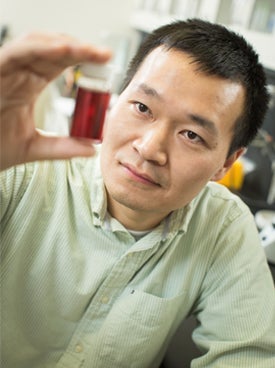
An assistant professor in the Chemistry Department, Liu’s work was recently recognized with an Ontario Early Researcher Award.
DNA: not just for genetics
While usually associated with genetics, Liu uses DNA in one of its other capacities, as a base on which to bind unwanted molecules. For each molecule, Liu and his team must look through a huge DNA library (think trillions), find a few good candidates, and then pick a handful to test. Once they have found the right sequence, they add a hydrogel to make the mix manageable and fluorescence (colour) to make it visible to the naked eye.
Liu’s lab is also working on other projects, all of which involve DNA. He studies the interactions between DNA and nano-materials with potential application for drug delivery systems and cancer detection. Again with this research he is still focused on real-world benefits.
“We want not only to pursue science but to have an impact on society,” says Liu. “We hope this research will eventually be applied to real cases in environmental protection and medical diagnosis.”
A student-centred lab
Back in the lab, Liu is also keen to have an impact on his graduate students. He currently supervises five graduate students and a postdoctoral fellow, along with a few undergraduates from the university’s co-op program. He likes to spend as much time in the lab with them as he can.
“I feel the best way to supervise students is to work very closely with them,” says Liu.
“I spend time with each student and make sure they are trained well and productive.”