Bridging the energy transition
Environment alum, Humberto Gutierrez (BES '15), shares how a leading North American energy infrastructure company is helping build the path to a lower-carbon future
How do we meet our growing energy needs while balancing reliability, affordability and the environment? It’s one of the greatest modern challenges we face. One that alum Humberto Gutierrez (BES '15), now based in San Diego, California, has been at the forefront of throughout his career at Sempra Infrastructure; a company that develops and operates energy infrastructure that is expected to play a crucial role in the energy systems of the future.
As the Sustainable Development Manager, Gutierrez works on helping to develop lower carbon infrastructure and pushes the boundaries of what’s possible in a rapidly evolving energy landscape, in particular the growing global demand for liquefied natural gas (LNG).
Addressing climate impact in a period of growth
The U.S. is now a net exporter of natural gas, and Sempra Infrastructure builds, develops and operates terminals that liquefy this fuel and ship it to markets around the globe. Gutierrez’s focus is on how to manage those operations in a sector where climate performance is increasingly scrutinized.
“It’s important to recognize that reducing greenhouse gas emissions can also be a strategic opportunity," he says. "We do our best to identify options that help create value for our business, like improving efficiency, and really execute on those. If we can do that and deliver a lower-carbon intense product to our customers without sacrificing safety and reliability, we’ll be well-positioned to continue to enable the energy transition.”
He’s quick to point out that natural gas, while still a fossil fuel, will continue to play an important role in the global energy mix.
“With energy demand increasing rapidly, an all-of-the-above strategy will be needed to meet that demand—this includes deployment of renewables like wind and solar, but also natural gas. Therefore, it’s important that production and use of natural gas considers climate impacts, and that we work to mitigate greenhouse gas emissions throughout the supply chain.”
The goal isn’t to maintain the status quo, but to be part of the transition in a conscious manner.
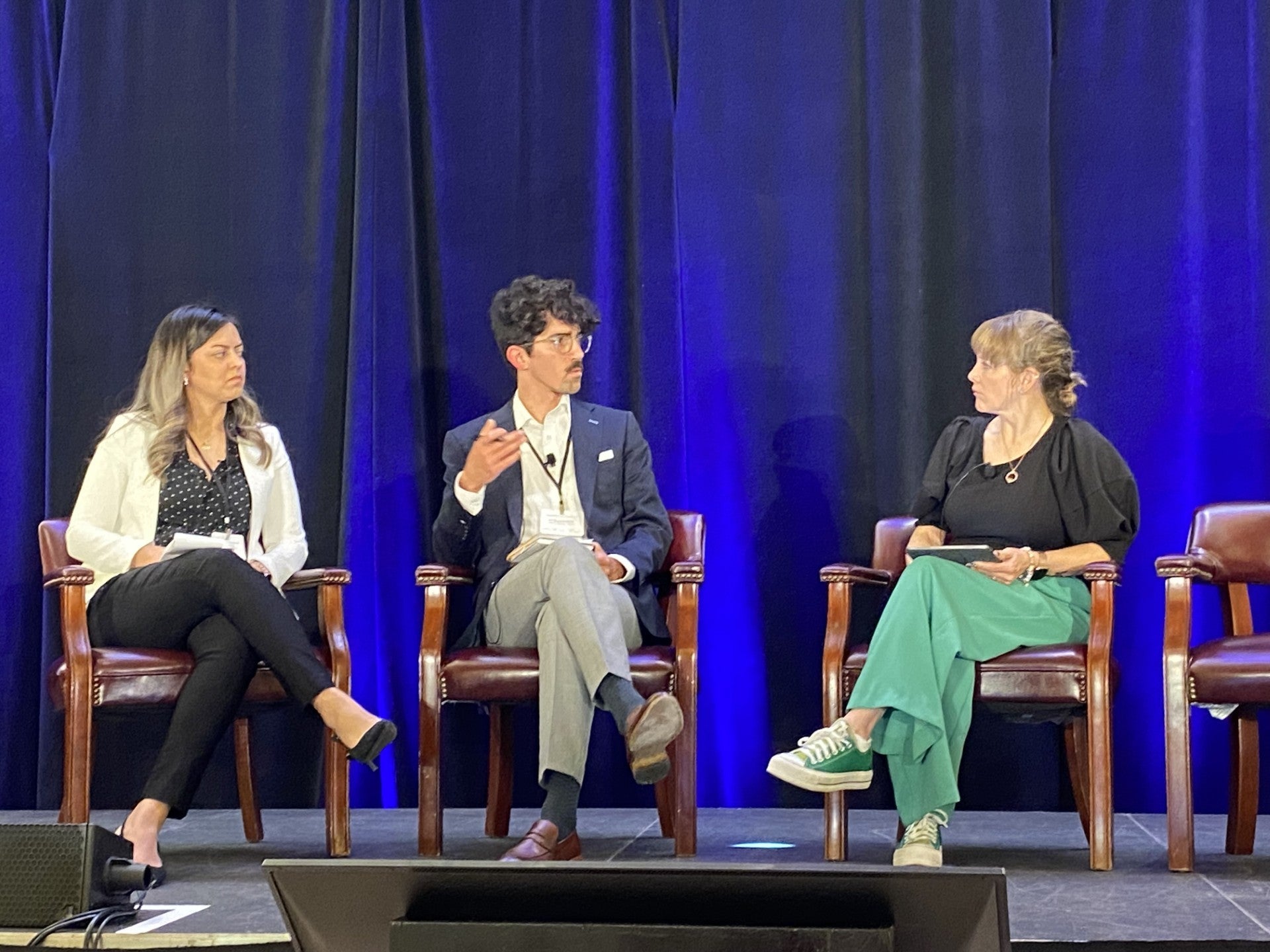
Gutierrez speaking at a conference on methane emissions.
Technological breakthroughs advance the shift
Gutierrez is particularly interested in the role technology plays in enabling a lower carbon energy future. As part of Sempra Infrastructure’s strategy to reduce emissions, his team is investing in strategic initiatives related to methane detection and management. By working together with industry partners, they’ve begun rolling out LiDAR and other advanced technologies that can detect and quantify emissions with unprecedented accuracy. This data-driven approach helps prioritize emissions mitigation and improve the company’s emissions profile.
He sees this kind of innovation as essential to building the energy systems of the future. New tools allow energy operators not just to comply, but to proactively identify emissions hotspots and respond in real time. These tools are also being embraced by regulators, and this is leading to broader shifts in the industry toward more transparent, measurable environmental performance.
Looking ahead, Gutierrez sees an energy transition shaped by a combination of market demand, evolving policies, and these technological breakthroughs.
“As much as I wish we lived in a carbon-neutral world, that’s not the current reality,” he says. “But I think there’s a really important role to play in making sure we get there as responsibly and quickly as possible. Technology is moving fast and these kinds of solutions are actually moving the needle.”
“It’s a race to keep up, and that’s what makes it exciting,” he says. “From carbon capture to advanced battery storage and e-fuels, we’re seeing innovation happen in real time.”
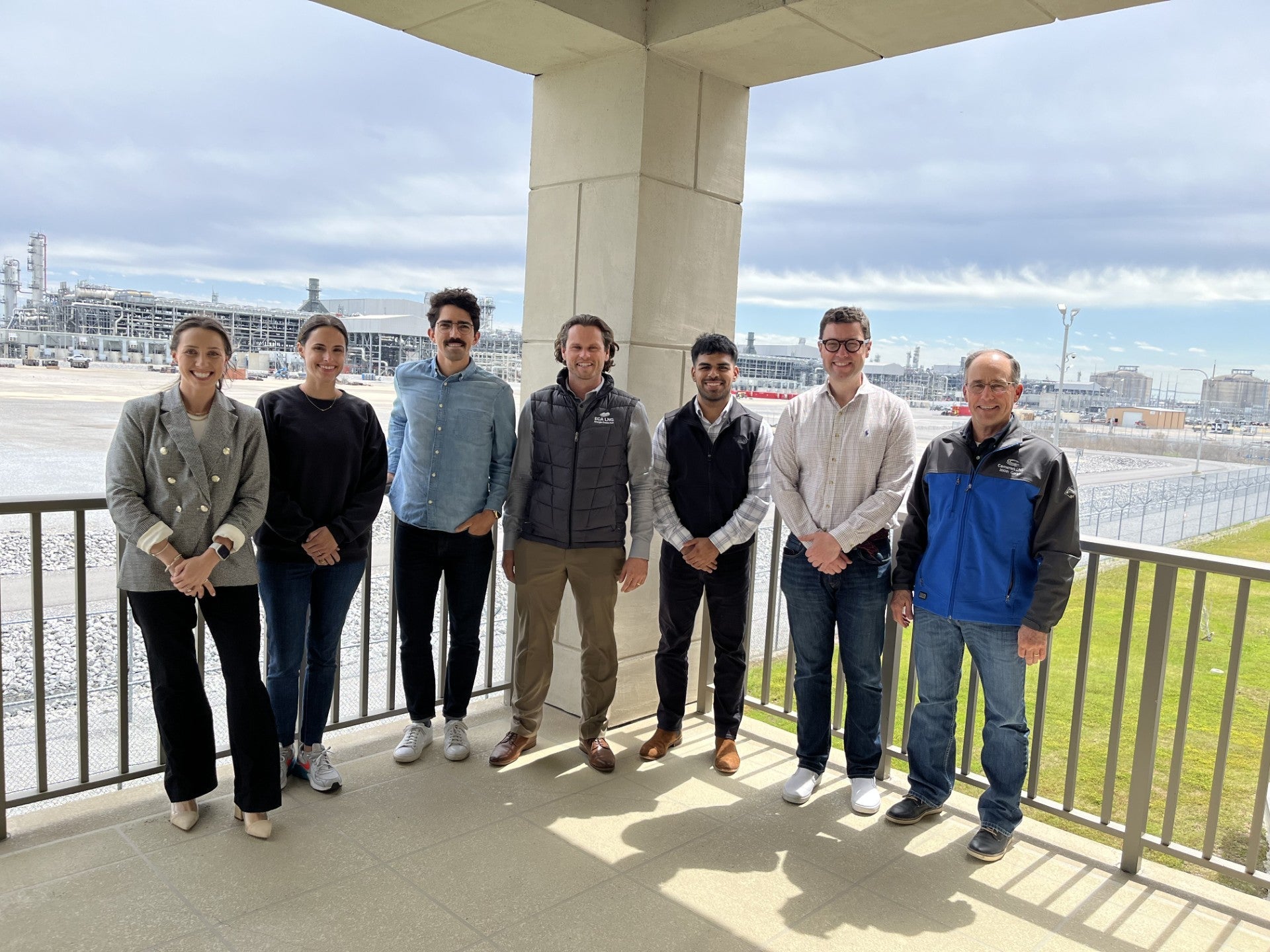
Gutierrez and his team at one of the LNG facilities.
Forged at Waterloo, fueled by curiosity
While Gutierrez is focused on the future, his path was shaped by his past. “Waterloo offered the right mix for me,” he says. “I was interested in business and the environment, and the co-op program really stood out. It gave me a chance to try things out and build a career path that wasn’t obvious at first.”
From a placement at Canadian Tire to a stint at Velocity, his co-op experiences were wide-ranging and often delt with technological innovation right from the start. Gutierrez was also a varsity soccer player and built lasting friendships on and off the field. As for some of his favorite memories, they are tied to quiet campus corners like the courtyard in EV1 or long bus rides with his teammates during the season. With family still in the area, he returns whenever he gets the chance.
He sees Waterloo’s culture of innovation and entrepreneurship as a key influence on how he approaches his work today and acknowledges that the work he does isn’t a solo effort. “A lot of what’s possible is because of the team we have,” he says. “It’s not a one-person show. I’m lucky to work with people who care, who get it, and who are committed to doing the right thing.”
His advice for students or young alumni that are interested in finding ways that benefit both people and planet?
“Be open-minded,” he says. “There are many ways to help build a more sustainable future and some of them might surprise you. Just stay curious, focus on learning, and embrace every challenge.”