Why humanity needs a new narrative of hope
TD Walter Bean Professor in the Environment, Sir Andrew Steer, shared powerful insights on how leaders, innovators, and communities can scale solutions for a more sustainable future
In 1968, experts warned that hundreds of millions of people would die of starvation. Yet, as Sir Andrew Steer reminded the audience of this in his TD Walter Bean Public Lecture, the grim prediction never came true. Instead, as the world’s population doubled, food production tripled. An outcome that was far from accidental.
“The problem was solved,” he said. “What all the experts got wrong was the fact that human ingenuity with the right combination of leadership, citizen engagement, scientific endeavor, and the right university engagement, you can change the world in amazing ways.”
Sir Andrew Steer brought this message to the University of Waterloo on September 29, in his lecture, The Courage to Act, supported by TD. It was a timely discussion as global concern over climate change reaches new heights.
New data suggests global temperatures could rise by 3.1°C, surpassing earlier estimates of 2.7°C, as population and economic growth accelerate human impact. Drawing on his experience with the Bezos Earth Fund, the World Bank, and the UK Department for International Development, Steer laid bare humanity’s growing footprint, what we extract, produce, consume, and discard, and what it means.
“In the 20th century our footprint increased twenty times in a hundred years. That’s because the economy was growing at roughly three per cent a year. If you compound three per cent for a hundred years you get 20 times. This century is the same, so in two centuries 400 times the human footprint.”
“If we keep going like this, we will run into a problem that’s unstoppable. That’s not to say we shouldn’t have 20 times as much prosperity, but what it does mean is we can’t have 20 times as much taking, making, wasting.”
But despite the bleak reality, Steer emphasized the story is not all bad. He reminded the audience that over the last century some major milestones have been achieved, including the biggest reduction in global poverty, global life expectancy has almost doubled and the middle class has risen. With this in mind, he shared five lessons for how we as leaders, innovators and communities can solve this wicked problem and scale solutions for a sustainable future.
- Offer a narrative of hope. The environmental movement has not always done a good job on that front; often focusing on the negative narrative. This moment calls for us to lean into a positive vision for the future. As an example, there is economic value to having livable, walkable cities.
- Focus on systems, not silver bullets. We need systemic changes that honour both people and planet.
- Look for disruptive ingenuity and tipping points. Remember that technology moves faster than we think. In 15 years, Fifth Avenue in New York went from solely horse and buggy to all automobiles. With the right leadership and innovation, we could scale our climate change solutions.
- Seek to understand people and act on that understanding. We must strive to foster inclusive, collaborative environments that empower us to learn from one another and grow together.
- Get the right hands on deck. We need a coalition of the right people collectively acting together.
Following his lecture, Dr. Leia Minaker joined Steer on stage for a wide-ranging conversation that dug deeper into his lecture. Together they explored the complexity of the climate challenge, discussing battery storage improvements as one key tipping point to watch for, the role of tariffs in stalling progress, and whether climate activists risk their own form of denial when confronting difficult trade-offs.
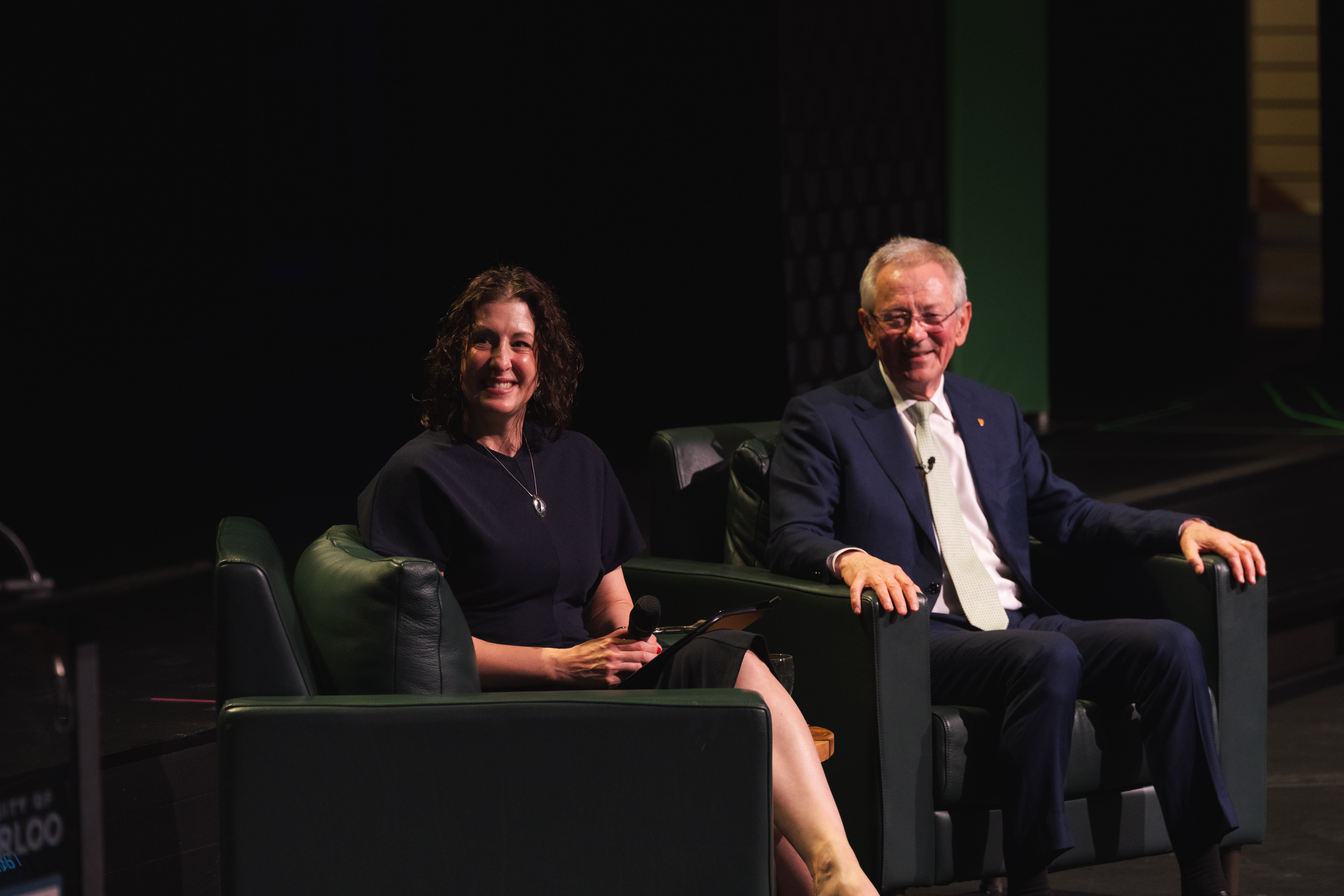
Dr. Leia Minaker and Sir Andrew Steer in conversation with the audience.
The discussion underscored a central truth: the opportunities before us demand courage, vision and collaboration that transcends borders and disciplines. They invite us not only to act, but to do so with foresight, evidence, and humility. Meeting the world’s toughest environmental challenges is, at its heart, an opportunity to harness knowledge, strengthen partnerships, and move forward together with purpose and hope.
In addition to the evening public lecutre, Steer also spoke with 400+ high school students about how their generation can lead change working with the world, for the world.
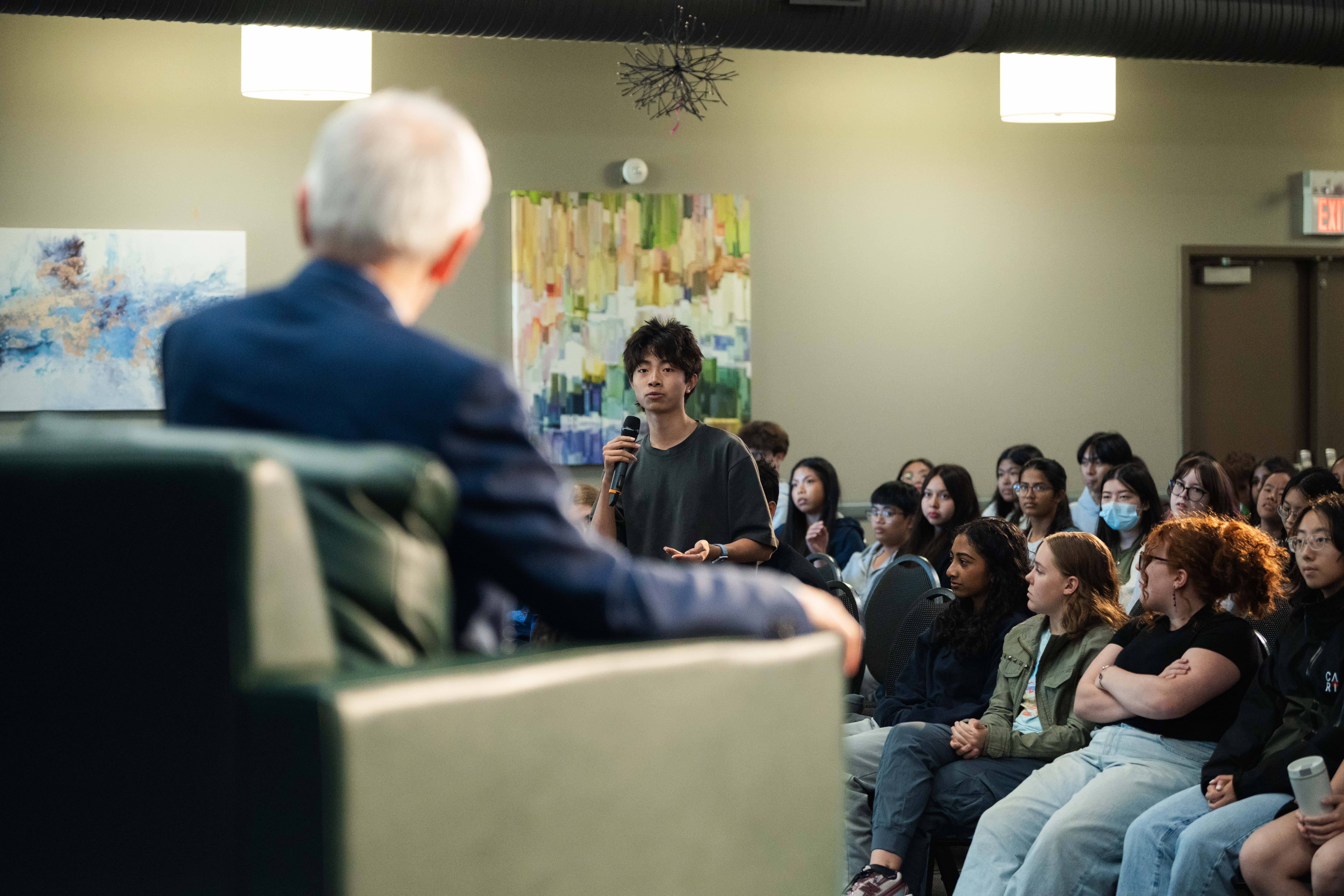
Dr. Andrew Steer speaking with high school students during the Q&A.
Building the knowledge and skills necessary for society to address complex environmental issues, the TD Walter Bean Professorship aims to attract outstanding international and national leaders and researchers to campus to give public lectures, teach classes, and meet with professors and students.Described as a fitting testament to the late Walter Bean’s legacy of community involvement and commitment to youth, education and community, the professorship is made possible thanks to the generosity of TD Canada Trust and their commitment to building a sustainable future together with their partners.
A president emeritus of Waterloo and an alum and former member of the University’s Board of Governors have been appointed to the Order of Canada.
Feridun Hamdullahpur and John Lounds were named members of the Order of Canada on December 29, 2022. Hamdullahpur’s honour is in recognition of his groundbreaking research in mechanical and mechatronics engineering and his visionary leadership in academia. Lounds, former president and CEO of Nature Conservancy of Canada (NCC), was honoured for his substantial contributions to land conservation across the country.
Hamdullaphur was Waterloo’s sixth president and vice-chancellor, beginning his first of two terms in 2010. During his leadership, the University saw significant growth in several areas, including at its campuses and initiatives focusing on student support and development. He was one of 10 university presidents to join the United Nations’ HeForShe IMPACT 10x10x10 global campaign for gender equity, and he established the Equity Office and the President’s Anti-racism Taskforce. During his presidency, he oversaw the creation of more than 7,500 jobs and $2.3 billion in revenue through entrepreneurship programs at the University. Hamdullahpur is a professor in Waterloo Engineering and serves as chancellor of International Business University.
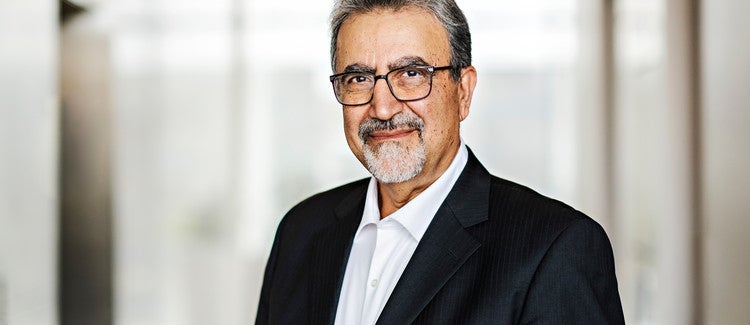
“In the decade Feridun Hamdullahpur led the University of Waterloo as president and vice-chancellor, the institution continued to expand its global reach while making significant contributions to Canada through its dedication to research excellence, innovation and entrepreneurship, and experiential learning opportunities for students,” said Cindy Forbes, chair of Waterloo’s Board. “On behalf of the Board of Governors of the University of Waterloo, I congratulate him on this fitting and deserved honour.”
John Lounds earned his Bachelor of Environmental Studies in planning from Waterloo in 1978. He’s worked to protect biodiversity and preserve some of the country’s most threatened landscapes. Lounds was at NCC for 24 years. The organization saw considerable success during his time at the helm, helping conserve 15 million hectares of land, water and habitats for species at risk across Canada. He served as a member of the University’s Board of Governors from 2013 to 2019.
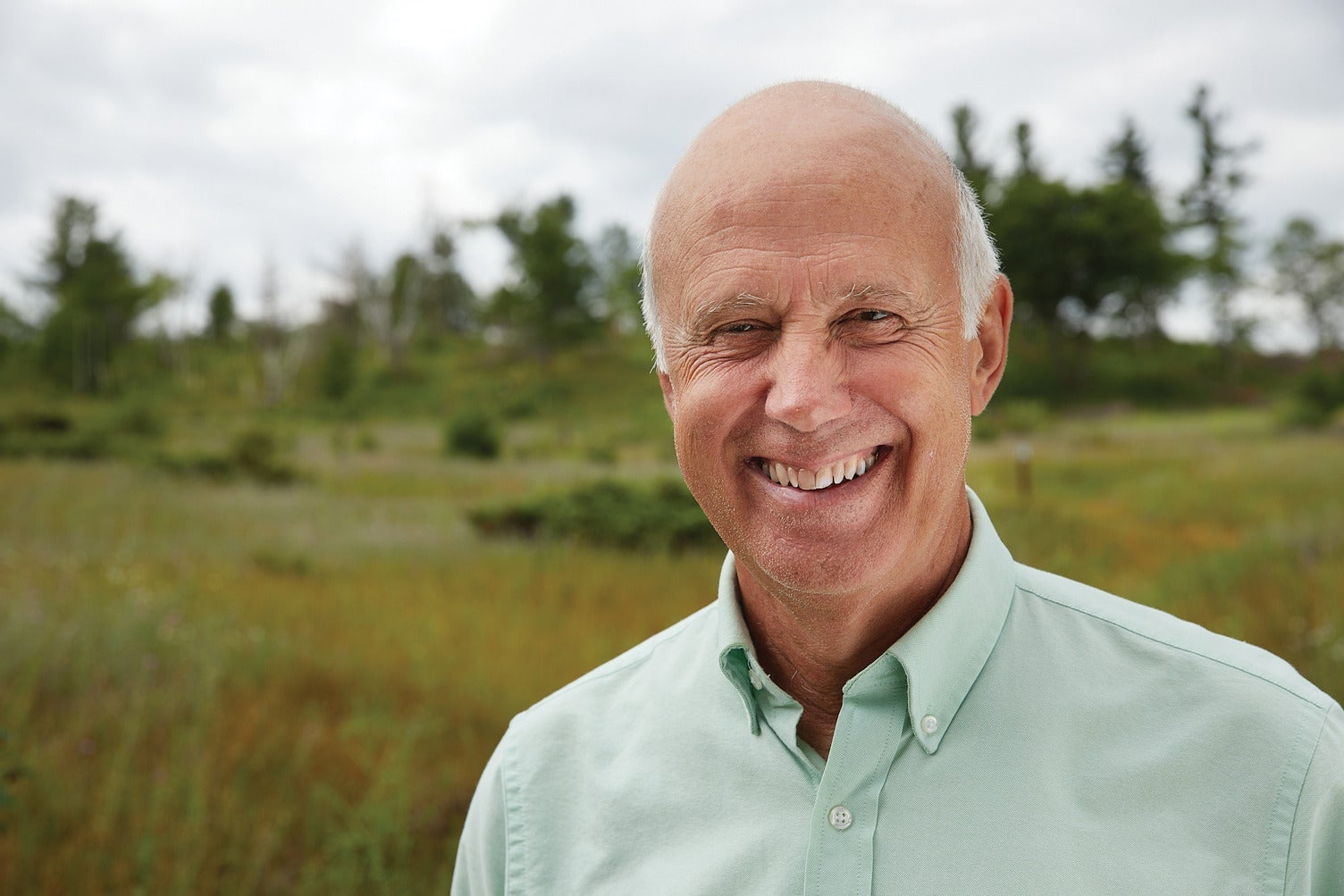
Photo credit: Mike Ford
“Waterloo graduates change lives and communities with their creative and collaborative approaches to solving big challenges, as illustrated by John Lounds’ remarkable accomplishments in environmental conservation,” said Vivek Goel, president and vice-chancellor of Waterloo. “This institution and the whole country have benefitted from his leadership and dedication, and the University community congratulates him on this special honour.”
Hamdullahpur and Lounds are among 99 new appointments to the Order of Canada announced by Her Excellency the Right Honourable Mary Simon, Governor General of Canada. They will receive their insignia at a later date.