From Waterloo to Fiji: Meet the Waterloo alum on Survivor 50
Kamilla Karthigesu shares behind-the-scenes stories and how co-op prepared her for casting
As a University of Waterloo student, Kamilla Karthigesu (BASc ’16) didn’t spend her Wednesday nights at Bomber. She was at home watching Survivor.
Ten years after graduating, Karthigesu watched herself play on the show’s 50th season. She also played on Survivor 48, where she reached the final four and formed an iconic secret alliance with Kyle Fraser, the season’s winner.
Read on to learn more about her Survivor experience and how her experience in the Management Engineering program may have prepared her for it.

How long have you been watching Survivor? A lot of recent players have watched every season.
I stopped watching Survivor in high school and then got back into it at Waterloo. When Survivor Cagayan (season 28) was airing, my brother tried to get me back into it multiple times. He talked about this guy Tony, who was going to win it all. So, I started watching it again and had a lot of fun.
There were two Sri Lankan women on the next season and my entire family started watching again. When I met my husband at Waterloo, I told him: “We’re not going out for drinks on Wednesday. We are sitting in our room and watching Survivor.”
No Bomber Wednesday?
No Bomber Wednesday. I watched Survivor every week. As soon as the episode was done, I was on Reddit reading everyone’s comments. I was very into it.
You were in deep! What made you apply?
I kept seeing people who looked like me, and I thought maybe I could do it too. A year or two after I moved to California, they allowed Canadian applicants for the first time. I immediately applied and didn’t hear anything back.
Years later, on Survivor 45, we saw multiple people quit. I filmed a three-minute rant about how embarrassing it would be if I quit. My family has done significantly harder things, and they never gave up. That video got casting to call me back. Less than a year later, I was filming Survivor 48.
The casting process is rumoured to be very intense. This might be a stretch, but did Waterloo co-op interviews prepare you?
You wouldn’t think so, but yes! I had never done job interviews until I got to Waterloo, and I had a lot of social anxiety. I read advice that you should do a power pose before interviews. I was so bad — that’s the kind of advice I was taking.
I would get to the Tatham Centre an hour early to prepare. Twenty minutes before the interview, I would go to the bathrooms downstairs, go into a stall, and power pose.
I ended up doing them for my Survivor interviews, and other things too! I would walk around the house and talk myself up. I’d have a can of Coke right before, so I was energized. I only learned how to do those things through co-op interviews. It gave me a ten-year head start to get on Survivor.
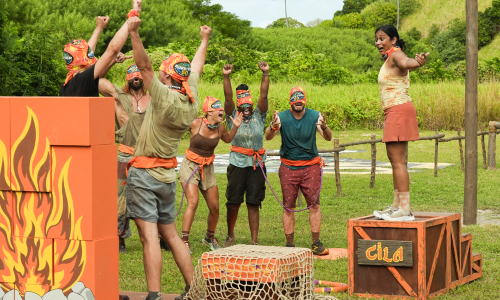
Did you have a specific game plan going into your first season?
I wanted to get into an alliance with someone who nobody would expect. Eventually, I found Kyle. We got to play out the idea I had in my head. It got us both to the end, and it led him to win.
It’s funny — right before we started filming, Kyle wrote the exact same game plan in his journal and named it The Departed after one of his favourite movies. Later, we bonded over how much we love that movie.
You’re a self-proclaimed gamer. What video games do you play and do you think they helped with your Survivor strategy?
Yes! Before my first season, I played a lot of Counter Strike and Valorant. I played online in team games, and it helped me when I lost immunity or things didn’t go my way. When I lose, I can move on. There’s another game coming.
It also helped with team challenges, when you have a lot of big egos and everyone’s saying they want to do this or that. When those people lose, they get mad and start blaming each other. I’m good in those environments because it happens in online games all the time. I understood that they needed to deal with their feelings. It’s not a situation where I need to tell them it’s okay. I knew that’s not what people wanted to hear.
On Survivor 50, you’re all returnees, and you all come from different eras of the game. How did that make the game different from season 48?
On season 48, people didn’t want to make big moves or be the first to talk strategy. It puts a target on you. After the merge, people were policing each other, making sure that certain people didn’t speak privately. You never wanted to be seen alone with anyone or in a small group. Everyone was afraid of people talking strategy.
On day one of season 50, I heard four names thrown out and we hadn’t even played for immunity yet! Mine was one of them and I was so happy and excited. We were playing hard right away.
It was a totally different culture because we knew we had to start working immediately. We didn’t care about targets on our backs. We didn’t care about getting caught. We needed a good alliance.