When a hobby becomes a career
Kate Atherley (BMath '92) explores her unlikely career journey from software to knitting.
If I’m being honest, I’m not really sure what I intended my career path to be.
When I was in high school, I was an avid reader and writer, and really enjoyed language and literature classes. My decision to study mathematics was a hasty one, and a surprise to everyone – including me.
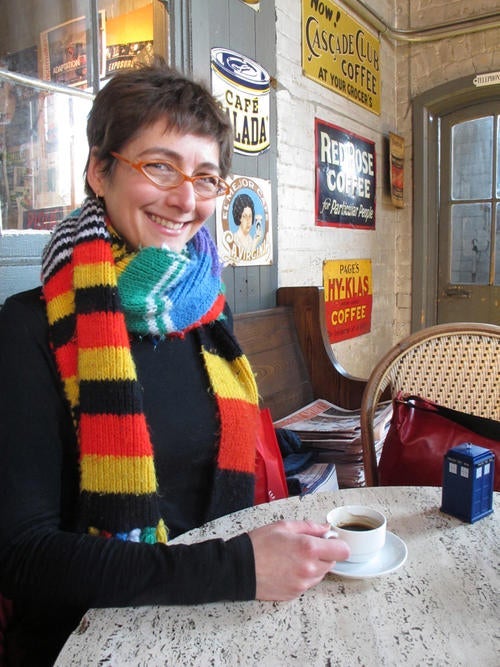
But if you asked me what I intended to do with that degree… I had no ideas, no answer. After the third year, I travelled with some fellow students, visiting possible graduate schools. It became clear to me that although I enjoyed the discipline, mathematics didn’t run through my veins in the way it did my friends’. I took my math degree and headed out into the working world. I’d gone through the co-op program, and had experience working in software companies, so I fell into the most obvious and perfect job: working at Waterloo Maple, a company that developed a mathematical programming language.
“The pursuit of science is an important one, and one that must be done in conjunction with historical and philosophical examinations of science and the science-society relationship,” says Douglas, a professor of philosophy and the Waterloo Chair in Science and Society. “My work centers on this relationship and how it should be understood, particularly for democratic societies.”
Because of my writing and communication skills, I divided my time between user support, training and technical writing. I moved around a fair bit in the software industry, changing jobs when I got bored or frustrated. In the 1990s, small software companies were forever changing hands, merging, transmogrifying, and I floated around. Although I liked the work, I always struggled with the culture at these types of companies: I was too ‘arty’ for development teams, too technical for marketing (and certainly didn’t have the right skills for sales). My best jobs were those where I sat between the technical and the non-technical types, as an interpreter: user support, training, documentation.
From software to knitting
I’d been a knitter most of my life. For many years, it was an on-and-off activity, based on whether I had any spare time. Very little knitting got done while I worked on my degree, but as soon as I graduated I picked it up again.
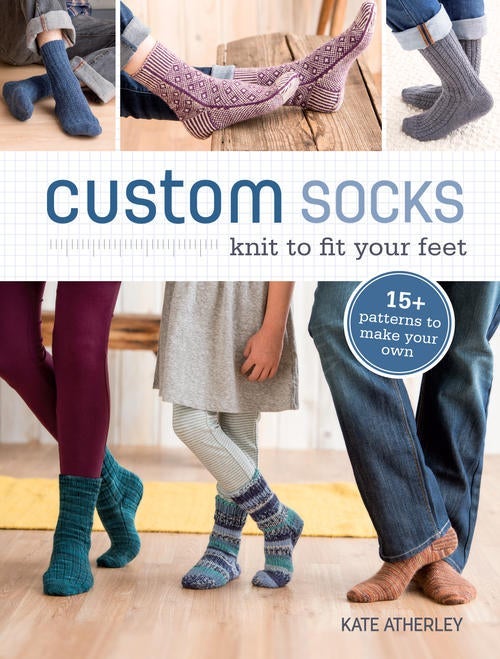
Twenty years later, I make my living through knitting. I travel internationally to teach, I write and edit books. And I’m doing exactly the same thing I was doing in software: I’m an interpreter between the technical and non-technical types. After all, that’s what teaching is. My books take a slightly unusual approach, in that it’s not just about standardized step-by-step patterns; I teach knitters how to adapt and adjust and customize their knitting so that it fits them precisely. There’s a huge amount of mathematics and number crunching in that, of course.
Knitting is technical too
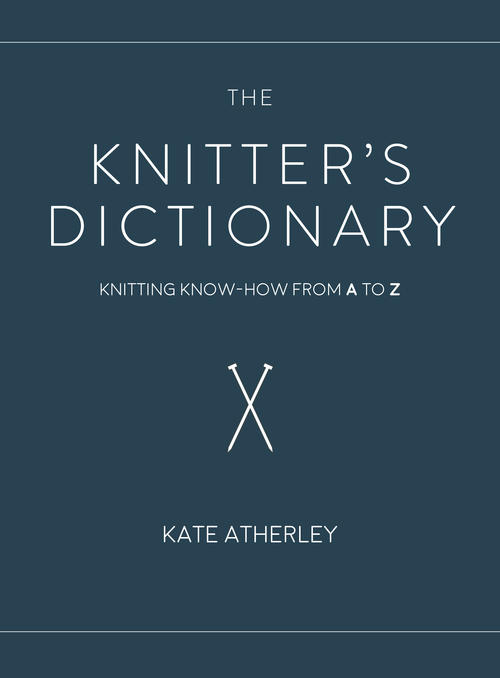
I have built myself a career where my unusual mix of arty and logical is valued, and where my communication skills are applied to something that brings pleasure and creative satisfaction. I perhaps don’t knit quite as much as I would have expected, making a living in the knitting world – but if that’s my only complaint, it’s not a bad one.
Kate Atherley is a globally recognized knitting instructor and seasoned designer. She has published seven books for knitters, and she’s the technical editor of knitty.com. Follow her on Twitter and Instagram to learn more.
“The pursuit of science is an important one, and one that must be done in conjunction with historical and philosophical examinations of science and the science-society relationship,” says Douglas, a professor of philosophy and the Waterloo Chair in Science and Society. “My work centers on this relationship and how it should be understood, particularly for democratic societies.”