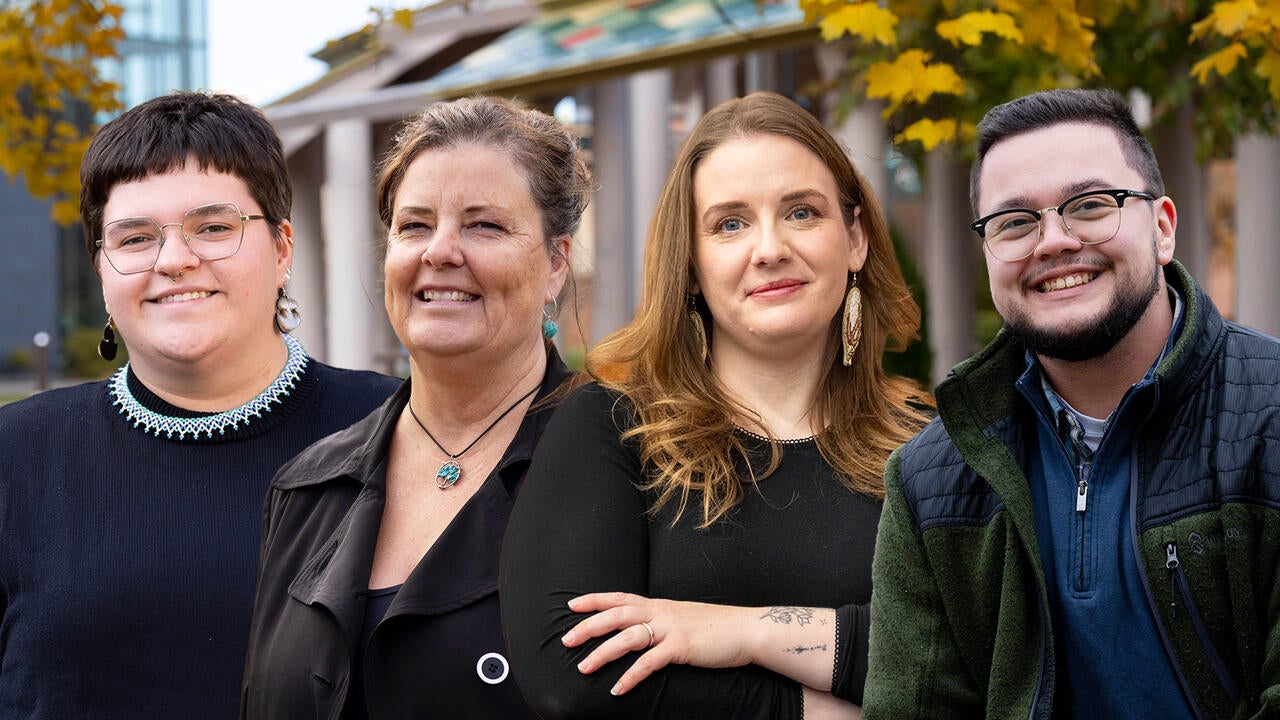
Four Indigenous students at the University of Waterloo are the recipients of Social Sciences and Humanities Research Council (SSHRC) awards. The $392,000 in funding supports research in the Faculties of Arts, Environment and Health and bring together Traditional Knowledge and western science.
“We are pleased to celebrate these exceptional students who are each playing an important role in incorporating Traditional cultural practices into their work at Waterloo,” says Dr. John Lewis, director of Indigenous Faculty Relations. “Their contributions to academia, our campus community and broader communities represent another step in our reconciliation journey.”
The SSHRC Canada Graduate Research Scholarship and the SSHRC Indigenous Scholars Awards support exceptional student researchers and are intended to increase participation in academic research and promote work that is informed by the successful candidate’s experience as a First Nations, Inuit and/or Métis person.
SSHRC Canada Graduate Research Scholarship provides $40,000 per year for doctoral students over three years while the SSHRC Indigenous Scholars Award funds a student with up to $32,000 over 12 months.
The funded research investigates a range of areas, including reconstructing historical changes in ecology, the reparations of Wampum belts, climate impacts on Inuit traditional practices and the development of culturally meaningful leisure for Indigenous Elders.
Tara Ryan (BES ’25, MES in progress) | Faculty of Environment 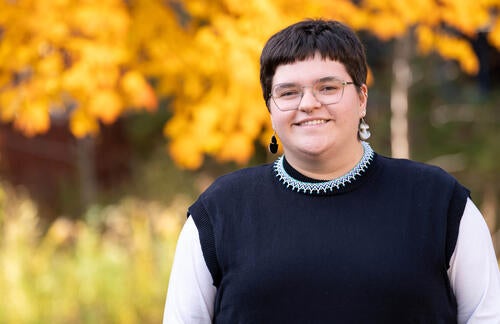
Tara Ryan’s research explores place-based relationships and shifting behaviours of Inuit attitudes and berry-picking practices in Labrador. It highlights climate-change related threats to bakeapples and traditional customs.
Bakeapples, also known as appet and cloudberries, grow in bogs across Newfoundland and Labrador and eastern Quebec. Picking of the berries and the berries themselves play important cultural role in Inuit communities.
Through integrating Inuit knowledge and perceptions of change into the research, its findings are intended to augment the understanding of how traditional resources may evolve due to climate change and how resource anxiety impacts the Inuit of Labrador.
Dale Ashley Bellaire (BA ’20, PhD in progress) | Faculty of Health 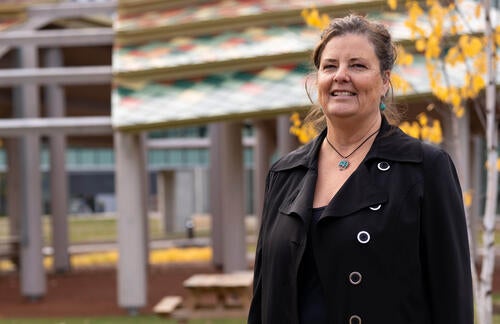
As the population of Indigenous Canadians over the age of 60 continues to grow, so too does the need to honour and support their distinct health and well-being. Using a Medicine Wheel framework, Dale Bellaire’s research focuses on decolonizing long-term care (LTC) by creating culturally meaningful spaces and activities that nurture connection, belonging and identity. This includes integrating language, traditional foods, spiritual and cultural practices and community-based activities that reflect the holistic needs of Indigenous Elders.
Bellaire’s study engages Elders and community members as collaborators in every stage of the research.
The outcomes will highlight the vitality of Indigenous cultural expression and promote its inclusion within LTC environments to enhance social connection, resilience and quality of life for Indigenous Elders.
Kian Drew (BSc ’22, MSc ‘25, PhD in progress) | Faculty of Environment 
Working alongside Miawpukek First Nation, Kian Drew is investigating the Little River Estuary on the south coast of Newfoundland.
The project takes a Two-Eyed Seeing approach that brings together Indigenous and western ways of knowing. By analyzing sediment cores collected from culturally significant areas and connecting them to Mi’kmaw Traditional Knowledge, the research will reconstruct historical changes in water levels, vegetation and disturbance events such as storms, flooding and traditional burning.
The findings aim to inform conservation strategies and community-focused planning for at-risk ecosystems, offering sustainable pathways for coastline and peatland stewardship.
Savannah Sloat (PhD in progress) | Faculty of Arts 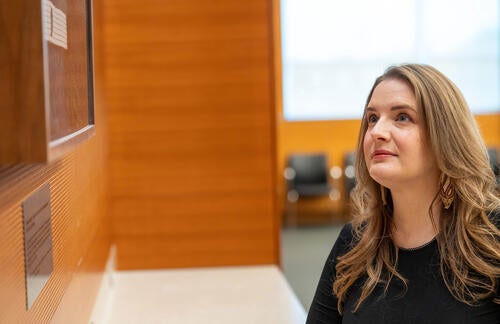
Building upon previous Haudenosaunee-led research, Savannah Sloat is documenting and preserving community stories and knowledge systems related to Wampum as a living aspect of Haudenosaunee culture.
The project will explore assertions of Haudenosaunee sovereignty through first-hand accounts of cultural reclamation.
The intent is to develop a complete chronicling of the 1988 repatriation of 11 wampum belts to the Six Nations Confederacy on the Grand River through the accounts of community members who participated in the repatriation. Through these stories, Sloat hopes to share a greater understanding of the ongoing narrative of Haudenosaunee sovereignty.
As part of its ongoing reconciliation initiatives, Waterloo provides research support to Indigenous faculty, students and staff through the Indigenous Research Team within the Office of Research. The team is responsible for supporting and strengthening Indigenous research capacity at the University and beyond.