July 20, 2026
Made by Waterloo: Why the future of robotics is being built in Waterloo
Alumni‑founded Clearpath shows how local talent, research infrastructure and values position Canada to lead in advanced robotics
Alumni‑founded Clearpath shows how local talent, research infrastructure and values position Canada to lead in advanced robotics
When Ryan Gariepy (BASc ’09, MASc ’12) arrived at the University of Waterloo, Canada’s robotics industry was still finding its footing. There was no clear career path and few examples of Canadian startups successfully taking physical robotics technology from the lab to the global market.
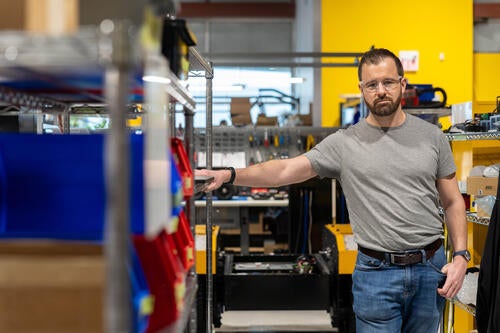
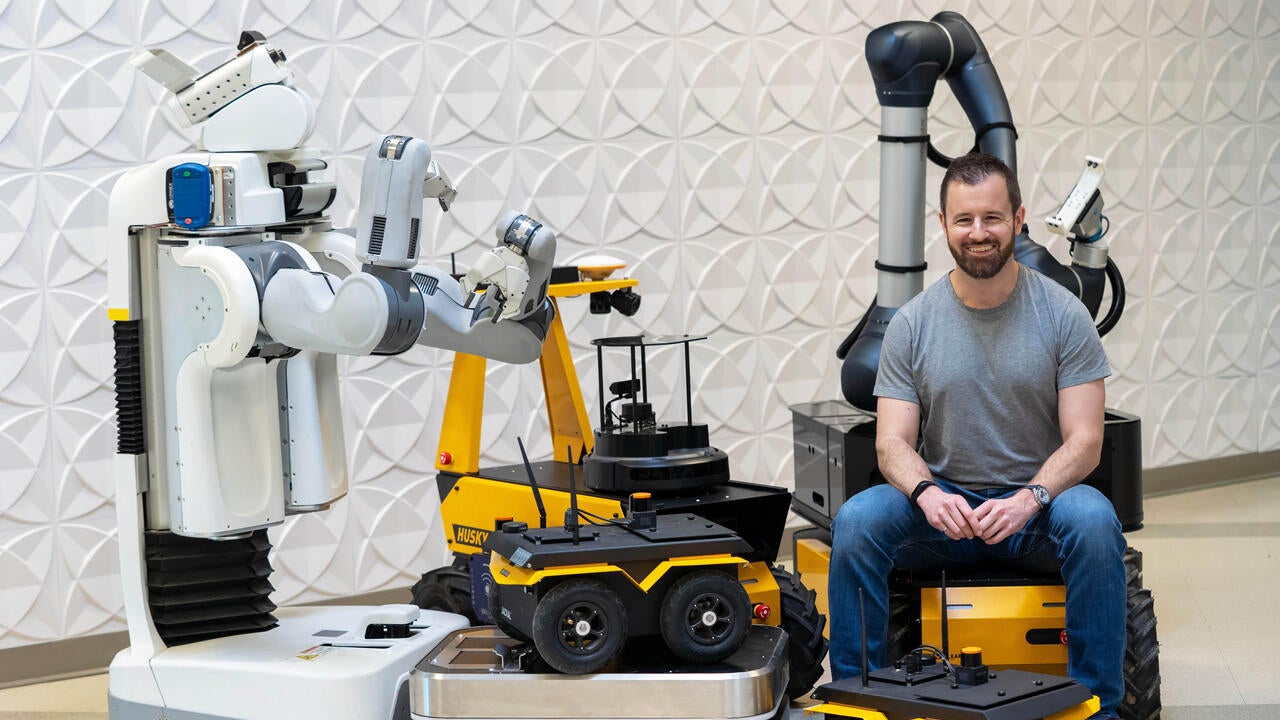
Today, as co-founder of Clearpath Robotics, now part of Rockwell Automation, Gariepy represents a generation of Waterloo alumni who helped turn that early promise into a globally recognized, made in Canada success. In the process, they have become advocates for building, scaling and governing advanced robotics from Canada.
Gariepy and his co-founders launched Clearpath immediately after graduating, with degrees in engineering from Waterloo, choosing a hardware startup path that was far from guaranteed. Their initial idea was simple but ambitious, give researchers better tools to experiment with real robots operating in real environments.
Being rooted near the University of Waterloo proved critical. Proximity to campus allowed Clearpath to draw on interdisciplinary expertise, test ideas quickly and maintain close relationships with researchers and students. Early user feedback directly shaped the company’s first platforms, ensuring the technology reflected real world needs.
“Robotics is inherently interdisciplinary,” Gariepy says. “You need mechanical engineering, software, electrical systems and systems thinking all working together. Waterloo was one of the few places where that mix was already happening.”
Clearpath grew alongside Waterloo’s emerging robotics and entrepreneurial ecosystem, and have supported spaces such as RoboHub and Velocity. These environments act as workspaces and gathering points where students, faculty and founders learn to collaborate across disciplines and translate theory into functioning systems.
When Clearpath was founded, there were only a handful of robotics companies in the region. “Now there are literally dozens of robotics startups coming up, and they’re scaling faster and faster,” Gariepy says. “That’s incredibly exciting.”
As the company matured, Clearpath increasingly operated at the intersection of civilian and industrial applications, often described as dual-use technology. Gariepy notes that Clearpath was unusual as a robotics company in that it went commercial first, without early venture capital or military funding, while still recognizing the importance of national resilience.
“It’s important to think about where Canadian technology developers can contribute both to economic success and to the security of our nation,” he says.
That perspective now extends beyond Clearpath. Gariepy serves as chair of the Canadian Robotics Council, helping shape national conversations about productivity, self sufficiency and responsible technology adoption.
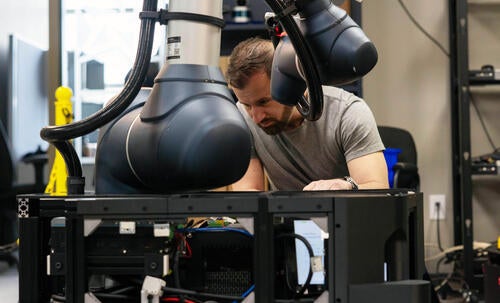
“When it comes to my responsibilities as chair of the Canadian Robotics Council, there are more commonalities across Canada than differences,” Gariepy says. “There’s a real sense of community, people trying to help each other out. Robotics may not be the only thing that will get us there, but it is certainly a critical ingredient.”
In 2023, Clearpath was acquired by Rockwell Automation, a U.S. based industrial automation company. For Gariepy and his co-founders, the decision was driven by impact rather than exit.
“None of us started this business for the money,” he says. “What kept us going was that we wanted to make a positive impact on the world.”
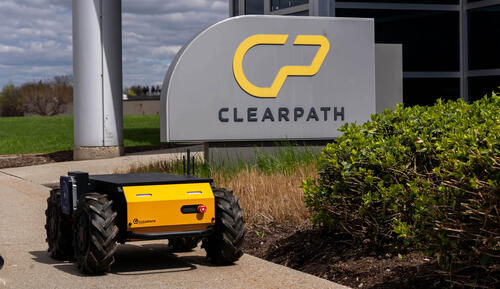
The acquisition brought new investment and stability to the region, including the establishment of the Rockwell Automation Robotics Centre of Excellence in Waterloo. “The epicenter is literally here in Canada,” Gariepy says, pointing to continued investment in local talent and infrastructure.
Clearpath’s story shows that Canadian founders do not have to choose between global scale and local commitment. The company continues to employ and mentor talent in the region, while its alumni are embedded across the startup and investment ecosystem.
Gariepy remains closely connected to the University of Waterloo, supporting initiatives such as RoboHub and regularly engaging with students and founders.
“As robotics becomes increasingly central to nearly every industry, scaling the technology here means the benefits come here too,” he says. “And then you get to pay it forward.”
Clearpath proves that Canada can build world‑class robotics companies that strengthen local talent and innovation at home.