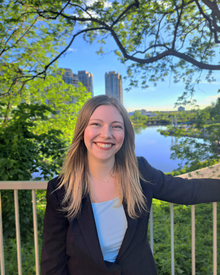
For Emma LeCouffe, success was never about following a single, well-defined path. Instead, it was about exploring possibilities, connecting ideas across disciplines, and embracing the unknown.
“I’ve always had a variety of interests,” she says. “I love exploring different topics and finding connections between them rather than staying in one lane.”
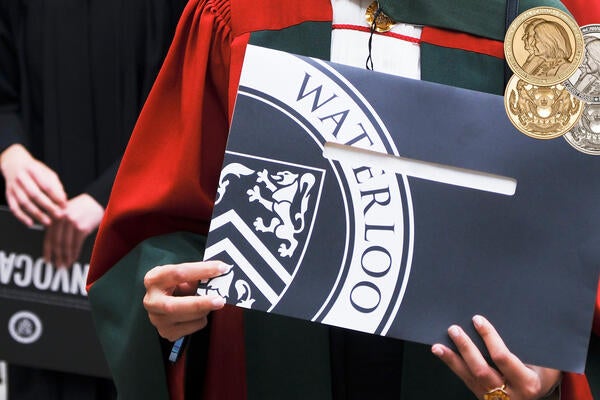
That mindset has guided her throughout her undergraduate journey and is the secret to her success. Not only has she earned a Bachelor of Knowledge Integration (BKI), but this spring, she also graduates at the top of her class, receiving the Alumni Gold Medal for outstanding academic achievement in the Faculty of Environment as well as the Departmental Award for distinguished academic achievement in Knowledge Integration.
“Knowledge Integration is an interdisciplinary degree that goes beyond traditional art and science programs by teaching students how to communicate, collaborate and solve problems across disciplines,” she explains. “Knowledge Integrators are bridge builders and connectors of people and information. These attributes are increasingly important to solve today’s complex problems.”
This interdisciplinary program allowed LeCouffe to shape her degree around her own interests, including a minor in psychology and a Collaborative Design Specialization. Through these experiences, she developed a deeper interest in how people think, learn and work together.
One of her most impactful early experiences came in a Knowledge Integration course called Making Collaboration Work.
“This class completely transformed how I approach group projects,” she says. “This class gave me practical tools to approach collaborative work that I used throughout the rest of my degree and will continue to use in my career.”
That focus on collaboration extended into one of the program’s signature experiences, a two-term project where students design and build museum exhibits. To prepare, LeCouffe’s cohort travelled to Barcelona to study museums and strengthen their connections as a group. While the academic experience was valuable, one of her favourite memories came from an unexpected challenge.
“We decided to hike up a mountain late in the day,” she laughs. “By the time we completed our hike, we had missed the last cable car ride to get back to the train at the base of the mountain. So, we had to hike down the mountain for hours to get back. We were exhausted, but everyone was laughing and singing camp songs. It was one of those moments where you realize how strong your community is.”
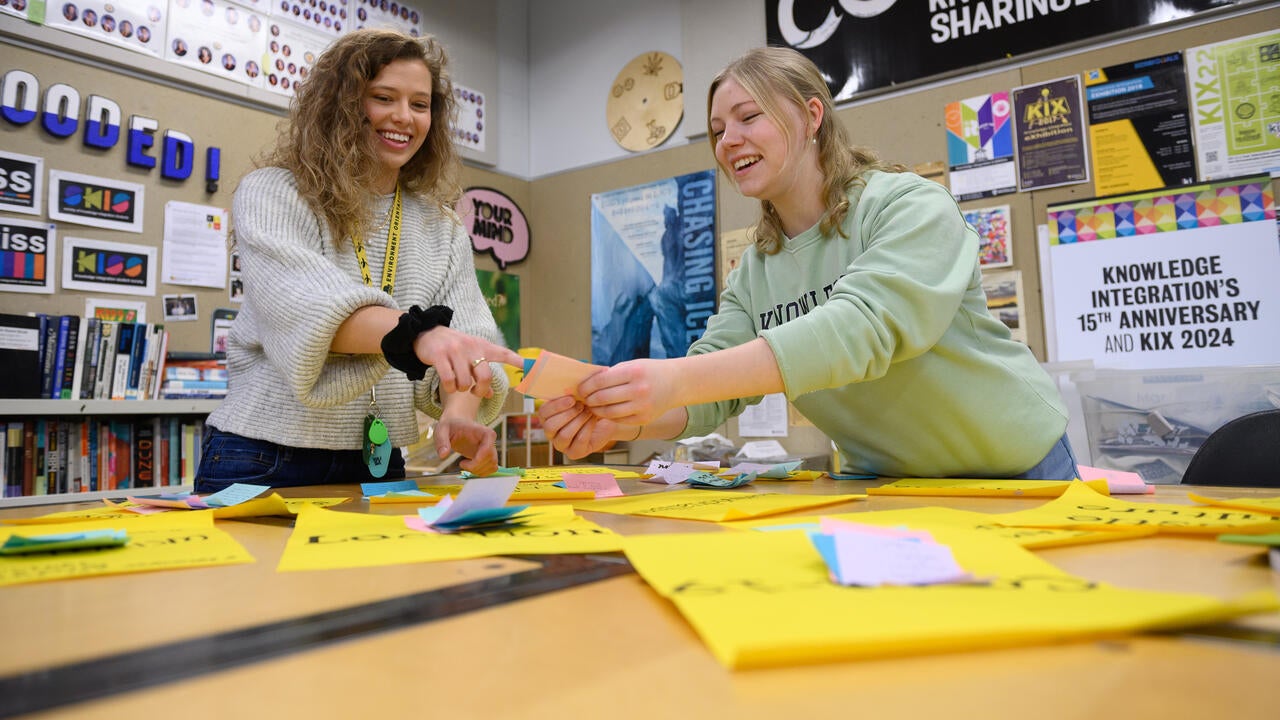
That sense of community is a defining part of her time at Waterloo. Weekly KI seminars, described as the “living room” of the program, brought together students from all years, along with alumni and faculty, to connect, share ideas and take a break from academic pressures.
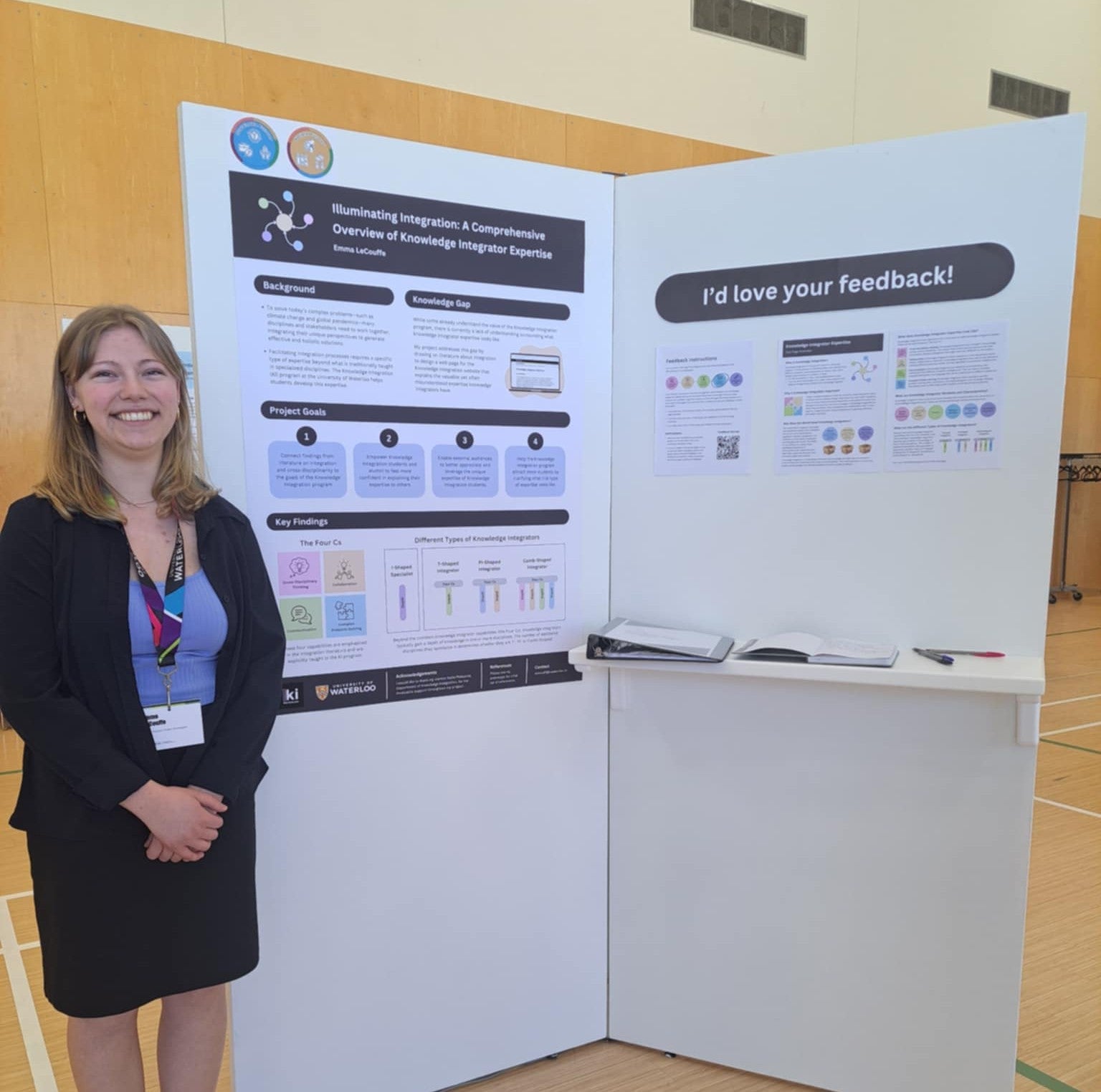 That environment also fostered meaningful mentorships, including one with Dr. Katie Plaisance. After taking multiple courses with Dr. Plaisance, LeCouffe went on to work as her teaching assistant, and later completed her senior honours project under her guidance. For her project, LeCouffe developed an educational resource that explains what it means to be a knowledge integrator. She pursued this project to shed light on the unique and valuable skills, mindsets and expertise that knowledge integrators have.
This work even extended beyond campus. Encouraged by her supervisor, LeCouffe presented her research at the International Network for the Science of Team Science Conference, where she shared insights on training the next generation of integrators with an audience of researchers and won third place.
Outside the classroom, she found balance through movement and creativity, regularly attending fitness and dance classes on campus. She also enjoyed spending time with friends and virtually connecting with her parents.
“My parents have always been my biggest cheerleaders, and I am so grateful for their support and encouragement as I completed my degree. They have also been a major source of inspiration in my life. Their creativity, curiosity and adventurous spirit have given me the confidence to forge my own path and embrace unexpected opportunities.”
Today LeCouffe works as an events coordinator with the Greater Kitchener Waterloo Chamber of Commerce and is also considering pursuing a master’s degree related to education, psychology or design.
“I believe that the world would be a better place if more people knew about the ideas we talk about in KI, such as how to solve problems in a human-centered way and how to collaborate with people from different fields and backgrounds. I want to share these ideas with other people, so I am interested in learning more about education with the goal of creating transformative and impactful learning experiences for others.”
As she looks ahead, LeCouffe remains grounded in the same mindset that shaped her experience at Waterloo: curiosity, openness, and a willingness to connect ideas in new ways.
“If you have many interests, don’t feel like you need to box yourself in. Our world needs more systems thinkers, bridge builders and connectors of people and knowledge. Keep learning about all the things that interest you. You never know what connections you’ll make.”
 “I’ve always had a variety of interests,” she says. “I love exploring different topics and finding connections between them rather than staying in one lane.”