Skip to main Skip to footer
University of Waterloo
  • Admissions
  • About Waterloo
  • Faculties & academics
  • Offices & services
  • Support Waterloo
  • COVID-19
Search
  • Home
  • 1974-75 Waterloo Warriors Mens Basketball season
  • AI Workshop Fall 2024
  • Real Research
  • The Sultans of String musical performance
  • Admissions
  • About Waterloo
  • Faculties & academics
  • Offices & services
  • Support Waterloo
  • COVID-19
Waterloo News Science Research
Image of Sagittarius A*
May 12, 2022

Finding our galactic centre

A new image from Avery Broderick and the Event Horizon Telescope shows the black hole at the centre of the Milky Way

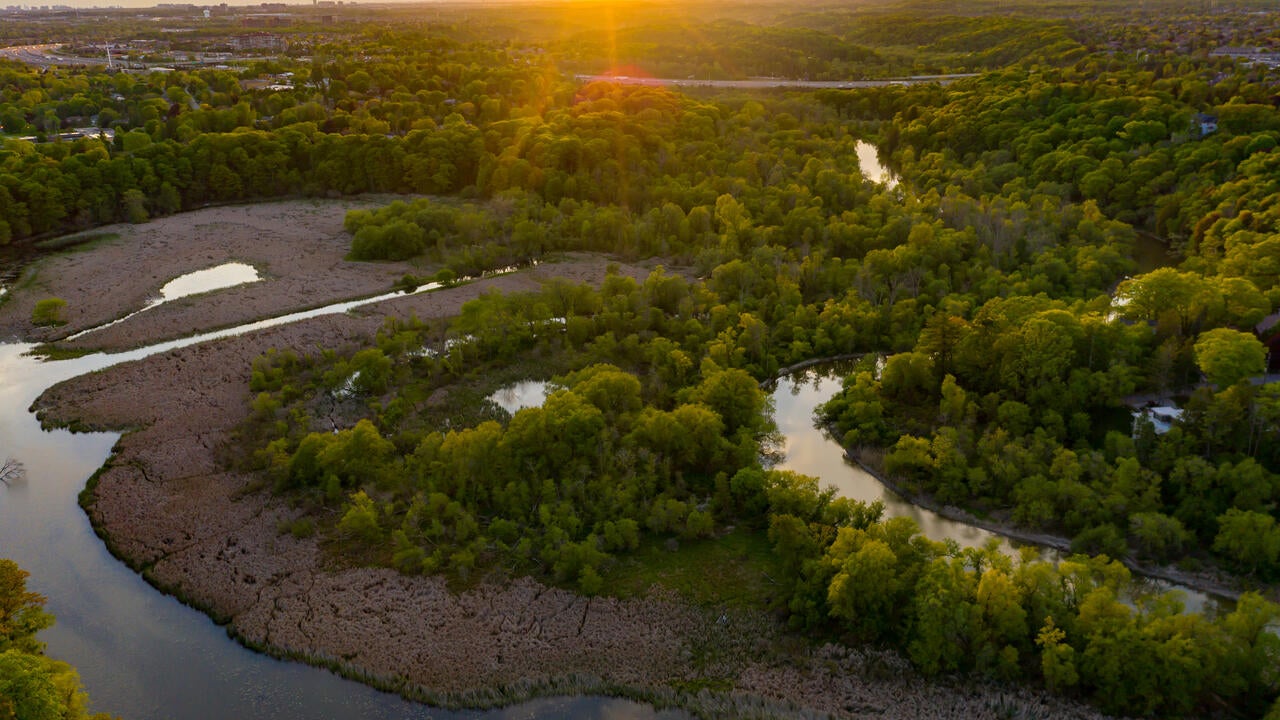
Aerial view of Rouge National Urban Park and Rouge River, Mast Trail, Toronto, Canada
January 25, 2022

New economic model finds wetlands provide billions in filtration value

Wetlands in Southern Ontario provide $4.2 billion in water filtration services each year

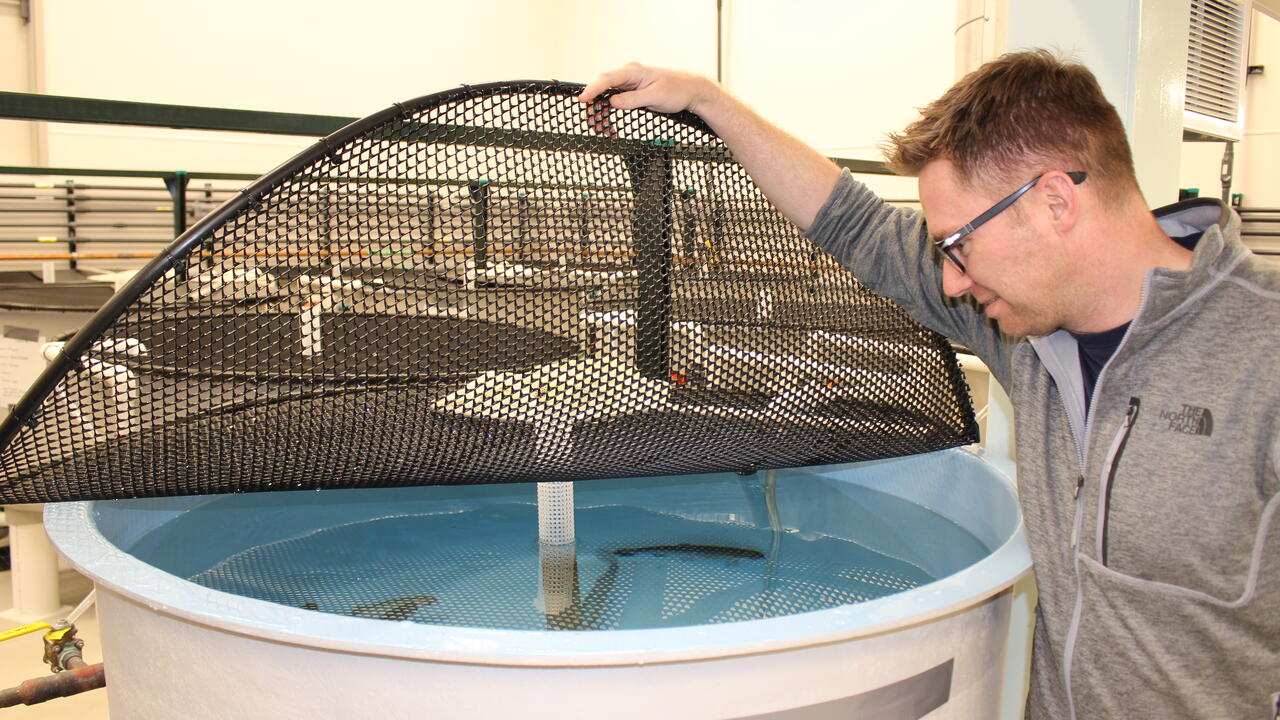
Paul Craig, one of the lead researchers in the new WATER facility, looks at fishes in a tank. at fishes
January 10, 2022

UWaterloo opens new aquatic threats research facility to study the impact of climate change on fish stress

The new multimillion-dollar facility will allow researchers to bridge the gap between lab and fieldwork

Wenyu Gao wearing a lab coat, gloves and mask, holding the prototype saliva sensor in the lab
October 14, 2021

Exploring new ways to test blood sugar levels for diabetes patients

Waterloo chemists develop new, non-invasive blood sugar testing methods using saliva

Raymond Laflamme
February 12, 2013

The quest for the quantum “holy grail”

Harnessing the power of the quantum realm is paving the way for a new breed of computers with tremendous processing power. Today's computers encode, store and manipulate information using bits - zero or one. Quantum bits, or qubits, have the remarkable property of being in a "superposition" of zero and one. In other words, they can be in both simultaneously. This characteristic, and other quantum phenomena, offer a much richer environment for processing information and allows us to develop devices that will drastically outperform today's computing and communication technology.

Bernard Glick
February 12, 2013

Feeding Earth's growing population

Microbes that help plants grow in harsh conditions will help feed Earth’s growing population. It’s an affordable solution for both the developed and developing worlds, where farmers have already begun successful implementation of this technology.

Melanie Campbell
February 12, 2013

An early test for Alzheimer's disease

Melanie Campbell sees the eyes as a window to the brain, where the presence of amyloid beta proteins in the neural layers of the retina may lead to an early and definitive test for Alzheimer’s disease. 

Avery Broderick
February 12, 2013

Shining a light on black holes

As a member of the Event Horizon Telescope team, Avery Broderick is helping to unravel the mysterious nature and behaviour of black holes, from the properties of the "event horizon" to how some can launch the energetic jets of matter and radiation that shape their host galaxies.

University of Waterloo Professor Melanie Campbell
January 22, 2013

Early test for Alzheimer's may rely on the eyes

The eye is a window to the brain, says a Waterloo physics professor who is developing a new instrument to detect the early stages of Alzheimer's disease. January is Alzheimer's Awareness Month in Canada.

University of Waterloo sign
January 15, 2013

Groundbreaking research at Waterloo receives federal funding

A research facility that will one day develop the technology that enables hybrid vehicles to feed energy into the power grid is among the innovative research initiatives at the University of Waterloo that received major funding announced today

Debbie Jones, clinical scientist at University of Waterloo
January 9, 2013

Contact lens research could slow vision loss for millions

New contact lens research offers hope for millions of near-sighted people

University of Waterloo Nanotechnology faculty in Jiangsu
December 13, 2012

Nanotechnology institute views research as borderless pursuit

An international network linking researchers, students and institutions enhances Waterloo's global reputation as a nanotechnology leader.

Michel Fich
December 7, 2012

Space project with Waterloo connection enters victory lap

As the Herschel telescope sends its final images in the coming months, professor Michel Fich will be seeing stars.

University of Waterloo sign
November 12, 2012

Satellite finds rising carbon dioxide levels in upper atmosphere

A research project with its roots at the University of Waterloo has found that human activity is raising levels of carbon dioxide (CO2) in the uppermost layers of the atmosphere

Juewen Liu
October 15, 2012

DNA researcher pursues science with impact on society

Interactions between DNA and nano-materials have the potential to change water treatment, drug delivery systems and cancer detection. 

University of Waterloo sign
October 3, 2012

Waterloo researcher helps make new discoveries about black holes

For the first time, researchers have determined where the energetic jets of matter and radiation that some black holes emit originate and how their existence relies on the speed at which the black holes spin

  • Load more
  • Share via Facebook
  • Share via Twitter
  • Share via Google+
  • Share via LinkedIn
  • Share via Email
  • TOP
  • Share
Waterloo news

Find an expert

Contact Media Relations


University of Waterloo
43.471468
-80.544205
200 University Avenue West
Waterloo, ON, Canada  N2L 3G1
+1 519 888 4567
  • Contact Waterloo
  • Maps & Directions
  • WatSAFE
  • Accessibility
  • Privacy
  • Copyright
  • Media
  • Careers
  • Feedback
@uwaterloo social directory

The University of Waterloo acknowledges that much of our work takes place on the traditional territory of the Neutral, Anishinaabeg, and Haudenosaunee peoples. Our main campus is situated on the Haldimand Tract, the land granted to the Six Nations that includes six miles on each side of the Grand River. Our active work toward reconciliation takes place across our campuses through research, learning, teaching, and community building, and is co-ordinated within the Office of Indigenous Relations.