
Dr. Paul Craig, Associate Professor and Interim Chair, Department of Biology
Craig lab research overview:
-
The role of epigenetic regulation on phenotypic responses to environmental stressors in teleosts.
-
Studies here involve the profiling of epigenetic responses (DNA methylation, microRNA) in zebrafish and rainbow trout to environmental stressors and how they dictate the phenotypic response. Transgenerational epigenetic responses to environmental stressors.
-
Studies here examine the heritability of epigenetic mechanism from paternal and maternal sources, both intra- and inter-generationally, in teleosts. Application of epigenetic profiling to local species and conditions.
-
Studies here build upon Themes 1 and 2 and apply epigenetic profiling in local fish species found along the Grand River in an effort to predict future responses to emerging organic contaminant threats.

Dr. Annemarie Dedek, Assistant Professor, School of Pharmacy
Dedek lab research overview:
- Aims to understand how the spinal cord processes sensory input and pain, and how these mechanisms are altered in chronic pain conditions.
- Focuses on the cellular and circuit-level physiology of nociceptive signaling, with an emphasis on how biological sex influences these processes.
- Uses a translational approach to identify conserved mechanisms underlying pain by integrating findings across cross-species tissue models.
- Seeks to advance the understanding of chronic pain physiology and support the development of more effective treatment strategies.
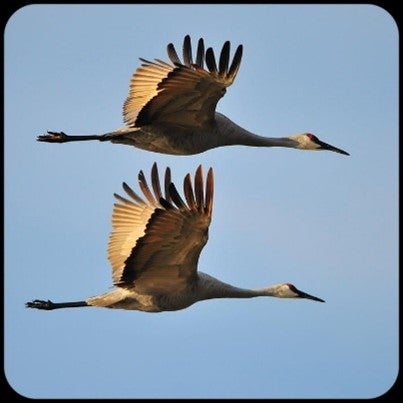
Dr. Brad Fedy, Professor, School of Environment, Resources and Sustainability
Fedy lab research overview:
- Investigates animal population fitness across scales — from genes to landscapes.
- Driven by conservation issues, while also addressing broader ecological and evolutionary questions.
- Focus areas include habitat selection, landscape genetics, population trends and social behaviour.
- Combines lab-based genetics with field techniques, such as wildlife capture, marking and tracking.
- Primarily studies birds (grouse, waterfowl, raptors, passerines), but also researches other taxa (herptiles, fish, insects, mammals).
- Collaborates with management partners to ensure conservation relevance.
See more of Dr. Fedy’s research on the Wildlife and Molecular Lab page.