Waterloo's commitment to responsible animal research
As part of the Canadian Council on Animal Care’s (CCAC) Transparency Plan to enhance openness about animal-based activities across Canada, all accredited institutions are encouraged to develop their own Institutional Transparency Plan. Research has shown that when transparency in animal-based science is enhanced through open dialogue and clear communication, institutions can achieve better public understanding of animals used in research and teaching and increase public trust.
Waterloo has taken this commitment a step further and has joined the Canadian Transparency Agreement developed collaboratively by the Canadian Association for Laboratory Animal Medicine (CALAM) and the European Animal Research Association (EARA). The purpose of this agreement is to promote greater openness and transparency with the public regarding the use of animals in scientific research in Canada. The official launch for this Agreement was on June 8, 2026, please read more about this launch from EARA's Press release.


Embedded in all animal research and teaching within Canada and Internationally are the 3Rs principles that provide a framework for ensuring animal welfare in animal research and teaching/training continues to grow and develop.
The 3R's involve:
Replacement
Refers to methods which avoid or replace the use of animals in a study where they would otherwise have been used.
At Waterloo, we have already replaced rodent sentinels by moving to a Soiled Bedding Sampling (SPS) method, thus eliminating the need for live rodent sentinels. We also have had a researcher that has been able to use dropped grouse feathers to obtain data samples instead of the more traditional way of capturing the animals and obtaining blood samples.
Other ways animals can be replaced in research are through Microphysiological Systems (MPS), which are miniaturized systems that mimic either a healthy or disease physiology of tissues, organs or organ system.
Reduction
Refers to any strategy that results in fewer animals being used to obtain sufficient data to answer a research question while maximizing the information obtained per animal.
At Waterloo, ACC has a statistician who reviews all statistical plans to ensure that the lowest number of animals is used, while ensuring the data from the study will be able to be used in the future.
To ensure studies are following good experimental design practices, researchers are encouraged to consult with the NORECOPA's PREPARE Checklist (PDF) as well as the NC3Rs' Experimental Design Assistant and DRIVER recommendations. Additionally, to assist with reproducibility and external validity, the NC3Rs ARRIVE Guidelines provide recommendations for ensuring the quality and reliability of published research.
Refinement
Refers to any modifications to husbandry or experimental procedures that minimize pain and distress for an animal.
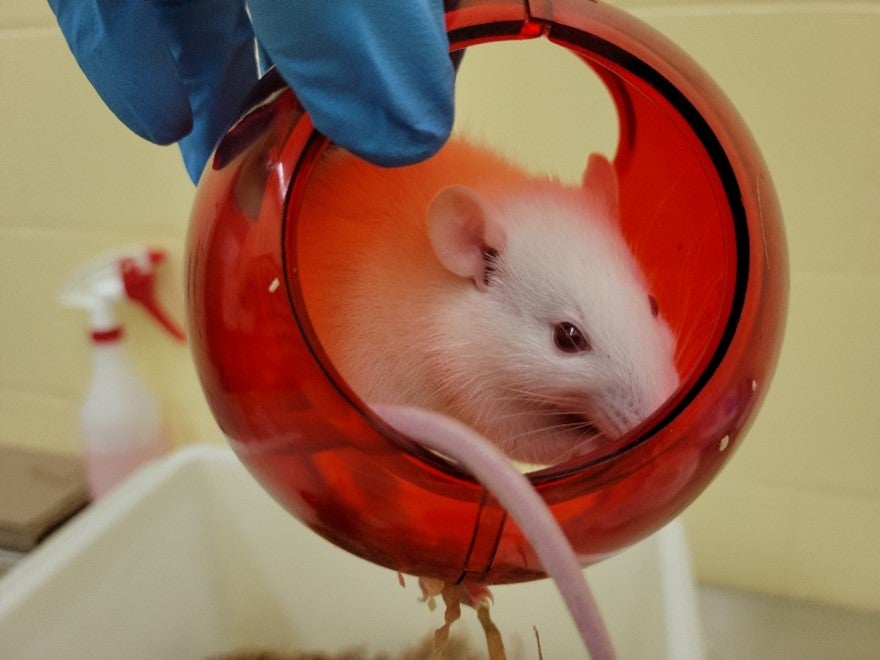
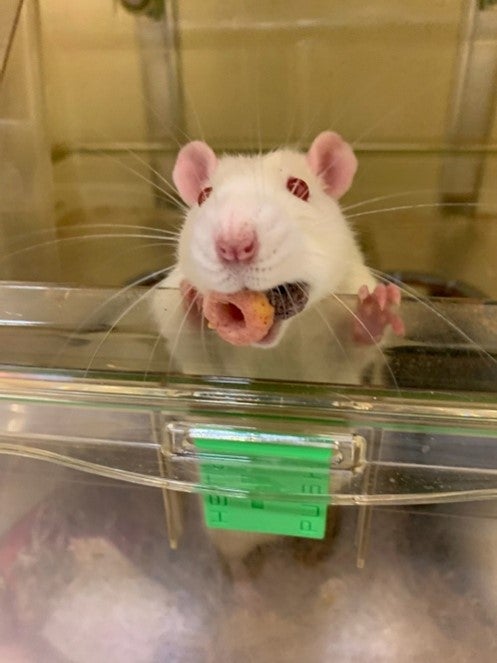
At Waterloo, staff are dedicated to ensuring the animals are cared for using low-stress handling techniques and following the 3Hs Initiative of Housing, Handling and Habituation practices. This includes rat tickling and making sure animals that can be handled are habituated properly prior to starting any procedures. All animals are provided with excellent, varied enrichment to be able to promote species-specific natural behaviour and allow a variety of options, including an exercise program if applicable. Other options for refinement include using topical analgesia for blood draws and administering drugs orally and voluntarily instead of injections.
All animal users at Waterloo are encouraged to use best practices and exceed minimum guidelines and standards when possible. Luckily, there are many resources available, such as:


Culture of care at Waterloo
At Waterloo, we are committed to cultivating a culture of care — an environment that prioritizes the well-being of animals, supports our staff, upholds scientific integrity, and encourages openness with the broader community.
This commitment goes beyond meeting legal requirements.
A culture of care involves:
- Continuously improving animal welfare and care practices.
- Supporting and recognizing the essential work of staff involved in animal care.
- Promoting high standards of scientific quality and ethical responsibility.
- Encouraging transparency and respectful collaboration across all levels.
We believe that treating animals and colleagues with compassion and respect strengthens both our research and our community.
To learn more about how institutions can promote a culture of care, please refer to the Norecopa and NC3Rs resources.
We deeply honour and respect all animals involved in research and teaching, recognizing the invaluable contributions they make during their time with us. With gratitude and reflection, we remember those who have helped advance knowledge in the past and acknowledge those who will continue to do so in the future.
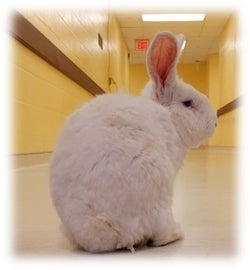
We have researchers completing research in a variety of disciplines, including field-based research into conservation and biology, human health disease models, animal disease pathogenesis and pre-clinical medical devices to refine human monitoring.
Find out more about some of Waterloo’s researchers working with animals.
Animal housing facilities at Waterloo
Waterloo Aquatic Threats in Environmental Research (WATER) Facility
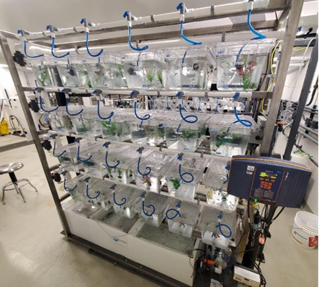
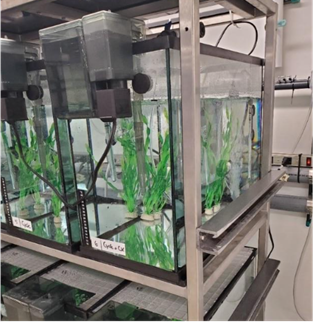
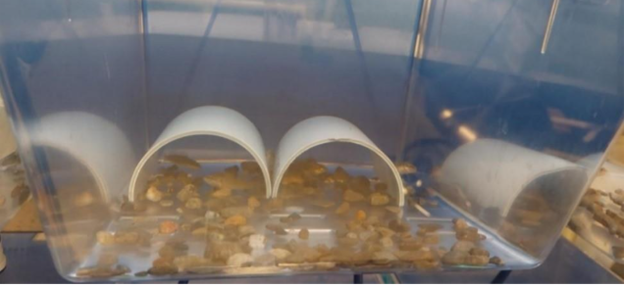
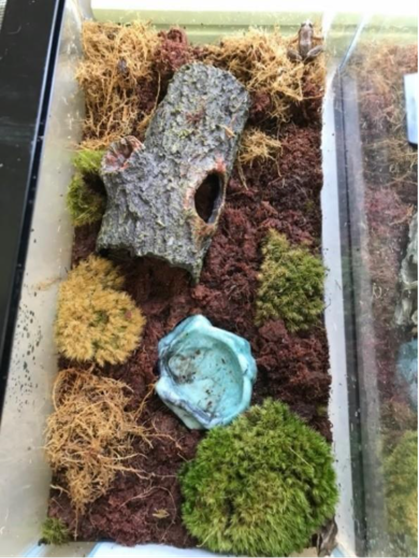
For research involving fish and amphibians, Waterloo is home to the Waterloo Aquatic Threats in Environmental Research (WATER) Facility, operated by the Department of Biology. This facility includes a Level 3 aquatic pathogen research space, uniquely enabling both experimental and infectious disease studies on a variety of aquatic species. The facility has a dedicated water treatment system for safe housing of aquatic animals.
For access or inquiries, please contact:
- Dr. Paul Craig (paul.craig@uwaterloo.ca), WATER Facility director
- Nick Bendo (nbendo@uwaterloo.ca), WATER Facility technician
- Martin Ryan (mryan@uwaterloo.ca), senior animal health technician (oversees all animal care within the facility)
Renovations to the facility began in 2020 and were completed by 2022, resulting in a state-of-the-art research and teaching space. The WATER Facility is equipped to house a wide range of aquatic and amphibian species, which have included since opening: rainbow trout (Oncorhynchus mykiss), Nile tilapia (Oreochromis niloticus), zebrafish (Danio rerio), killifish (Fundulus heteroclitus), various Ontario darter (Etheostoma spp.) and minnow species, as well as aquatic (Xenopus) and terrestrial amphibians (Wood frogs).
The facility also features advanced environmental monitoring and control systems, capable of simulating natural diel fluctuations in temperature and dissolved oxygen. These capabilities support more ecologically relevant, multi-stressor experimental designs aimed at understanding the effects of climate change and other anthropogenic stressors on aquatic organisms. The WATER Facility represents a critical resource for cutting-edge aquatic research and conservation science.
Waterloo Aquatic Threats in Environmental Research (WATER) Facility


Central Animal Facility
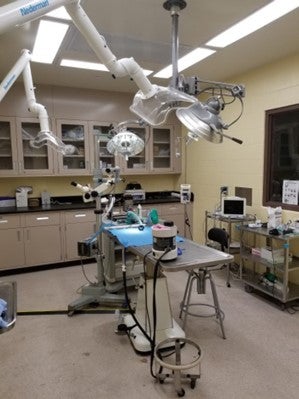
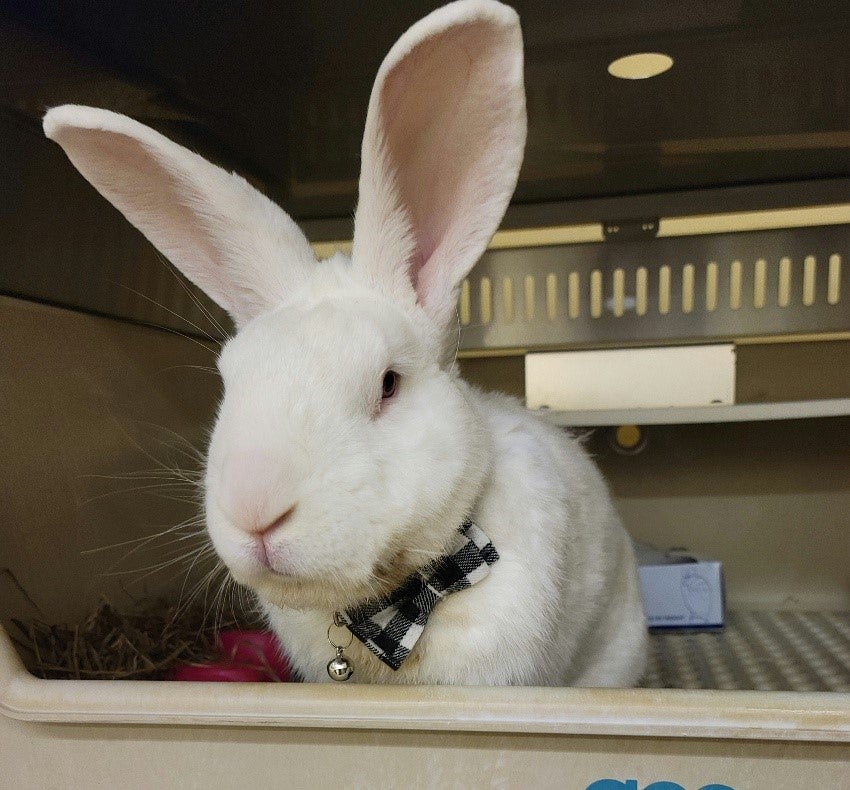
For laboratory animal species, Waterloo has a state-of-the-art Central Animal Facility (CAF), overseen by the Office of Research Ethics (ORE), which provides housing (including Immunodeficient and Animal Biosafety Level 2 rooms), procedure rooms, a surgical suite, behavioural testing spaces and quarantine rooms. The CAF is staffed by laboratory animal technicians certified through the Canadian Association for Laboratory Animal Science (CALAS), holding Registered Laboratory Animal Technician (RLAT) certifications. Our veterinarians provide consultation on all aspects of the animal care and use program and are active members of the CALAM.
At the CAF, our staff go above and beyond to ensure our facility not only meets but exceeds minimum standards for animal care. We are proud to highlight several initiatives that reflect our dedication to animal welfare:
- Enhanced Housing Standards: We offer multiple high-quality housing options for animals, surpassing standard guidelines to promote comfort, enrichment, and well-being.
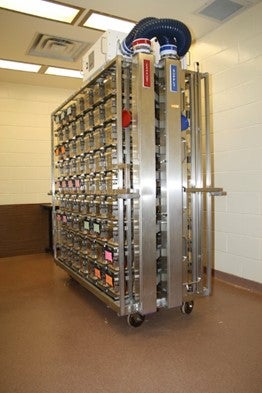
- Techniplast Double-Decker Cage Upgrade: In 2022, we transitioned to double-decker Techniplast cages, a significant step forward in our commitment to animal welfare. For context, the CCAC guidelines for rat housing (PDF) require institutions to convert 33% of their cages by April 2025 and 100% by April 2031. Our early adoption demonstrates leadership and proactive care.
Central Animal Facility


A brochure that outlines the facilities, equipment and per diem pricing is available. If you would like a copy of this brochure, email the ORE (oreaupp@uwaterloo.ca) and provide a brief background of your study and the principal investigator/faculty member’s name (if applicable).
The CAF has adopted the Soiled Bedding Sampling (SPS) method, which replaces the use of live animals. This method uses soiled bedding from colony cages, media filters, and PCR diagnostics to test rodent pathogens. The transition to the SPS program has replaced approximately 80 mice and 25 rats per year. This change aligns with the replacement principles and is adopted by many other institutions across the U.S. and Canada through a rodent health monitoring initiative with the 3Rs Collaborative.